
- Quick Answer: What Should You Check Before Buying a Male Fertility Supplement?
- Check 1: Know Your Numbers First — a Semen Analysis Before Anything
- Check 2: Doses Printed on a Real Label — the Studied-Dose Test
- Check 3: Cycle-vs-Guarantee Maths — the 74-Day Problem
- Check 4: Fertility Is Not Libido Is Not Volume — Three Different Jobs
- Check 5: Partner and Timing Honesty — the Clock Is a Couple's Clock
- The Worked Example: Fertility Factor 5 Against Every Check
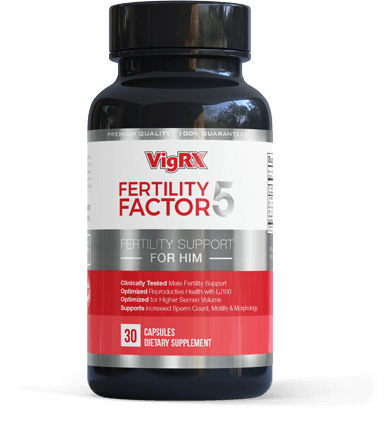
Affiliate disclosure: This article contains affiliate links. If you buy through a link on this page, we may earn a commission paid by the manufacturer, at no extra cost to you. That never changes what we publish — and here it means writing a guide you can use against our own product. This store sells one male fertility supplement, Fertility Factor 5 ; the last section of this page holds it up against every check below, including the checks it fails, and you can check our working.
A male fertility supplement is the slowest purchase in this store. Sperm production runs on a cycle of roughly three months, so the money you spend today buys a verdict that arrives a season from now — if you set the purchase up so a verdict can arrive at all. Five checks, run before the clock starts: know your numbers first, demand doses printed on a real label, do the cycle-versus-guarantee maths, keep fertility, libido and volume from being sold as one job, and be honest about the partner and timing side. The worked example runs our own fertility product through all five.
Quick Answer: What Should You Check Before Buying a Male Fertility Supplement?
Five things. One: know your numbers first — a semen analysis before buying anything, because count, motility and morphology are the only honest measures of whether a fertility product did anything. Two: the doses must be printed on a real label — named ingredients without amounts, or a hero below its studied dose, are marketing, not a formula. Three: do the cycle-versus-guarantee maths: sperm production takes about 74 days, so a guarantee shorter than roughly three months expires before the maker's own judging point. Four: fertility is not libido and neither is volume — three different jobs, and a volume or taste product sold as fertility help is a misclassification. Five: time it as a couple: a trial is a three-month block inside a longer trying timeline, and it should never delay the medical step that timeline calls for.
Check 1: Know Your Numbers First — a Semen Analysis Before Anything
Fertility is one of the few supplement categories with a real measuring instrument, and the first check is to use it before the purchase, not just after. A semen analysis reports the parameters every fertility claim is about: count (concentration), motility (what proportion are moving, and moving forward) and morphology (what proportion are normally shaped). Our worked example is positioned exactly there: its maker aims it at men and couples trying to conceive where low count, poor morphology or poor motility is the barrier, with stated aims to improve count, morphology and motility and to support spermatogenesis. Without a baseline analysis, none of those aims can ever be judged.
The maker itself endorses the instrument: it recommends a semen analysis after at least three months of use. Our advice is to move that test earlier — a baseline before the course and a repeat at the three-month judging point is the only arrangement in which the second result means anything. A baseline also protects you in the other direction: male fertility problems can have medical causes a supplement cannot address, and an analysis surfaces them in time to act. If you have been trying for 12 months without success — or 6 months if your partner is 35 or older — the right next step is that analysis and a clinician, not a supplement; see Can a Semen Volume Supplement Improve Fertility?
Check 2: Doses Printed on a Real Label — the Studied-Dose Test
A fertility formula asks for three months of faith, so its label owes you arithmetic in return: every ingredient named, the amount of each printed in a real Supplement Facts panel, and — the test most formulas fail — the hero ingredient at the same dose used in the research the maker cites. A famous extract at a token dose is a label decoration.
Our worked example passes the hardest part of this check and fails the routine part. Fertility Factor 5 is built around LJ100, a patented Tongkat Ali extract, and the maker states the product contains "the same amount of LJ100 as in this clinical trial": 200 mg per daily serving . That fertility study — 75 men given 200 mg of LJ100 daily, with semen parameters measured at the three-month mark — matches the bottle's dose exactly, a dose match most fertility formulas never offer. Around the hero sit four named supporting ingredients: Panax Ginseng, Zinc, Selenium and BioPerine (a black pepper extract included to increase nutrient bioavailability, particularly selenium and zinc). There is no proprietary blend.
Now the failure, stated as plainly: the maker publishes no full Supplement Facts panel with amounts for the other four ingredients . Its zinc is described as a "clinically proven dose" without the dose. Its selenium amount is nowhere printed; the only route to a figure is a corporate-page remark — discussing a study that used 50 mcg, it notes that was "20 mcg less than the daily value in Fertility Factor 5," implying 70 mcg — but with no label panel, that figure cannot be confirmed from the bottle. Even the serving is loosely documented: once daily, with the exact capsule count per day unstated. The label verdict is genuinely split — a hero at a verified, studied dose, and four amounts a buyer cannot verify at all. Two evidence cautions complete this check: there is no trial of the finished formula — every study tested a single ingredient — and the maker's own pages disagree about the LJ100 fertility trial (the brand site reports the three-month analysis and 11 spontaneous pregnancies across six months; the corporate page says nine months and 15% of partners impregnated). We take the brand page as primary, but the conflict is the maker's. One further cited study (109 men, in eCAM) used 300 mg of LJ100 daily — more than the product's 200 mg — so its dose does not match the bottle either.
Check 3: Cycle-vs-Guarantee Maths — the 74-Day Problem
Sperm are not made to order. Production — spermatogenesis — runs on a cycle of approximately 74 days , which is why every honest timeline in this category lands at about three months : the sperm measured at month three are the first cohort produced entirely under the course. We explain the cycle in The 74-Day Sperm Production Cycle, Explained . Any maker promising a verdict in weeks is promising to measure sperm made before you started.
Now hold that biology against the guarantee. Fertility Factor 5 carries a 67-day money-back guarantee — try it for up to 60 days and return the containers within 67 days for a refund of the product price, excluding shipping and handling. Sixty-seven days is shorter than one production cycle, and shorter than the maker's own three-month judging point: the refund clock expires before the analysis the maker tells you to judge by, and your real decision point is day 60, on no fertility evidence at all. Price that into the pack choice: one month is $69 (MSRP $79); the 3-month supply is $169 ($56 per bottle); the 6-month supply is $299 ($50 per bottle). Given the maker's own timeline, the 3-month pack is the sensible starting point — bought knowing its final month runs outside the guarantee.
These statements have not been evaluated by the Food and Drug Administration. This product is not intended to diagnose, treat, cure, or prevent any disease. This article is educational and is not medical advice.
Check 4: Fertility Is Not Libido Is Not Volume — Three Different Jobs
The most expensive confusion in this aisle is categorical. Fertility is production: count, motility, morphology — measured by an analysis. Libido is desire — a man can have a healthy libido and poor sperm parameters, or the reverse. Volume is fluid: the ejaculate that carries the sperm, most of which is not sperm at all. A product built for one job is not evidence for another. Fertility Factor 5's maker does list supporting libido and sexual function among its stated aims, and LJ100 has a separate placebo-controlled study of 26 men on sexual function — but its name, hero study and judging tool are all on the production side, and if desire is your actual problem, this is the wrong bottle.
The shelf makes the split concrete. Semenax (Our Score 9.5/10) is a volume product: its maker-run study measured semen volume, not conception. Volume Pills (Our Score 7.5/10) is likewise volume-led. Both scores are high for the volume job ; neither says anything about fertility, and buying either as fertility help spends the one resource a trying couple cannot replace — time. The same discipline catches a quieter misclassification: SemEnhance (Our Score 5.5/10) is a semen taste enhancer, a Semenax companion — not a fertility product, not a volume product. Name the job in one word before you buy, and buy only the product whose evidence measures that word.
Check 5: Partner and Timing Honesty — the Clock Is a Couple's Clock
The final check is about the calendar two people share. Run the three-month block deliberately: start it when a repeat analysis can be booked at the three-month mark, judge it by that analysis, and decide in advance what the result will trigger. What it must never do is quietly consume the window in which medical help would have been sought — past the 12-month mark (or 6 months where a partner is 35 or older), a course runs alongside clinical advice, not instead of it.
Documentation honesty belongs here too. Fertility Factor 5's maker publishes no exclusion list, no age limit and no medication cautions, and states the formula is all-natural with no known adverse side effects. Treat that silence as a gap, not reassurance: if you are undergoing fertility treatment, taking medication, or have a diagnosed condition, talk to your doctor or fertility specialist first.
The Worked Example: Fertility Factor 5 Against Every Check
Here is Fertility Factor 5 ($69 for one month) marked with the rules above. Check 1, know your numbers: pass on framing — the product is aimed at the three parameters a semen analysis measures, and the maker directs you to judge it by an analysis after at least three months; add your own baseline first. Check 2, printed doses: split — LJ100 at the studied 200 mg dose, all five ingredients named, no proprietary blend; but no published amounts for the other four, and the daily capsule count unpublished. Check 3, cycle vs guarantee: fail on the maths — a roughly 74-day cycle and a three-month judging point against a 67-day guarantee, with the 3-month pack ($169) the sensible buy and its last month unprotected. Check 4, three jobs separate: pass — marketed and evidenced as a fertility formula, distinct from the volume products (Semenax, Volume Pills) and from SemEnhance, which is not a fertility product. Check 5, timing honesty: partial — a measurable endpoint and a real timeline, against a maker that publishes no warnings or exclusions at all. That pattern earns 8.0/10 in our review — Ingredients 8.0, Evidence 8.5, Safety 7.5, Value 7.5. Our Answered post goes question by question: Fertility Factor 5, Answered .
The bottom line: before the three-month clock starts, get the analysis, read the label for printed doses and a studied-dose match, subtract the guarantee's days from the cycle's days, name the job in one word, and agree as a couple what the result will trigger. A fertility supplement bought on those rules is a measured experiment. One bought without them is three months of hoping, with no verdict at the end.
Disclaimer: This article is for general information only and is not medical advice. Always consult a qualified healthcare professional before starting any supplement, especially if you have a medical condition or take prescription medication. Individual results vary, and no result is guaranteed.
Last reviewed: October 2026
