
- Quick Answer: Which Foods Support Sperm Count?
- Why Does Zinc Matter So Much for Sperm?
- What Does Folate Do for Sperm?
- Do Omega-3 Fats Really Help Semen Quality?
- How Do Antioxidants Protect Sperm?
- What About Vitamin D?
- Which Foods and Habits Work Against Sperm?
- How Do You Build a Sperm-Supporting Plate?
- When Is Food Not the Answer?
- What About Supplements Built for This?
Affiliate disclosure: This article contains affiliate links. If you buy through a link on this page, we may earn a commission paid by the manufacturer, at no extra cost to you. That never changes what we publish — and here it means being straight with you up front: food supports sperm health, it does not treat infertility, and no grocery list replaces a medical workup if you have been trying to conceive without success.
Can what you eat actually change your sperm count? It is one of the most searched questions in men's fertility, and the honest answer is more useful than the hype in either direction. Your body builds sperm continuously, and it builds them out of what you feed it. Certain nutrients show up again and again in the research on semen quality — not because they are magic, but because sperm production and sperm protection genuinely depend on them. This page goes nutrient by nutrient: what the evidence actually supports, which foods deliver it, what quietly works against you, and where the limits of diet honestly sit.
Quick Answer: Which Foods Support Sperm Count?
The strongest pattern in the research is not a single superfood — it is a nutrient set: zinc, folate, omega-3 fats, vitamin C, vitamin E, lycopene, selenium, and vitamin D. Men whose diets and blood levels are low in these tend to show poorer semen parameters; men who eat diets rich in fish, vegetables, fruit, nuts, and whole foods tend to show better ones. Oysters and pumpkin seeds for zinc, leafy greens and lentils for folate, oily fish for omega-3, cooked tomatoes for lycopene, and a small handful of Brazil nuts for selenium cover most of it. What food cannot do: fix a blocked duct, a varicocele, a hormone disorder, or a genetic cause. Diet is the foundation, not the whole building.
Why Does Zinc Matter So Much for Sperm?
Zinc is the nutrient most consistently tied to male reproductive health. It is concentrated in the prostate and semen, it is involved in testosterone metabolism, and it plays a role in sperm formation and motility. Studies comparing fertile and infertile men repeatedly find lower zinc levels in the semen of men with poor sperm quality. That is an association, not proof that zinc alone fixes a low count — but of all the nutrients on this page, zinc's connection is among the best supported, and genuine deficiency is common enough to take seriously.
The richest food source by a wide margin is oysters. After that: red meat, crab and other shellfish, pumpkin seeds, chickpeas, cashews, and dairy. A practical note: zinc from plant sources is absorbed less efficiently because of compounds called phytates in grains and legumes, so vegetarians need to be more deliberate about it. And more is not endlessly better — chronic megadosing of zinc can interfere with copper absorption, which is one reason food-first beats supplement-first for a nutrient you can get from a normal diet.
What Does Folate Do for Sperm?
Folate (vitamin B9) is best known for pregnancy, but it matters before conception too — on the father's side. Sperm production involves constant, rapid cell division and DNA copying, and folate is essential to DNA synthesis. Low folate status has been linked in studies to poorer sperm counts and higher rates of DNA fragmentation in sperm, which is one of the quality measures fertility specialists actually look at.
Food sources are easy to hit if you eat plants at all: lentils and other beans, leafy greens like spinach, asparagus, Brussels sprouts, and fortified grains. A lentil-based meal a few times a week plus a daily green vegetable covers most men. Folate from food comes with none of the masking concerns attached to very high-dose folic acid supplements, another argument for the plate over the pill bottle.
Do Omega-3 Fats Really Help Semen Quality?
Sperm cell membranes are unusually rich in DHA, one of the omega-3 fats, and membrane flexibility matters for motility and for the sperm's ability to fuse with an egg. Observational studies have found that men who eat more oily fish tend to have better semen parameters, and small trials of omega-3 supplementation have shown improvements in some measures — count, motility, or morphology — in some (not all) studies. The fair summary: the signal is real but modest, and oily fish brings protein, vitamin D, and selenium along with it, which makes the food a better bet than the isolated claim.
Best sources: salmon, sardines, mackerel, herring, and anchovies — two servings a week is the standard general-health advice and a reasonable target here. Walnuts and flaxseed provide the plant omega-3 (ALA), which the body converts to DHA only inefficiently, so they are a useful addition, not a full substitute for fish.
How Do Antioxidants Protect Sperm?
Sperm are unusually vulnerable to oxidative stress — damage from reactive oxygen molecules — because their membranes are rich in the very fats that oxidize easily, and they carry little of the cellular machinery that repairs damage. A meaningful share of male infertility cases show high oxidative stress in semen. This is where the antioxidant nutrients earn their place:
- Vitamin C — citrus fruit, bell peppers, kiwi, strawberries, broccoli. Vitamin C is present in semen itself, and studies of men with low vitamin C status have shown improvements in sperm quality when intake rises.
- Vitamin E — almonds, sunflower seeds, hazelnuts, avocado. A fat-soluble antioxidant that protects sperm membranes; small trials have paired it with selenium with some positive results.
- Lycopene — the red pigment in tomatoes, watermelon, and pink grapefruit. Unusually, lycopene becomes more available when tomatoes are cooked, so tomato sauce and paste count double. A few small trials of lycopene have reported improvements in count and motility, though the studies are small.
- Selenium — needed for a family of antioxidant enzymes and for normal sperm structure. Brazil nuts are so concentrated that one or two a day is genuinely enough; a small handful daily can push you toward excess, and selenium is a nutrient where too much is a real problem, not a theoretical one. Tuna, eggs, and whole grains contribute smaller amounts.
The honest framing: antioxidant evidence is promising but built from small studies and associations. Eating antioxidant-rich food is low-risk and broadly healthy; expecting it to reverse a diagnosed fertility problem on its own is more than the evidence promises.
What About Vitamin D?
Vitamin D receptors exist in sperm and the testes, and studies have linked low vitamin D status with lower motility in particular. The evidence is not strong enough to promise that correcting a deficiency will raise a count, but deficiency is extremely common — especially in men who work indoors and live at northern latitudes — and correcting it is worthwhile for bone, muscle, and general health regardless. Oily fish, egg yolks, and fortified dairy provide some; sunlight provides most for most people; a blood test tells you whether a supplement is even needed.
These statements have not been evaluated by the Food and Drug Administration. This product is not intended to diagnose, treat, cure, or prevent any disease. This article is educational and is not medical advice.
Which Foods and Habits Work Against Sperm?
The "eat this" list gets the attention, but the "stop doing this" list has some of the strongest evidence on the page:
- Heavy alcohol use. Regular heavy drinking is associated with lower testosterone, lower counts, and poorer morphology. Moderate intake shows murkier results; heavy intake is consistently bad news.
- Smoking. Tobacco use is linked to reduced count, motility, and higher DNA damage in sperm. This is one of the clearest findings in the whole field.
- Trans fats and heavily processed food. Diets high in processed meat, fried food, and full-sugar drinks correlate with poorer semen quality in observational studies; Mediterranean-style patterns correlate with better quality. Correlation is not proof, but the pattern is consistent across many studies and countries.
- Heat. Not a food, but inseparable from the topic: sperm production runs best slightly below core body temperature. Frequent saunas and hot tubs, and a laptop resting on the lap for hours, can temporarily suppress production.
- The soy question, answered honestly. Soy foods are often accused of harming male fertility because of their plant estrogens. The evidence at normal food intakes — tofu, soy milk, edamame as part of a normal diet — does not show a meaningful negative effect on sperm or testosterone. The studies that raise eyebrows involve intakes far beyond typical eating. Normal soy consumption is not a demonstrated problem.
How Do You Build a Sperm-Supporting Plate?
Abstract nutrient lists fail at the supermarket, so here is the practical version of everything above:
- Twice a week: oily fish (salmon, sardines, mackerel).
- Daily: one leafy-green or cruciferous vegetable serving; one citrus or berry serving; a small handful of mixed nuts and seeds, including pumpkin seeds.
- Most days: a legume — lentils, chickpeas, beans — for folate and zinc; cooked tomato in some form for lycopene.
- A few times a week: eggs and dairy for additional zinc, selenium, and vitamin D.
- One or two Brazil nuts a day — and stop there.
- Red meat a few times a week is fine and contributes zinc; processed meat daily is the pattern to cut.
Give any dietary change a fair window. Sperm you produce today started developing roughly two to three months ago, so a new eating pattern needs about three months before it can show up in a semen analysis. Judging a diet change at two weeks is judging it before it has had a chance to matter. We cover the other everyday levers — timing, frequency, habits, and what else moves volume and quality — in our guide on how to increase semen volume naturally.
When Is Food Not the Answer?
This section matters more than any food list. A large share of low sperm counts have causes no diet touches: a varicocele (enlarged veins in the scrotum — common and often treatable), hormonal disorders, genetic conditions, blocked ducts, infections, certain medications, and undescended testicle history. If you and a partner have been trying to conceive for 12 months without success — or 6 months if she is over 35 — the standard medical advice is that both partners get evaluated, and a semen analysis is cheap, simple, and painless compared to most fertility testing. Starting with the man's test first is often the fastest route to an actual answer.
Our explainer on the causes of low semen volume covers what to check: Why Is My Semen Volume Low? Causes, and When to See a Doctor.
None of this makes food pointless. Nutrient status is the one input you fully control, the downside of eating this way is essentially nil, and if a workup does find a treatable cause, you will be addressing it from a better nutritional baseline. What food should never be is a reason to delay finding out what is actually going on.
What About Supplements Built for This?
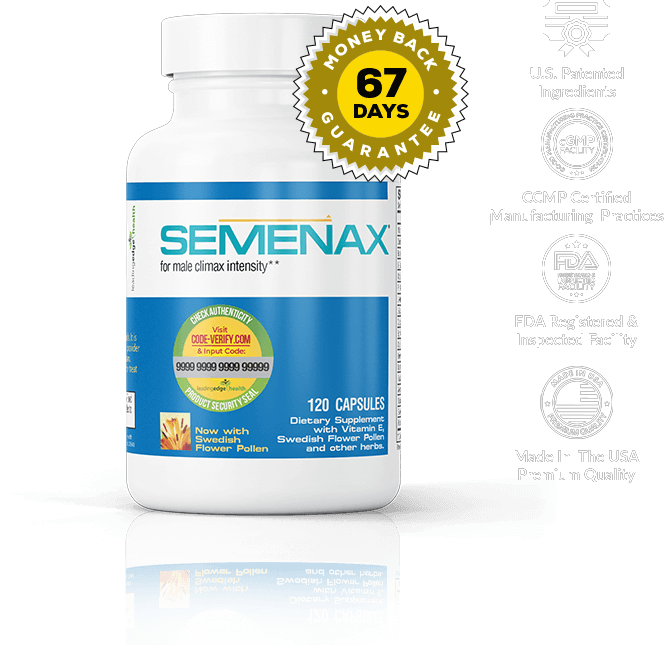
Men researching this topic will run into volume and fertility-support formulas, of which Semenax is the long-established example on our shelf. To keep the same standard we have applied to food: its maker reports a randomized, double-blind, placebo-controlled study of the finished product (63 men, two months) in which significantly more men on Semenax achieved a semen-volume increase of 20% or more than on placebo. That is a real study, and it is also one study, run by the maker, on volume — not a fertility-outcomes trial, and not a reason to skip a medical workup if conception is the goal. Our full review applies our scoring rubric and lays out its limits in the open, the same way this article has.
The bottom line: eat for the nutrient set — zinc, folate, omega-3, antioxidants, selenium, vitamin D — mostly from fish, greens, legumes, nuts, seeds, and cooked tomatoes; drop the heavy drinking, smoking, and daily processed food; give it three months; and if conception is the goal and it is not happening, get the semen analysis rather than another grocery list. Food is the foundation. Foundations matter — and they are not the whole house.
Disclaimer: This article is for general information only and is not medical advice. Always consult a qualified healthcare professional before starting any supplement, especially if you have a medical condition or take prescription medication. Individual results vary, and no result is guaranteed.
Last reviewed: October 2026
