
- Quick Answer
- What Dapoxetine Is
- How It Works
- What the Trials Found — in Minutes
- Who It Is Licensed For
- Side Effects and Interactions
- The interaction list
- The US Problem: Not FDA-Approved, and What That Means
- Dapoxetine vs Topical Sprays: Two Different Mechanisms
- What Dapoxetine Is Not
- Frequently Asked Questions
- Is dapoxetine FDA-approved?
- How long before sex do you take dapoxetine?
- How much does dapoxetine increase time?
- Dapoxetine 30 mg vs 60 mg — which is used?
- Can you take dapoxetine with Viagra?
- Is dapoxetine the same as other SSRIs?
- Why isn't Priligy sold in the US?
- Does dapoxetine work the first time?
- Can you buy dapoxetine over the counter?
- Read This Next
Quick Answer
Dapoxetine (brand name Priligy) is a prescription tablet for premature ejaculation: a short-acting SSRI taken only when needed, 1 to 3 hours before sex — not every day.
In the largest trials, men who started at about 1 minute from penetration to ejaculation reached about 3.1 to 3.6 minutes on dapoxetine, versus 1.9 minutes on placebo.
It is licensed in more than 50 countries, but not in the United States: the FDA declined to approve it in 2005, and it has no legal US supply channel.
That gap matters. Any "Priligy" offered to a US buyer online is moving outside the regulated supply chain, with the counterfeit risk that implies.
What Dapoxetine Is
Dapoxetine is a selective serotonin reuptake inhibitor — an SSRI, the same drug family as common antidepressants such as sertraline and paroxetine.
It was developed specifically for premature ejaculation, and where it is approved it remains the only oral drug licensed for that purpose.
The difference from antidepressant SSRIs is timing. Daily SSRIs are taken every day, indefinitely, and take weeks to build their full effect.
Dapoxetine is taken on demand only, a few hours before sex, and clears from the body far faster. Its label states it is not intended for continuous daily use.
It comes in two strengths, 30 mg and 60 mg. Everywhere it is licensed, it is prescription-only and restricted to men aged 18 to 64.
How It Works
Ejaculation is driven by a spinal reflex, but the brain sets the reflex's threshold. Serotonin is one of the main braking signals in that circuit.
By blocking serotonin reuptake, dapoxetine raises serotonin activity for a few hours. That raises the reflex threshold and delays the point of no return.
Blood levels peak about 1 to 2 hours after a tablet is swallowed, according to the NICE evidence summary on dapoxetine — which is why the label's window is 1 to 3 hours before sex.
The drug then clears quickly. The official product information states that plasma levels fall to less than 5% of peak concentrations by 24 hours after a dose.
That short action is the whole design: an SSRI effect for an evening, without the round-the-clock exposure of a daily antidepressant.
What the Trials Found — in Minutes
The honest unit for this drug is minutes, stopwatch-timed by partners in the trials. Here is what the numbers actually were — including the placebo group's.
In the integrated analysis by Pryor and colleagues (The Lancet, 2006) of two 12-week US trials covering 2,614 men with moderate-to-severe PE, average latency rose from about 0.9 minutes at baseline to 1.75 minutes on placebo.
In those same US trials, men on dapoxetine reached 2.78 minutes on the 30 mg dose and 3.32 minutes on the 60 mg dose by week 12.
Read the placebo line carefully: a meaningful part of the improvement happened on a dummy tablet too, through expectation, practice and being timed.
A 22-country trial by Buvat and colleagues (2009) followed 1,162 men for 24 weeks and found the same shape of result.
In that trial, latency rose from 0.9 minutes at baseline to 1.9 minutes on placebo, 3.2 minutes on dapoxetine 30 mg and 3.5 minutes on dapoxetine 60 mg.
One technical point changes how those averages should be read. Latency data is skewed — a minority of much longer times pulls the average up — so the Buvat trial also reported geometric means, which sit lower.
On that measure, the same trial's men rose from 0.7 minutes at baseline to 1.1 minutes on placebo, 1.8 minutes on 30 mg and 2.3 minutes on 60 mg.
The drug still won clearly against placebo on either measure. The geometric figures simply suggest the typical man's gain is smaller than the headline mean implies.
Pooling four on-demand trials (4,843 men), the NICE evidence summary reports the same pattern: 0.9 minutes at baseline rising to 1.9 minutes on placebo, 3.1 minutes on 30 mg and 3.6 minutes on 60 mg at week 12.
So the realistic expectation is roughly a tripling from a very low baseline — about two extra minutes over placebo for a man starting near one minute.
That is a genuine effect. It is also a modest one in absolute terms, and any page quoting "3× longer" without the one-minute baseline is hiding the denominator.
The 60 mg dose buys a little more time than 30 mg — roughly 0.3 to 0.5 minutes in these trials — at noticeably higher side-effect rates, which is why the label insists treatment starts at 30 mg.
Time was not the only endpoint. In the 22-country trial, partners rating the man's control over ejaculation as "good" or "very good" rose from under 5% of partners at baseline to 25% on 30 mg and 32% on 60 mg, versus 14% on placebo.
The trials also carried limits worth knowing. Men had to be in stable, monogamous relationships, partners held the stopwatch, and the lower a man's starting latency, the larger his fold-increase looked.
And the evidence stops at 24 weeks. There is no efficacy or safety data beyond six months, which is why the label requires the benefit–risk balance to be re-evaluated at least every six months.
Who It Is Licensed For
Licensing is narrower than "any man who wants to last longer". The official criteria, as set out in the NICE evidence summary, require all of the following:
- An intravaginal ejaculatory latency time (IELT) of less than two minutes; and
- ejaculation that is persistent or recurrent, occurring with minimal stimulation before, on or shortly after penetration, and before the man wishes; and
- marked personal distress or interpersonal difficulty as a consequence of the PE; and
- poor control over ejaculation; and
- a history of PE in the majority of intercourse attempts over the prior six months.
The licence covers men aged 18 to 64. The European Association of Urology guidelines list dapoxetine as the licensed on-demand drug option for premature ejaculation.
It is not licensed for men who have not been diagnosed with PE. The International Society for Sexual Medicine defines lifelong PE as ejaculation within about a minute of penetration in most encounters.
The criteria also sit inside a wider diagnostic picture. PE is classified as lifelong — present from a man's first sexual experiences — or acquired, meaning it developed later in life.
Acquired PE can be a symptom of something else, including erectile dysfunction or prostate problems. The product information therefore expects other forms of sexual dysfunction to be investigated before treatment, rather than simply medicated over.
Before a first prescription, the label also expects a medical review, including a blood-pressure check lying down and standing — because this drug can cause fainting, as the next section explains.
Side Effects and Interactions
In the phase 3 trials behind the licence, the most common side effects in men taking dapoxetine were nausea (11.0% of men on 30 mg and 22.2% on 60 mg), dizziness (5.8% and 10.9%) and headache (5.6% and 8.8%), per the official Priligy product information.
The same source reports diarrhoea in 3.5% of men on 30 mg and 6.9% on 60 mg, insomnia in 2.1% and 3.9%, and fatigue in 2.0% and 4.1% — side effects climb with dose across the board.
Side effects were also the usual reason for quitting: nausea led 2.2% of dapoxetine-treated men in the trials to stop treatment, and dizziness led 1.2% to stop.
The side effect that shapes the whole label is fainting. Syncope — actual loss of consciousness — occurred in 0.06% of men on 30 mg and 0.23% of men on 60 mg in the placebo-controlled phase 3 trials.
Most fainting cases happened within the first three hours after a dose, often after the first-ever dose. Warning signs include nausea, light-headedness, sweating and palpitations.
The label's advice is concrete: lie down immediately if those symptoms appear, and do not drive. Men with significant heart conditions or a history of fainting are excluded from treatment altogether.
The interaction list
Dapoxetine must not be combined with other serotonergic medicines. The label's list includes antidepressant SSRIs and SNRIs, tricyclic antidepressants, MAO inhibitors, tramadol, triptans, lithium and St John's Wort.
Stacking serotonergic drugs risks serotonin syndrome, a potentially serious reaction. The label sets washout gaps of one to two weeks between dapoxetine and any of those medicines.
Strong CYP3A4 inhibitors are also prohibited, because they raise dapoxetine blood levels. Named examples include the antifungals ketoconazole and itraconazole, and several HIV medicines such as ritonavir.
Alcohol is a specific warning, not a footnote. Combining it with dapoxetine increases drowsiness and impaired judgement and raises the fainting risk, so the label advises avoiding alcohol while taking it.
Erectile-dysfunction drugs need caution too. The label states dapoxetine should not be used by men taking PDE5 inhibitors such as sildenafil (Viagra), because the combination can cause a blood-pressure drop on standing.
A later phase 3 study (McMahon and colleagues, 2013) tested the combination under medical supervision in men who had both PE and ED. Supervised trial conditions are not a home experiment.
The US Problem: Not FDA-Approved, and What That Means
Dapoxetine has never been approved by the US Food and Drug Administration. Johnson & Johnson's subsidiary ALZA applied in 2004, and in October 2005 the FDA issued a "not-approvable" letter asking for more efficacy and safety data.
The drug then won approvals elsewhere — Sweden, Finland, Germany, Italy and Spain among the first, in 2009 — and is now sold in more than 50 countries. No sponsor has since carried it to a US licence.
So a US reader has no legal route to this medicine. No US pharmacy stocks it, and a US prescription does not turn foreign supply into an approved product.
Websites offering to ship "Priligy" to US buyers are therefore operating outside the regulated chain: no meaningful prescription checks, no verified storage or sourcing, and no accountability if the tablets are wrong.
That risk category is not theoretical. The World Health Organization estimates that at least 1 in 10 medical products in low- and middle-income countries is substandard or falsified, and unregulated online sellers are a recognised channel for them.
Falsified tablets can contain too little active ingredient, too much, a completely different drug, or contaminants. With a medicine whose known risks include fainting, an unknown dose is not a bargain.
One more tell: some shopping guides describe dapoxetine as an "FDA-approved treatment for PE". That claim is simply false — and a seller who gets the approval status wrong is unlikely to be checking anything else.
Persistence also drops off in real-world use. In one two-year observational follow-up of 182 men prescribed dapoxetine, about 9 in 10 men had discontinued it by 24 months.
Dapoxetine vs Topical Sprays: Two Different Mechanisms
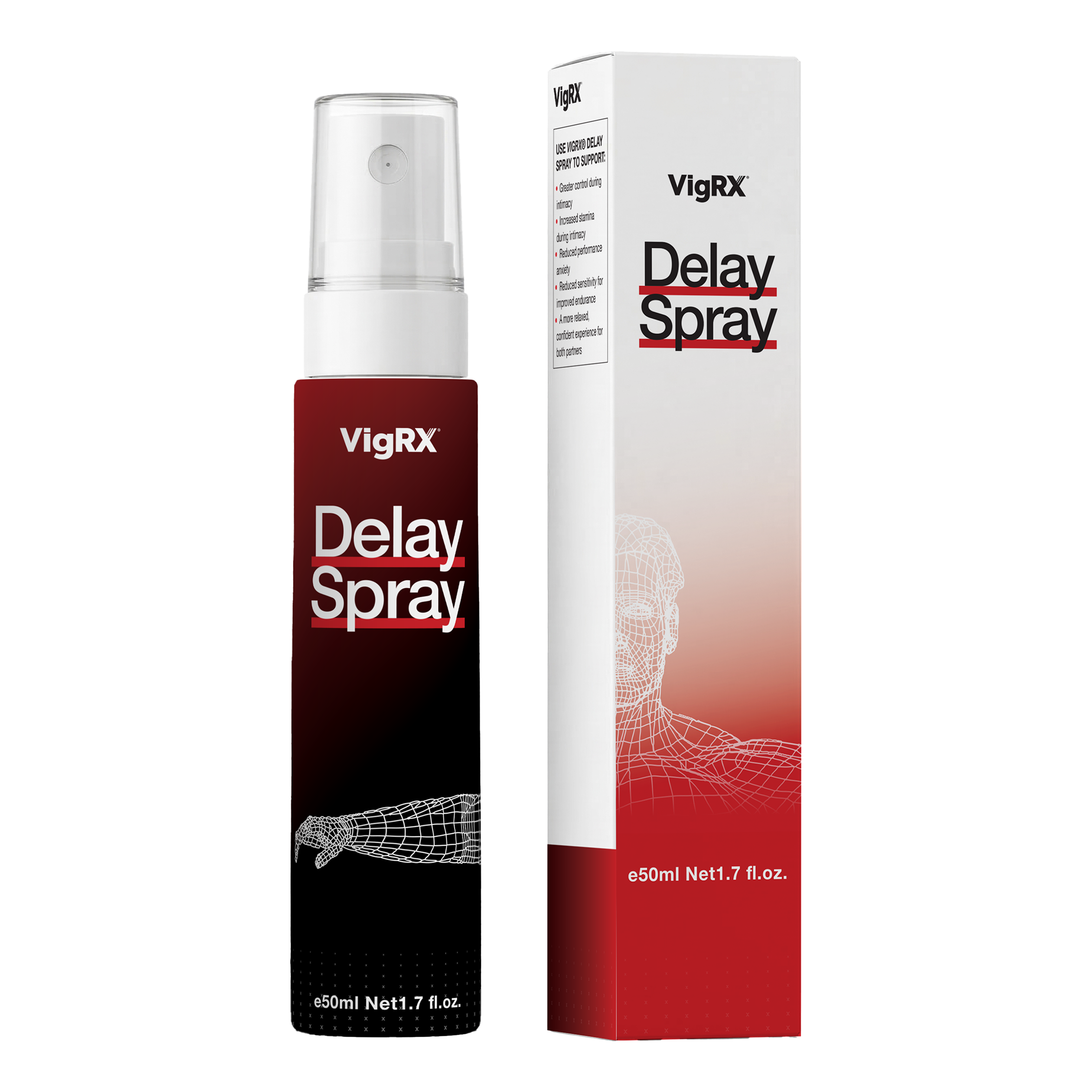
The other route to the same goal does not touch serotonin at all. Delay sprays apply a local anaesthetic — usually lidocaine or benzocaine — to the glans, reducing sensation and thereby delaying the reflex.
The best-studied example is a metered lidocaine–prilocaine spray, later licensed in Europe as Fortacin. In its phase 3 trial (Dinsmore & Wyllie, 2009), 300 men with lifelong PE used it five minutes before intercourse for three months.
In that trial, geometric mean latency rose from 0.6 minutes at baseline to 3.8 minutes with the spray, versus 1.1 minutes with a placebo spray.
Those are geometric means from men who started under one minute — comparable territory to dapoxetine's numbers, reached by numbing the signal rather than by raising the brain's braking threshold.
| Dapoxetine | Topical delay spray | |
|---|---|---|
| How it works | Systemic: raises serotonin's braking effect on the ejaculatory reflex | Local: anaesthetic reduces glans sensitivity |
| Timing | One tablet, 1–3 hours before sex | Applied minutes before sex (5 minutes in the Fortacin trial) |
| Evidence | Several phase 3 trials in thousands of men; licensed in 50+ countries | One formulation has phase 3 trial data and an EU licence; typical shop sprays are far less studied |
| Main side effects | Whole-body: nausea, dizziness, fainting risk; a drug-interaction list | Mostly local: genital redness, erection loss; partners reported burning sensations in the spray trial |
| Availability | Prescription-only where licensed; not licensed in the US | Sold over the counter in the US as desensitising products |
Neither route is "stronger" in any simple sense: they were tested in different populations against different placebos, and we found no head-to-head trial comparing the two directly.
For US readers, the practical difference is availability. Our own cluster covers the spray side in depth, including our guides to delay spray side effects and safety and using delay spray with condoms.
What Dapoxetine Is Not
It is not a cure. Dapoxetine works only on the occasions it is taken; stop taking it and latency returns to baseline. Nothing in the trials suggests a lasting change.
It is not an erection drug. It does not treat erectile dysfunction, and men whose PE developed alongside ED need the ED assessed in its own right first.
It is not a supplement, and it is not a "natural" alternative to anything. It is a regulated pharmaceutical with a prescription gate, an interaction list and a fainting risk.
That regulatory status is precisely why it sits behind a doctor in the countries that license it — and why unregulated copies aimed at US buyers sit outside every safeguard the licence was built around.
It is also not approved for men under 18 or over 64, for women, or for men without a PE diagnosis. The licence is specific, and the evidence behind it is specific too.
Frequently Asked Questions
Is dapoxetine FDA-approved?
No. The FDA issued a "not-approvable" letter in October 2005, and dapoxetine has never been licensed in the United States. It is approved in more than 50 other countries. Any guide calling it FDA-approved is wrong.
How long before sex do you take dapoxetine?
One to three hours before anticipated sex, per the label, because blood levels peak at about one to two hours. It must not be taken more than once in any 24-hour period.
How much does dapoxetine increase time?
In the pooled analysis of four trials (4,843 men), men starting at about 0.9 minutes reached 3.1 minutes on 30 mg and 3.6 minutes on 60 mg at week 12, versus 1.9 minutes on placebo. Expect roughly two extra minutes over placebo from a one-minute start.
Dapoxetine 30 mg vs 60 mg — which is used?
Treatment always starts at 30 mg; the label states treatment should not be initiated with the 60 mg dose. The higher dose is considered only if 30 mg under-delivers and caused no moderate or severe side effects — while knowing rates of nausea and several other effects roughly double.
Can you take dapoxetine with Viagra?
The official label says dapoxetine should not be used by men taking PDE5 inhibitors such as sildenafil, because the combination can cause a blood-pressure drop on standing. Combined use has been studied only under trial supervision; outside that setting, it is a prescribing decision, not a self-experiment.
Is dapoxetine the same as other SSRIs?
Same family, different job and schedule. Antidepressant SSRIs are taken daily and build their effect over weeks; dapoxetine was designed for single on-demand doses and falls to under 5% of peak blood levels within 24 hours. The two must never be combined.
Why isn't Priligy sold in the US?
Because the FDA declined the application in 2005 and asked for more data, and no sponsor has since taken the drug to a US licence. Approvals in Europe and elsewhere from 2009 onward did not change its US status.
Does dapoxetine work the first time?
Yes, in the trials it did. Pryor and colleagues reported that both doses were effective from the first dose in the US studies — unlike daily SSRIs, there is no build-up period to wait through.
Can you buy dapoxetine over the counter?
No. In every country where dapoxetine is licensed, it is a prescription-only medicine, gated behind the diagnostic criteria and the blood-pressure check described above. Any website offering it with no prescription at all is, by that fact alone, operating outside the licensing system.
Last reviewed: October 2026. This article is educational and is not medical advice.
