
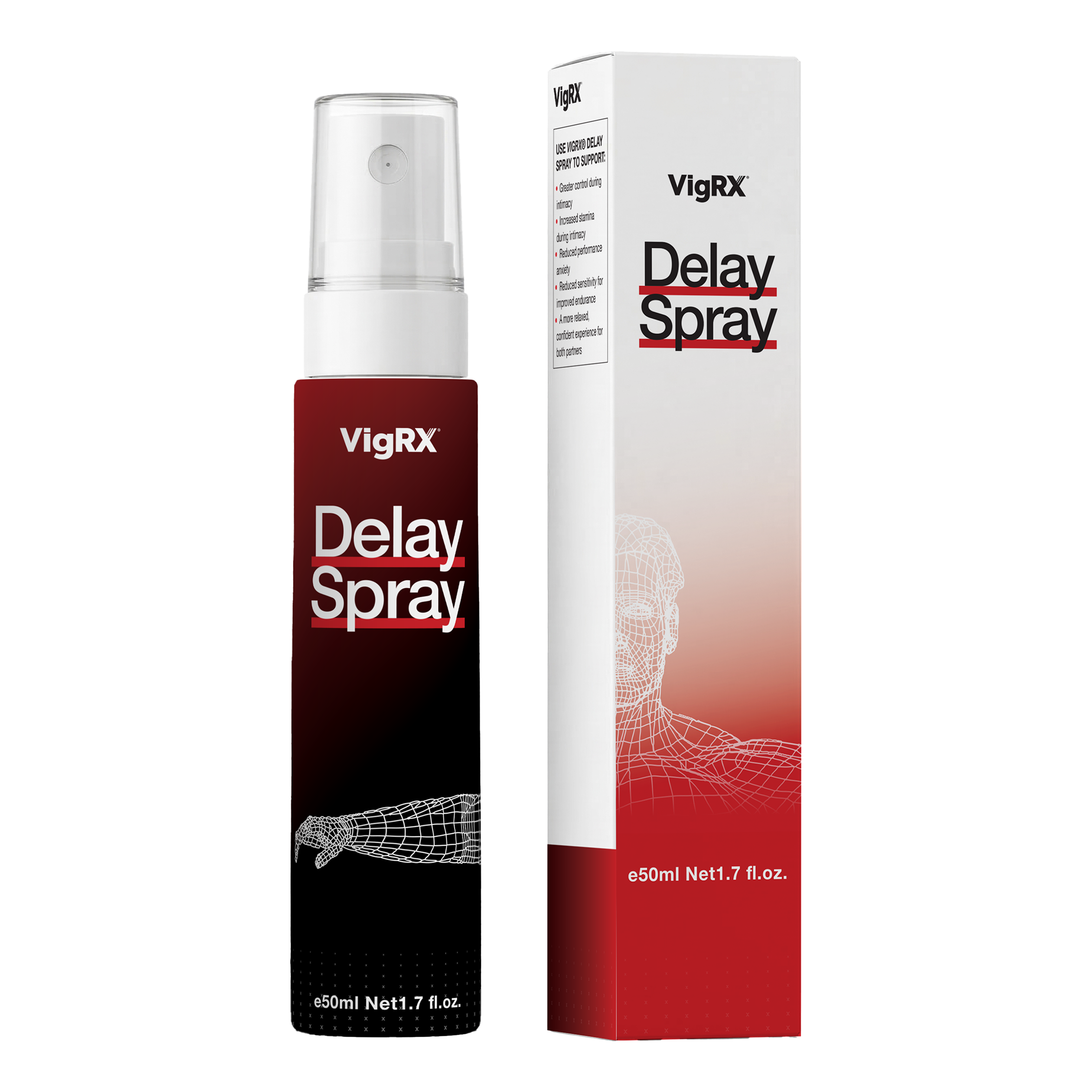
Affiliate disclosure: We sell two of the three formats compared here — VigRX Delay Spray (Our Score 4.5/10) and VigRX Delay Wipes (Our Score 5.5/10) — through affiliate links and earn a commission if you buy either. We do not sell a delay cream; the cream column is the category's third format, covered from category material so the comparison Healthline's FAQ poses — "are delay sprays or wipes better for premature ejaculation?" — gets its full three-way answer. Every product fact below is from the maker's own pages, including the facts that cost our products points.
Quick Verdict: Three Answers to the Same Problem
The formats differ less in goal than in how the dose reaches the skin and how much of the process the user controls. The spray is the adjustable instrument: a benzocaine formula metered by spray count (1–3), with the category's most precise directions and its risks concentrated in user dosing. The wipe is the fixed instrument: one pre-dosed, single-use application of a benzocaine-free botanical formula — nothing to calibrate, nothing to adjust, and a maker that publishes neither an onset nor a duration. The cream is the manual instrument: an anaesthetic formula applied by hand, where the dose is however much the user squeezes and spreads — the oldest format, the least standardised, and the one our shelf does not stock. There is no best format; there is a best match between a format's control structure and the man using it, which is what the rest of this page maps.
The Three Formats at a Glance
| Delay spray (VigRX) | Delay wipes (VigRX) | Delay cream (category format) | |
| Active | Benzocaine (ethyl aminobenzoate) — percentage NOT published by the maker | None — two botanicals (Zanthoxylum Oil, Peony Extract); benzocaine-free | Typically a local anaesthetic (benzocaine or lidocaine class) — varies by product; check the label |
| Dose control | Metered: 1–3 sprays, adjustable across occasions | Fixed: one pre-dosed wipe per use | Manual: amount squeezed and spread; no meter, no pre-dose |
| Published wait | About 10 minutes, rubbed in (maker's direction) | None — "absorb and dry fully"; no minute count published | Varies by product label |
| Published duration | None (category FAQ window ~30–60 min for the class) | None | Varies by product label |
| Condom position | Maker claims water-based, latex-compatible | Hedged: absorb fully; consult condom maker's guidelines | Label-by-label — the category's labels genuinely conflict |
| Price shape | $49.95 a bottle (list $59.95); sprays per bottle not published | $29.95 per box of 10 wipes (list $39.95) — about $3.00 per use | Varies; sold by tube/jar, per-use cost rarely stated |
| Guarantee | 67 days | 67 days | Maker-dependent |
| Our score | 4.5/10 | 5.5/10 | Not sold here — not scored |
Dose Control: The Axis Everything Else Hangs On
The spray's defining property is that its dose is a dial. One to three sprays is a range the user is expected to explore — start at one, adjust across occasions — and the dial is both the format's advantage and its documented hazard. The over-application cases in our safety audit are spray stories, because only a format with a user-set dose can be user-overdosed; with the VigRX spray the hazard is sharpened by the maker's refusal to publish the benzocaine percentage, leaving the count as the only dose information in the room. The wipe abolishes the dial entirely: the dose arrives pre-decided on a wrapped cloth, identical every time, which removes the overdose route and the calibration route in the same stroke — if one wipe is too weak or too strong for a given user, the format offers no second setting, and the maker publishes neither the botanical amounts nor a two-wipe instruction. The cream keeps a dial but removes its markings: the dose is a smear, judged by eye and hand, the least repeatable unit in the category. Comparison sites that run spray-vs-wipe and spray-vs-cream tables tend to score this axis as convenience; on the paperwork, it is really about who bears the dosing risk — the user's judgement (spray), the maker's fixed choice (wipe), or the user's unmeasured hand (cream).
Timing Paperwork: Precise, Absent, and Variable
Formats also differ in how much of the evening they schedule. The spray schedules the most: a directed application point about 10 minutes before intimacy, with duration left — as our duration piece documents — to the category's collective 30–60-minute FAQ window rather than any maker figure. The wipes schedule almost nothing: apply, absorb, dry, with "fast-acting" as the maker's whole contribution to the timeline and no duration behind it; the format suits spontaneity precisely because its paperwork refuses to promise any. Creams sit between, on other makers' labels: a stated wait on some, none on others, which is why the cream column of the table above reads "varies" so often — there is no cream label in this comparison to audit, and inventing one would repeat the category's favourite sin. A buyer comparing formats should notice the pattern: the more adjustable the format, the more of its timeline the maker has had to specify, and the more of the remaining timeline everyone — maker, reviewer, this page — is tempted to fabricate. Resist on all three columns.
Mess, Portability and the Partner
The wipe is the format designed around the occasion itself: individually wrapped, wallet-sized in the maker's positioning, no bottle, no measuring, nothing to wash off the hands beyond the application, and a formula whose residue question the maker handles by requiring full absorption — the same step its FAQ ties to minimised partner transfer. The spray travels adequately but behaves like what it is, a small pump bottle with a liquid that must be rubbed in and given its ten minutes; unabsorbed residue is its transfer route, and our partner piece exists because that route is the category's most-discussed failure. The cream is the stay-at-home format: a tube, a hand-applied smear, the longest clean-up, and the most product left on the surface to transfer — which is why cream labels, where the category publishes them, lean hardest on washing instructions. None of this is decisive alone; all of it is the texture of actually using the things, and it is the ground on which Healthline's FAQ question — spray or wipes? — is usually really being asked.
These statements have not been evaluated by the Food and Drug Administration. These products are not intended to diagnose, treat, cure, or prevent any disease. This article is educational and is not medical advice.
Who Each Format Suits
Choose the spray if you want control and can be trusted with it: the adjustable dose lets a user find his own level across occasions, the directions are the most complete in the cluster (count, targets, wait, warnings), and the benzocaine active is the category's best-evidenced class of approach — while the specific product's file stays thin: no published percentage, no trial of the finished spray, and an allergy warning the maker never prints. Choose the wipes if the drug itself is the objection or the dial is the problem: no benzocaine, no synthetic anaesthetic, no dose decision, nothing to over-apply — accepting an evidence file made of tradition, no published wait, no published duration, and a per-use cost (about $3.00) that a bottle's unknown spray count makes hard to compare like-for-like. Consider a cream if neither shelf option fits and you are prepared to audit a label we cannot audit for you: demand a named active with a printed percentage, a stated wait, a condom position and a warnings block, and treat any cream missing two of those four as the category's baseline noise rather than a product. Our buying guide turns those demands into a checklist that applies across all three formats.
Frequently Asked Questions
Are delay sprays or wipes better for premature ejaculation?
Healthline's FAQ question, and its honest answer is structural: sprays offer an adjustable benzocaine dose with a specified wait; wipes offer a fixed benzocaine-free dose with no specified wait. "Better" depends on whether dose control or drug-free simplicity matters more to you — and on evidence neither product possesses for itself, since neither maker cites a trial of its finished product.
Which format works fastest?
Only one format here publishes an onset at all: the spray, at about 10 minutes by its maker's direction. The wipes publish none ("fast-acting" is positioning, not a figure), and cream onsets live on labels outside this comparison. A fastest-format ranking would require numbers two of the three columns do not have.
Which is cheapest per use?
The wipes are the only format whose per-use cost can be computed from maker-published figures: $29.95 for 10 wipes is about $3.00 per use. The spray's bottle price ($49.95) is published but its spray count is not, so its per-use cost cannot be verified from the maker's pages — a gap worth more than the arithmetic.
Which format is least likely to numb my partner?
The one whose residue is most controlled. The wipes' maker ties full absorption to minimised transfer and the dose is small and fixed; the spray's maker conditions "minimal transference" on correct application and its full 10-minute absorption, with a wash-before-oral instruction on top; creams leave the most surface product. The transfer mechanics are detailed in our partner piece.
Why don't you sell a delay cream?
Our shelf carries the two VigRX formats because those are the maker's delay products in the programme we audit. The cream column exists so the format question is answered whole. If a cream joins the shelf later, it will be audited to the same standard — named active, printed percentage, stated wait, warnings — before it is recommended to anyone.
Final Verdict
Spray for the man who calibrates, wipes for the man who simplifies, cream for the man prepared to audit a stranger's label himself. The two formats we sell embody the trade exactly: the VigRX Delay Spray (4.5/10) gives you a dial and a drug and withholds the percentage that would make the dial meaningful; the VigRX Delay Wipes (5.5/10) give you a clean two-ingredient formula and no timeline at all. Neither file is complete, and the format you choose decides which incompleteness you live with — dose risk and drug paperwork on one side, evidence thinness and timing silence on the other. That, and not a ranking, is the comparison.
Disclaimer: This article is for general information only and is not medical advice. Always consult a qualified healthcare professional before starting any supplement or topical product, especially if you have a medical condition or take prescription medication.
Last reviewed: October 2026
