
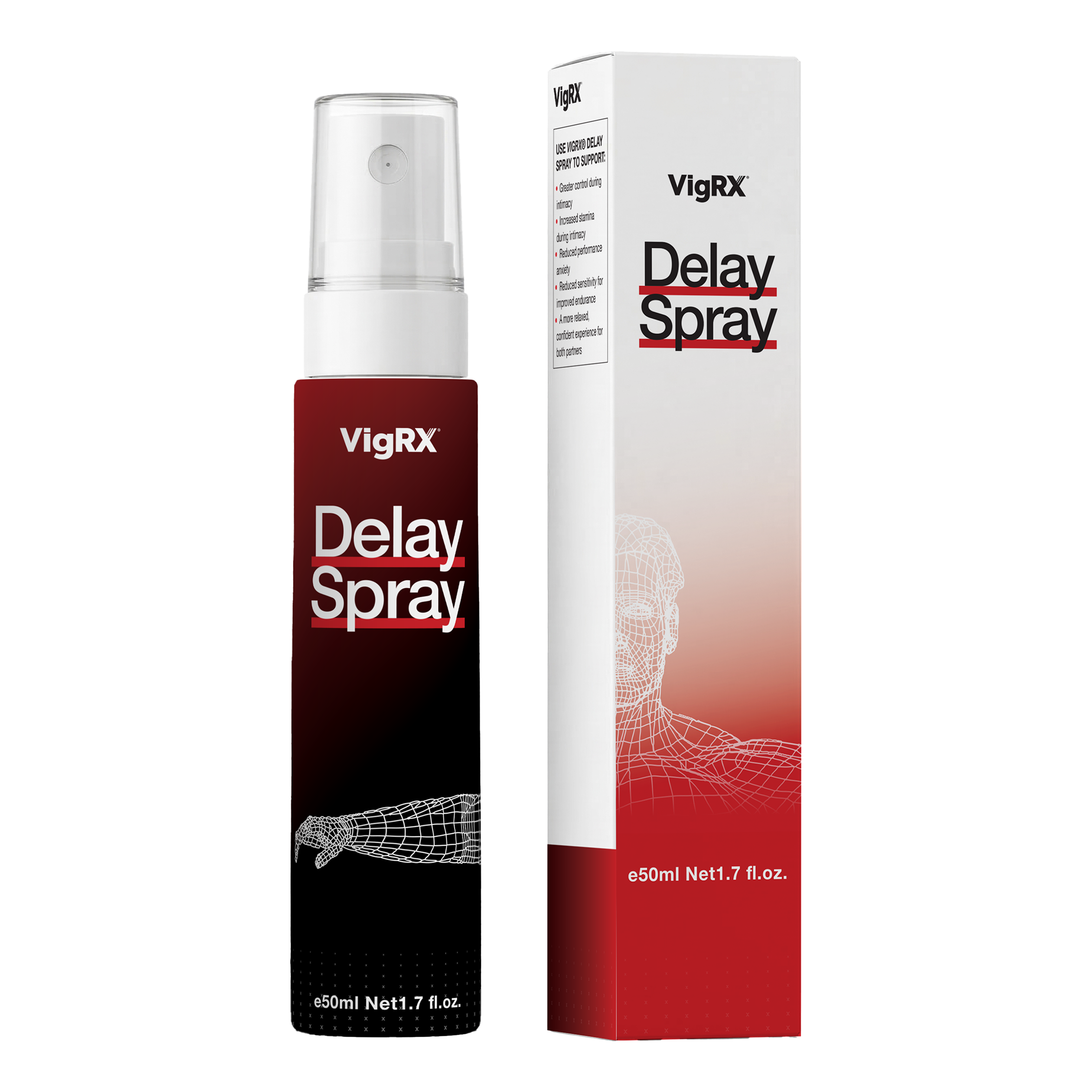
Affiliate disclosure: We sell one of the sprays the testing sites rank — VigRX Delay Spray — through our affiliate link, and we score it 4.5/10, which is not how affiliate roundups usually treat their own inventory. This guide therefore does something the roundups don't: instead of a ranking, it gives you the six label checks we audit by, shows you where the major testing sites contradict each other (and themselves) about this category — including a flat disagreement about what is inside our own product — and then applies the checks to the spray we sell, in public, failures included. Choose by the checks and the rankings become decoration.
Quick Answer: Choose by Label, Not by List
Every major testing site in this category — Innerbody, NoMorePE, PerformanceInsiders and their imitators — publishes a ranked list of "best delay sprays," and the lists disagree with each other about order, criteria and even facts. They cannot all be the answer, because most of them are answering a different question: not "which spray is best documented?" but "which sprays have affiliate programmes worth ranking?" The buyer's defence is to stop shopping the lists and start shopping labels, on six checks that any maker either passes in print or doesn't: a named active, a printed percentage, complete directions with a wait, a stated condom position, a real warnings block, and a guarantee whose terms are written down. A finished-product trial would be a seventh; almost nothing in this category has one, which is itself information. Run those checks on any spray — ours first, below — and you will know more than any ranking told you.
What the Testing Sites Disagree About
Start with the disagreement that should recalibrate your trust in the whole genre: the review ecosystem cannot agree on what is in the spray we sell. Its maker names the active as benzocaine (Ethyl Aminobenzoate) and publishes no percentage. Across affiliate and review pages, that same bottle is described as 7.5% benzocaine, as 10% benzocaine, as "10% lidocaine" — a different drug — and as a lidocaine-benzocaine combination. These are not rounding differences; they are four incompatible specifications, printed by sites that present themselves as testing authorities, none traceable to the maker. A site that invents an ingredient list has told you how its other rankings were produced.
The disagreements continue above the ingredient line. The same sites rank the same handful of sprays in different orders under different "best for" labels, on criteria that shift between hands-on language and paperwork summaries — Innerbody's own testing notes, for instance, report its testers averaging four sprays of the VigRX product, a dose above the maker's printed direction of 1–3 sprays; a test conducted outside the label's directions is a test of a product nobody can buy as directed. And hovering over all of it is the structural fact the research for this cluster kept surfacing: every one of these roundups carries the same affiliate inventory, so their existence proves commercial intent, not comparative rigour. Testing sites are useful as a census — which products exist, roughly what they cost — and unreliable as a verdict. The verdict work has to be done somewhere. The next section is where we do ours.
The Six Label Checks
1. Is the active named? A delay spray's active should be a specific drug — benzocaine or lidocaine — not "a proprietary desensitising blend." If the label won't name the drug, nothing downstream can be checked.
2. Is the percentage printed? The single most important specification of an anaesthetic product. Without it, dose is a guess, comparison is impossible, and every review quoting one is quoting fiction. This is the check our own product fails, and the failure is scored, not spun, on its page.
3. Are the directions complete? Count, target areas, wait time, maximum — in print. A maker that specifies its choreography can be followed and judged; vague directions transfer all responsibility to the user while keeping all credit for the maker.
4. Is the condom position stated? As our label-by-label audit shows, this category's answers range from a flat compatibility claim to a flat prohibition — so "not stated" is itself a failing answer on a question this practical.
5. Is there a real warnings block? External use, eyes, irritation, children — and, for an anaesthetic, some engagement with allergy or sensitivity. A page that prints only assurances ("very few, if any, side effects") has inverted the document's purpose.
6. Is the guarantee written down, with terms? Length, conditions, what to return, what is excluded. A guarantee is the buyer's only protection in a category with almost no finished-product trials; its paperwork quality is a proxy for the maker's.
These statements have not been evaluated by the Food and Drug Administration. This product is not intended to diagnose, treat, cure, or prevent any disease. This article is educational and is not medical advice.
Applying the Checks to the Spray We Sell
VigRX Delay Spray ($49.95; maker's list $59.95), check by check. Active named: pass — benzocaine, printed on both maker pages (as Ethyl Aminobenzoate on the brand page). Percentage printed: fail — nowhere, on any maker page; the gap that caps this product's score and that this guide exists partly to publicise. Directions complete: pass — 1–3 sprays, shaft and glans, rub in, about 10 minutes before, start low, do not exceed; the most complete choreography in our cluster. Condom position stated: pass, scoped — water-based, latex-compatible, claimed flatly; nothing published on non-latex materials. Warnings block: mixed — the brand page prints a proper block (external use, wash before oral sex, eyes, stop if irritation, doctor if it persists, children), while the maker's parent page omits the allergy class entirely and prints a blanket safety assurance for men with heart disease, blood pressure and diabetes that no cited assessment supports. Guarantee: pass — 67 days, terms stated. Net: four passes, one scoped pass, one outright fail — a documented, usable product whose central specification is missing, scored 4.5/10 because the missing specification is the one the whole category turns on. A buyer who needs a printed percentage should buy the lidocaine benchmark instead — Promescent, the class reference — where that check passes; a buyer who needs no anaesthetic at all should look at the same maker's Delay Wipes (5.5/10), benzocaine-free and pre-dosed, with their own gaps (no wait, no duration) recorded just as plainly.
How the Alternatives Stack on the Same Checks
The category, compressed, through the same six lenses. The lidocaine benchmark (Promescent) is the specification-led option: its class position and printed strength are what the benzocaine-vs-lidocaine comparison keeps returning to, and it is the natural first check for a buyer whose priority is a label that can be reasoned about — the full class comparison is in Benzocaine vs Lidocaine Delay Sprays. Other benzocaine sprays separate themselves from ours on exactly one axis — whether the percentage is printed; a benzocaine spray that discloses its strength passes check 2 and should be preferred on paperwork by any buyer comparing within the class. The wipes format trades the spray's dial for a fixed dose and trades the drug for botanicals; creams trade standardisation for manual application — both mapped in the format comparison. And across all of them, the seventh check stays empty: in the material we audited, no spray's maker cites a trial of its finished product, and the cluster's one real product-level study belongs to a benzocaine wipe. "Best," in this category, means "least undocumented" — and any ranking that doesn't show you the documentation is asking to be believed on the strength of its adjectives.
Frequently Asked Questions
What is the best delay spray for men?
The question the rankings pretend to answer. On auditable paperwork there is no champion — there are products that print their strength and products that don't, directions that specify and directions that gesture, and guarantees with terms and guarantees with slogans. Our own entry scores 4.5/10 with its failures itemised above. Use the six checks on the two or three sprays you're actually considering; the best-documented one is your answer, and it will not always be the same product a ranking names.
Why do the testing sites disagree with each other?
Because their inputs differ and their incentives don't. Each roundup weighs criteria it chooses, sometimes describes testing that runs outside the makers' own directions (one site's testers averaged four sprays of a product directed at 1–3), and all of them monetise the same affiliate inventory — which is how the same bottle ends up specified four incompatible ways across "authorities." Disagreement at that level is not a controversy to split; it is a signal to verify from labels.
Is a more expensive spray better?
Nothing in the audited material supports a price-performance ladder: the category's prices cluster in a narrow band, its most expensive claims are usually its least documented, and the one product-level study in the cluster belongs to a wipe, not a premium spray. Price buys branding and guarantee infrastructure more reliably than it buys evidence.
How many sprays should I use?
Whatever your own product's directions state — for ours, start with one of a directed 1–3 and adjust across occasions, never exceeding the recommended application. The documented harms in this category are dose stories, and our how-to guide works through the real cases. A testing site using more than the label directs is not a dosing source.
Should I just avoid any spray whose percentage isn't printed?
That is a defensible rule — it is check 2, and it is the rule that eliminates our own product. If you apply it, apply it evenly: it also eliminates most of the category's also-rans and leaves the specification-led end of the shelf, which is a coherent place to shop. If you don't apply it, buy the undisclosed product only with the gap priced in — complete directions, a stated condom position and written guarantee terms become the minimum, which is the standard our spray is scored against on its product page.
The Bottom Line
The testing sites disagree because ranking is their product; the labels are yours. Six checks — active, percentage, directions, condom position, warnings, guarantee — sort this category more honestly than any ordered list, and they sort our own spray into the middle of it: well-directed, condom-claimed, guarantee-backed, and missing the single specification that matters most. We publish that verdict on the page that sells it, at 4.5/10, because a buying guide that exempts its own inventory is just another roundup. Start your own comparison with the checks, read the pillar guide for the wider options beyond sprays, and let any site — this one included — earn its ranking in front of you, label by label.
Disclaimer: This article is for general information only and is not medical advice. Always consult a qualified healthcare professional before starting any supplement or topical product, especially if you have a medical condition or take prescription medication.
Last reviewed: October 2026
