
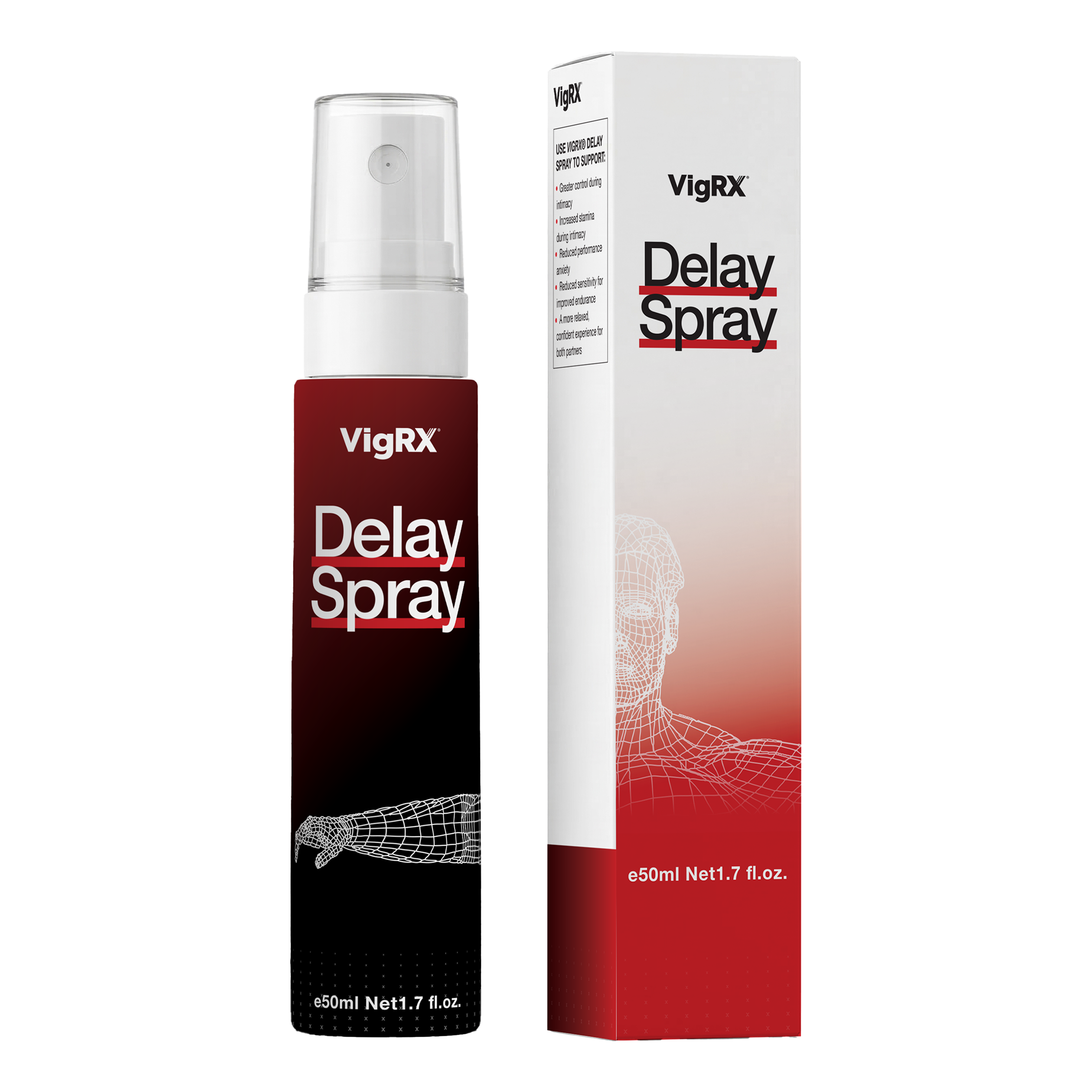
Affiliate disclosure: We sell the benzocaine side of this comparison — VigRX Delay Spray (Our Score 4.5/10), whose active is benzocaine (listed by its maker as Ethyl Aminobenzoate) — through our affiliate link, and earn a commission if you buy it. We sell no lidocaine spray. This comparison is deliberately confined to the two ingredient classes, for a reason stated up front: the maker of our spray publishes no benzocaine percentage, so no strength figure for our own product appears anywhere in this article — and any you have seen elsewhere did not come from the maker.
Quick Verdict: A Comparison of Labels as Much as Molecules
Benzocaine and lidocaine are both local anaesthetics used to dull sensation at the skin, and both anchor real delay products — lidocaine's benchmark in this category is Promescent; benzocaine's includes the spray we sell and a small trial literature in wipe form. But the practical differences a buyer can actually verify are mostly paperwork differences: the lidocaine benchmark prints its strength on its label; our benzocaine spray's maker prints no percentage at all, leaving affiliate pages to invent conflicting ones. Onset and duration, meanwhile, are published — where they are published at all — per product, not per class: our spray's maker directs a 10-minute wait and no duration, and no head-to-head trial of the two classes in this use appears in any material we audited. Choose by what the label in front of you discloses, and treat class-versus-class stopwatch claims, from any site, as marketing wearing a lab coat.
Strength: The Percentages Are Not Interchangeable
The first thing to unlearn is the league-table instinct: a percentage for one anaesthetic does not line up against a percentage for the other. They are different drugs with different potencies per milligram, so a higher printed number does not mean a stronger product across the class line — the figure only means something inside its own class, against other products using the same active. Which makes the second point the operative one: a percentage only helps if it is printed. The lidocaine benchmark's label states its strength, and a buyer can compare it against other lidocaine products on equal terms. For the benzocaine spray we sell, the maker's pages — brand site and parent-company page alike — publish the active's name and no percentage, anywhere. The vacuum has been filled predictably: affiliate and review pages describe this one product, variously, as 7.5% benzocaine, as 10% benzocaine, as "10% lidocaine" (the wrong drug entirely) and as a lidocaine-benzocaine combination. Four incompatible specifications for one bottle, none of them the maker's. A class comparison built on figures like those is built on fog — which is why this article's strength section ends where the paperwork does: within-class, printed percentages are comparable; across classes, and wherever the maker stays silent, they are not.
Onset and Duration: Product Paperwork, Not Class Properties
Comparison sites run dedicated benzocaine-vs-lidocaine head-to-heads, and they tend to assign each class a personality — one faster, one longer. The auditable record is thinner than the personalities. What is actually published, in the material we reviewed, is a patchwork of individual product directions: our benzocaine spray's maker directs application about 10 minutes before intimacy and publishes no duration; the delay category's FAQ literature answers "how long does delay spray last?" with a collective window of roughly 30–60 minutes that spans both classes without separating them; and no trial in the audited material sets a benzocaine product against a lidocaine product for onset or duration in this use. The strongest product-level evidence anywhere in the wider cluster belongs, ironically, to neither spray: a 2019 study of a benzocaine wipe — a stated-strength benzocaine product in a different format — found it noticeably extended time in participants. That is a result about a tested formula at a printed strength, which is precisely the kind of paperwork that makes onset and duration claims meaningful, and precisely what neither spray class's marketing usually offers. Until a maker publishes a strength and a study, "faster" and "longer" are adjectives in search of a label.
These statements have not been evaluated by the Food and Drug Administration. This product is not intended to diagnose, treat, cure, or prevent any disease. This article is educational and is not medical advice.
The Allergy Divide: The One Class Difference With Data
If onset and duration are fog, allergy is the comparison's one firm ground — because the classes are chemically distinct families of anaesthetic, and sensitivity attaches to the family. For benzocaine, the category's literature carries a concrete figure: a patch-test summary reports that about 1.1% of a nearly 2,000-person patch-tested population reacted to benzocaine — a selected population already suspected of skin reactions, so not a general forecast, but a documented reaction class with a number on it. That number is why the omission on our own product's paperwork matters: the maker's parent-company page publishes no allergy warning for its benzocaine spray at all, and goes the other way, assuring readers the product is "generally considered safe" for men with conditions including heart disease, high blood pressure and diabetes — a seller's blanket sentence that our safety audit prints and scores down. The actionable class fact is narrower and more useful than any verdict: a man who knows he reacts to one anaesthetic family should not assume anything about the other, in either direction — cross-sensitivity is a pharmacist's question, and it is the one genuinely class-level decision in this entire comparison. Neither class gets a clean bill from us; one of them gets a documented patch-test figure and a maker who forgot to mention it.
Who Each Class Suits
The lidocaine class suits the buyer who shops by specification. Its benchmark product prints its strength, which makes within-class comparison, dose reasoning and honest reviewing possible — the entire information chain that our benzocaine product breaks. If a printed percentage and the accountability that comes with it top your criteria, the lidocaine shelf is where the category keeps them, and Promescent is its reference point. The benzocaine class suits the buyer already holding a specific product whose label he has read — benzocaine is the older, wider-spread delay active, present across sprays and in the wipe format that carries the cluster's one real study — provided the label actually discloses: a benzocaine product with a printed percentage competes on specification; ours, without one, competes on its directions, its condom claim and its guarantee, and is scored 4.5/10 in full knowledge of the difference. Neither class suits the man with a known local-anaesthetic sensitivity who has not asked a pharmacist which family his history belongs to, nor the man whose real preference is no anaesthetic at all — for him the category's third answer is the botanical one, the benzocaine-free Delay Wipes (Our Score 5.5/10), whose trade is a thinner evidence file for a formula with no drug in it. The format dimension cross-cuts the class one, and is mapped in Delay Spray vs Delay Wipes vs Delay Cream.
Frequently Asked Questions
Which is stronger, benzocaine or lidocaine?
Not answerable as asked — the two are different drugs, and their percentages are not a shared scale. A printed strength is comparable only against other products using the same active. And for the benzocaine spray we sell, the question has a prior problem: its maker publishes no percentage, so its strength is not merely unranked, it is unstated.
Which works faster, and which lasts longer?
No head-to-head trial of the two classes in this use appears in the material we audited, and makers publish timing per product, not per class: our benzocaine spray directs a 10-minute wait and no duration, while the category's FAQ window of roughly 30–60 minutes spans both classes. Sites assigning each class a speed personality are summarising marketing, not measurements.
What percentage is the VigRX Delay Spray?
Its maker does not publish one — not on its brand page, not on its parent company's product page. Figures circulating on affiliate pages (7.5% benzocaine, 10% benzocaine, even "10% lidocaine" and a combination formula) contradict each other and trace to no maker source. We print none of them, here or on the product page, where the gap is recorded as part of its 4.5/10 audit.
If I'm sensitive to one, can I use the other?
The classes are distinct anaesthetic families and sensitivity is family-specific in principle — but "in principle" is where a product page's authority ends. Patch-test data puts benzocaine reactions at about 1.1% in a tested population. Which family your own history implicates, and whether the other is a safe alternative for you, is a question for a pharmacist who knows that history.
Is one class safer overall?
The auditable differences are documentary, not dramatic: benzocaine carries the patch-test figure and, on our product, a maker who publishes no allergy warning; lidocaine's benchmark carries a printed strength that makes its file checkable. Neither maker class publishes a finished-product trial in the material we reviewed for its spray. Safety here is mostly a function of dose discipline and label honesty — audited product by product, as in our buying guide.
Final Verdict
As molecules, benzocaine and lidocaine are near-interchangeable tools with distinct allergy families; as products, they are separated by disclosure. The lidocaine benchmark shows its strength and can be reasoned about; our benzocaine spray withholds its strength and cannot — a difference that outweighs every onset and duration personality the comparison sites assign, none of which rests on a head-to-head measurement in the audited record. Shop the class whose label lets you check it, ask a pharmacist if either family's sensitivity is yours, and read any exact percentage attached to the spray we sell — including any this page could have printed and chose not to — as fiction until its maker publishes one.
Disclaimer: This article is for general information only and is not medical advice. Always consult a qualified healthcare professional before starting any supplement or topical product, especially if you have a medical condition, take prescription medication, or have a known sensitivity to local anaesthetics.
Last reviewed: October 2026
