
- Quick Answer
- Our Findings
- Why You Should Trust This Review
- Our Verdict
- How We Scored It
- What Is GenuinePurity Resveratrol?
- The Ingredients
- Trans-Resveratrol (Micronized) — 500 mg per 2-capsule serving
- The liposomal phospholipid complex
- The rest of the capsule
- The Label Audit: Two Purity Figures on the Website, None on the Label
- The Evidence, Read Properly
- How Long Does It Take to Work?
- Is It Safe?
- Side Effects: What Is Actually Known
- What Resveratrol Cannot Replace: Medical Screening and Prescription Care
- Is It a Scam?
- Price and Packs
- Purchase Options
- How It Compares
- Who Should Buy It — and Who Should Skip It
- Who Should Buy It
- Who Should Skip It
- Frequently Asked Questions
- Does GenuinePurity Resveratrol actually work?
- How pure is it — 98% or 99%?
- How much should I take — 500 mg per capsule or per day?
- Does the liposomal form fix resveratrol's bioavailability problem?
- Is resveratrol safe — and who should not take it?
- Can I take resveratrol with exercise training?
- Resveratrol vs NMN — which should I choose?
- Where can I buy GenuinePurity Resveratrol — is it on Amazon?
- Sources & Method
- Read This Next
SuppChecked is an independent supplement review site. When you buy a product through links on our pages, we may earn a commission at no extra cost to you. Every score, price, and product claim on this page is checked against the maker's official records and the published scientific literature, and brands never pay to change our scores.
Shop for a resveratrol capsule and you land straight between two loud camps. On one side sit the longevity believers who treat resveratrol as the headline anti-aging molecule. On the other sit the sceptics who point out that almost none of the compound reaches human blood unchanged.
GenuinePurity Liposomal Trans-Resveratrol tries to win over both camps with one clean capsule. It puts 500 mg of micronized trans-resveratrol from Japanese knotweed into a liposomal phospholipid complex, backed by a registered US label and a 97-day guarantee.
Then you actually check the records. The daily dose is honestly printed on the bottle's official database filing, yet the maker cannot agree with itself about how pure the extract is. Its store page claims 99% pure, its landing page headlines 98% pure, and the registered label settles the argument by printing no purity figure at all.
Put that unresolved label split next to a small, genuinely mixed human trial record, and this bottle becomes a much harder decision than its marketing suggests.
Quick Answer
GenuinePurity Liposomal Trans-Resveratrol is a single-ingredient longevity capsule from Leading Edge Health delivering 500 mg of micronized trans-resveratrol per two-capsule serving, and it earns 6.5/10. Best for: adults who want a transparent single-ingredient trans-resveratrol with a registered dose, a published Certificate of Analysis policy, and a long refund window to judge it inside.
Two issues hold the score back. First, the maker's own store page prints 99% purity while its landing page headlines 98%, and the registered US label (NIH DSLD 336119) prints no purity percentage at all. Second, the human trial evidence on resveratrol is small and inconsistent, spanning a tiny positive metabolic crossover, a null high-dose trial, and a study where resveratrol blunted the cardiovascular benefits of exercise training.
A single 30-day bottle costs $59 ($1.97 a day), dropping to $43.17 a bottle in a six-pack ($1.44 a day) or $39 a bottle on subscription ($1.30 a day). Every order through the official website carries a 97-day money-back guarantee covering up to two opened bottles plus any unopened ones.
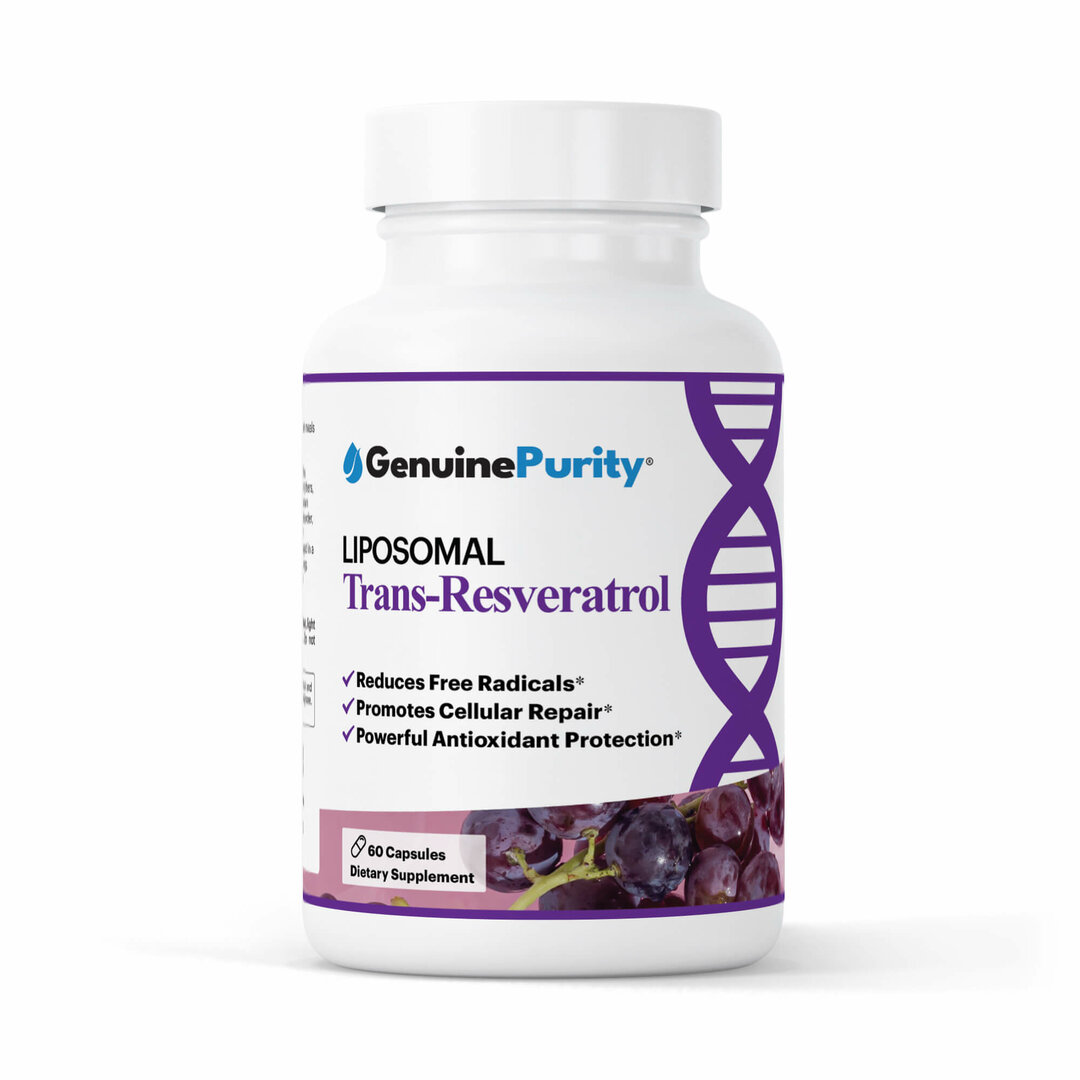
GenuinePurity Liposomal Trans-Resveratrol — Our Score: 6.5/10
Score: 6.5/10 · Sub-scores: Ingredients 7.5 · Evidence 5.0 · Safety 7.0 · Value 6.0 · Best for: Adults who want a single-ingredient trans-resveratrol with the dose and source printed on a registered label, published batch certificates, and a 97-day guarantee to judge it inside · Main caution: The maker states the purity two ways — 99% pure on its store page, 98% on its landing page — while the registered label prints no purity figure at all; and the human evidence for resveratrol is mixed, with one trial finding it blunted the benefits of exercise training · Fair trial: Two bottles ($59 each) — at two capsules a day they last 60 days, inside the 97-day guarantee; decide by about day 85 so a return arrives in time
Our Findings
What we like
- Dose and botanical source printed on a registered label: The NIH Dietary Supplement Label Database record (NIH DSLD 336119) lists 500 mg of micronized trans-resveratrol per two-capsule serving from Polygonum cuspidatum root extract, with no proprietary blend hiding the amount.
- Single-ingredient formula with full capsule disclosure: Every inactive ingredient appears on the registered label, including the vegetarian cellulose shell, sunflower lecithin, phosphatidylcholine, microcrystalline cellulose, silicon dioxide, and vegetable stearate.
- Published third-party Certificate of Analysis policy: The maker states its batches undergo third-party lab testing and makes Certificates of Analysis available as policy, giving cautious buyers a way to verify batch purity directly.
- A 97-day guarantee that fits a real trial: The refund policy covers up to two opened bottles plus unopened ones within 97 days of delivery. Two bottles last 60 days at the label dose, leaving room to evaluate and return before the deadline.
- Transparent subscription pricing: The maker prints its $39-per-bottle Subscribe & Save rate openly on the store page rather than hiding recurring billing terms behind a checkout funnel.
What gives us pause
- Two conflicting purity figures and none on the label: The maker's store page prints "99% Pure Trans-Resveratrol - 500mg", its landing page headlines 98% pure, and the registered bottle label prints no purity percentage at all.
- Store-page wording that invites a double dose: The store page writes that "each capsule" provides clinically studied doses. A quick read can make buyers think each capsule contains 500 mg, doubling the intended 500 mg daily serving to 1,000 mg.
- No published absorption data for the liposomal claim: The maker claims liposomal encapsulation improves uptake and bioavailability, yet publishes no absorption percentage and no delivery study for this capsule. No human trial of liposomal resveratrol exists.
- A small, genuinely mixed human evidence record: Alongside a 30-day crossover trial in 11 obese men at 150 mg a day that improved metabolic markers (Timmers et al., Cell Metabolism 2011), a 4-week placebo-controlled trial in 24 obese men at 1,500 mg a day found no metabolic benefit (Poulsen et al., Diabetes 2013), and an 8-week placebo-controlled trial in 27 older men at 250 mg a day found resveratrol blunted the cardiovascular gains of exercise training (Gliemann et al., Journal of Physiology 2013).
- Priced at the steep end of the maker's own shelf: At $1.30 to $1.97 a day, buyers pay a premium rate for a single polyphenol whose human evidence is thinner and less consistent than other longevity options in the same line.
Why You Should Trust This Review
We read this product’s registered label record in the NIH Dietary Supplement Label Database (NIH DSLD 336119), set the maker’s store page and landing page side by side, and read the published human trials of resveratrol itself before scoring anything. SuppChecked is independent: brands cannot pay for a score, a placement or a kinder verdict, and the commission we may earn through links never changes a number on this page.
Our Verdict
GenuinePurity Liposomal Trans-Resveratrol earns 6.5/10: a well-documented single-ingredient capsule held back by an unreconciled purity claim and the weakest, most inconsistent human evidence across the maker's three main single-ingredient longevity formulas.
Start with what the bottle gets right. The registered US label prints the exact 500 mg daily dose, names Japanese knotweed root extract as the source, uses a vegetarian cellulose shell, and hides nothing inside a blend. Leading Edge Health also backs the product with a written third-party Certificate of Analysis policy and a 97-day refund window that covers two opened bottles.
Now weigh what stops it from scoring higher. The maker claims 99% purity on its store page and 98% on its landing page, while the registered bottle record prints no standardisation figure at all. Add an unmeasured liposomal delivery claim and a human trial record where high-dose metabolic results failed to replicate and exercise adaptations were blunted, and the gap between marketing confidence and clinical certainty is wide.
The bottom line is simple. If you already want a single-ingredient trans-resveratrol capsule and value COA access plus a refund cushion, two single bottles ($59 each, $118 total) give you a clean 60-day trial inside the 97-day guarantee. Mark day 85 on your calendar so any return arrives in time.
How We Scored It
| Category | Score |
|---|---|
| Overall | 6.5/10 |
| Ingredients | 7.5/10 |
| Evidence | 5.0/10 |
| Safety | 7.0/10 |
| Value | 6.0/10 |
Ingredients (7.5/10): A single active ingredient with its exact 500 mg daily dose, botanical source, and full excipient list printed on a registered US label earns solid credit, as does the maker's published COA policy. We dock points because the label prints no purity figure while the maker's own web pages disagree between 98% and 99%, and because the store page's "each capsule" phrasing invites an accidental double dose.
Evidence (5.0/10): No clinical trial has tested GenuinePurity Liposomal Trans-Resveratrol itself, and no published human trial has tested liposomal resveratrol. The underlying human resveratrol record is small and genuinely split: one tiny positive metabolic crossover sits beside a null high-dose trial, an exercise-blunting result in older men, an acute blood-flow study with no cognitive benefit, and pharmacokinetic proof that unchanged resveratrol barely reaches human blood.
Safety (7.0/10): The registered label prints specific, responsible cautions for pregnancy, nursing, under-18s, cardiovascular disorders, low blood pressure, and Parkinson's disease, alongside full facility allergen disclosures. Short human trials show reasonable tolerance at supplement doses, but high-dose trials report nausea, diarrhea, and weight loss, blood-thinner and CYP enzyme interactions require a doctor's check, and long-term daily use remains unstudied.
Value (6.0/10): At $1.30 to $1.97 a day depending on whether you subscribe or buy one bottle at a time, this capsule sits at the pricier end of the maker's own longevity shelf despite carrying the thinnest human evidence of its single-ingredient range. The 97-day refund guarantee — which protects a full 60-day, two-bottle trial — keeps the value score at 6.0.
What Is GenuinePurity Resveratrol?
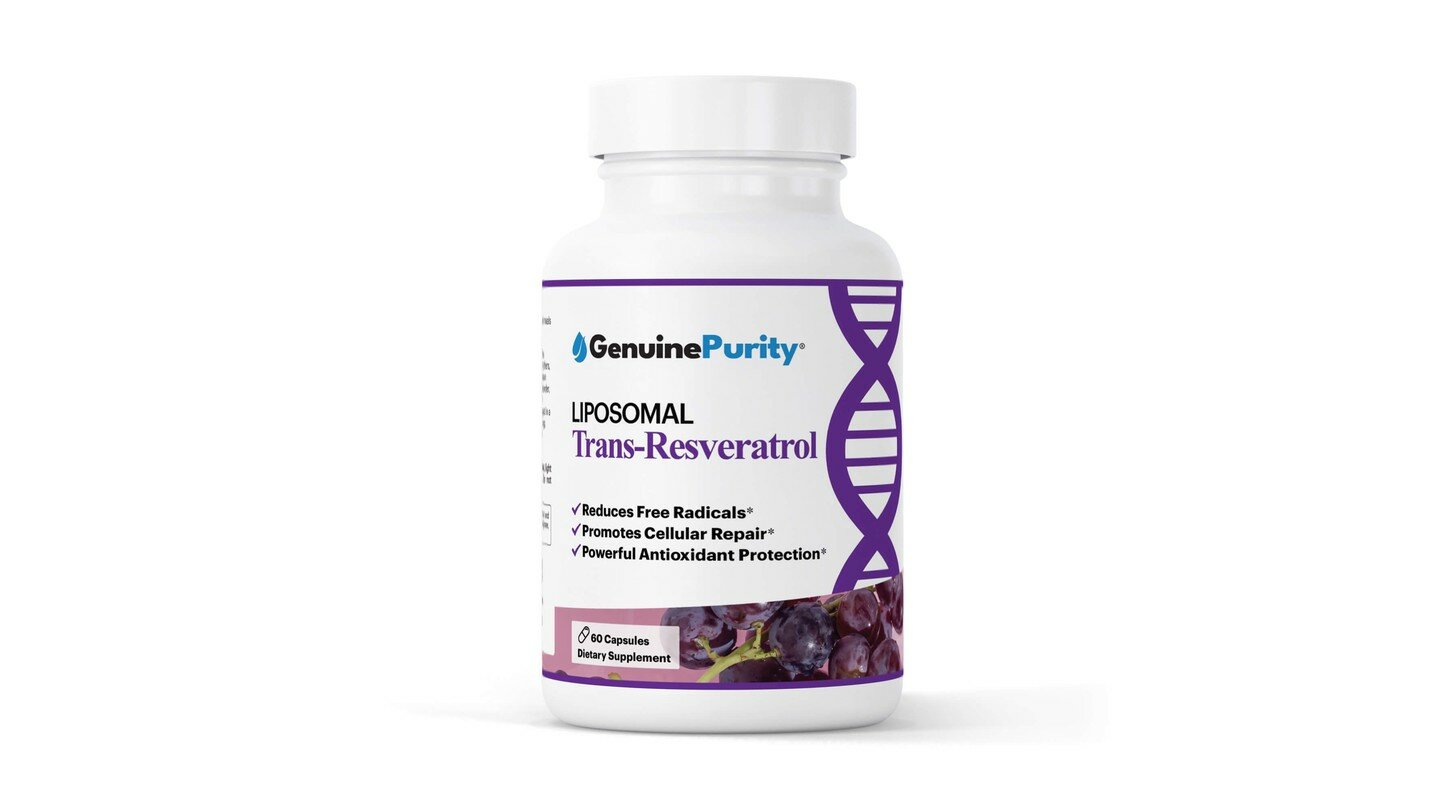
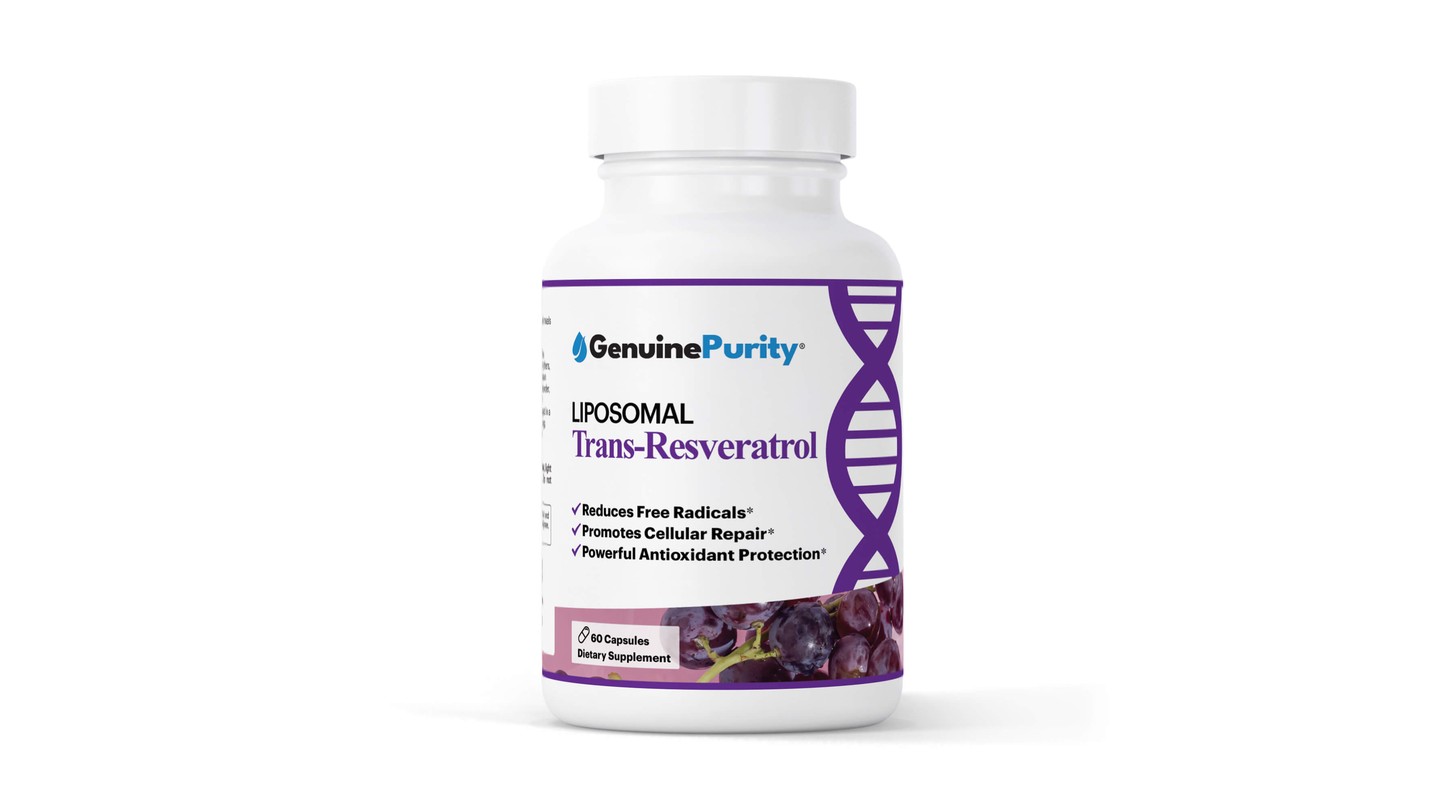
GenuinePurity Liposomal Trans-Resveratrol is a single-ingredient dietary supplement capsule positioned for cellular repair, antioxidant support, and healthy aging. Each bottle contains 60 vegetarian capsules — 30 daily servings of two capsules — delivering 500 mg of micronized trans-resveratrol sourced from Polygonum cuspidatum (Japanese knotweed) root extract inside a liposomal phospholipid complex (NIH DSLD 336119).
The product is sold under the GenuinePurity label by Leading Edge Health. According to the registered US label record, it is distributed by Genuine Purity at 100 Fidelitone Way, Elizabethton, Tennessee 37643, and manufactured in the USA in a Good Manufacturing Practice (GMP) facility (NIH DSLD 336119).
The front of the registered label prints one broad structure-function statement: "Promotes Cellular Repair & The Reduction Of Free Radicals." On its store page, the maker expands those claims considerably, stating that the formula stimulates the cells' natural cleaning process, improves and smooths blood flow, supports healthy cholesterol, and reduces age-related neurological issues. None of those four store-page claims has been tested in a published clinical trial of this product, and the human evidence on plain resveratrol is far more mixed than those headlines imply.
The maker also highlights an endorsement, stating that the formula is recommended by Dr. Dave David. A doctor's recommendation on a brand page tells you who backs the product, not whether the capsule raises active blood levels or changes clinical outcomes in humans.
On quality control, the maker states that batches are third-party lab tested and publishes Certificates of Analysis (COAs) as company policy. One practical shipping note also appears on the maker's page: GenuinePurity states that it recently redesigned the bottle packaging, so orders may arrive in either the older or newer label design while the capsules inside remain identical.
GenuinePurity Resveratrol at a Glance
- Our score: 6.5/10
- Brand: GenuinePurity
- Company: Leading Edge Health
- Product type: Liposomal trans-resveratrol capsule — a polyphenol antioxidant
- Primary purpose: Marketed for cellular repair, antioxidant support and healthy aging
- Formula: Trans-Resveratrol (Micronized), 500 mg per 2-capsule serving, from Polygonum cuspidatum root extract, in a liposomal phospholipid complex
- Clinical research: No published trial of this product; human resveratrol trials used 150–2,000 mg a day for up to 12 months, with mixed results
- Research limitation: The human record is small and inconsistent — one null high-dose trial, one trial where resveratrol blunted exercise benefits, and free resveratrol barely reaches the bloodstream unchanged
- Recommended use: 2 capsules daily, preferably with meals (the bottle label)
- Money-back guarantee: 97 days
The Ingredients
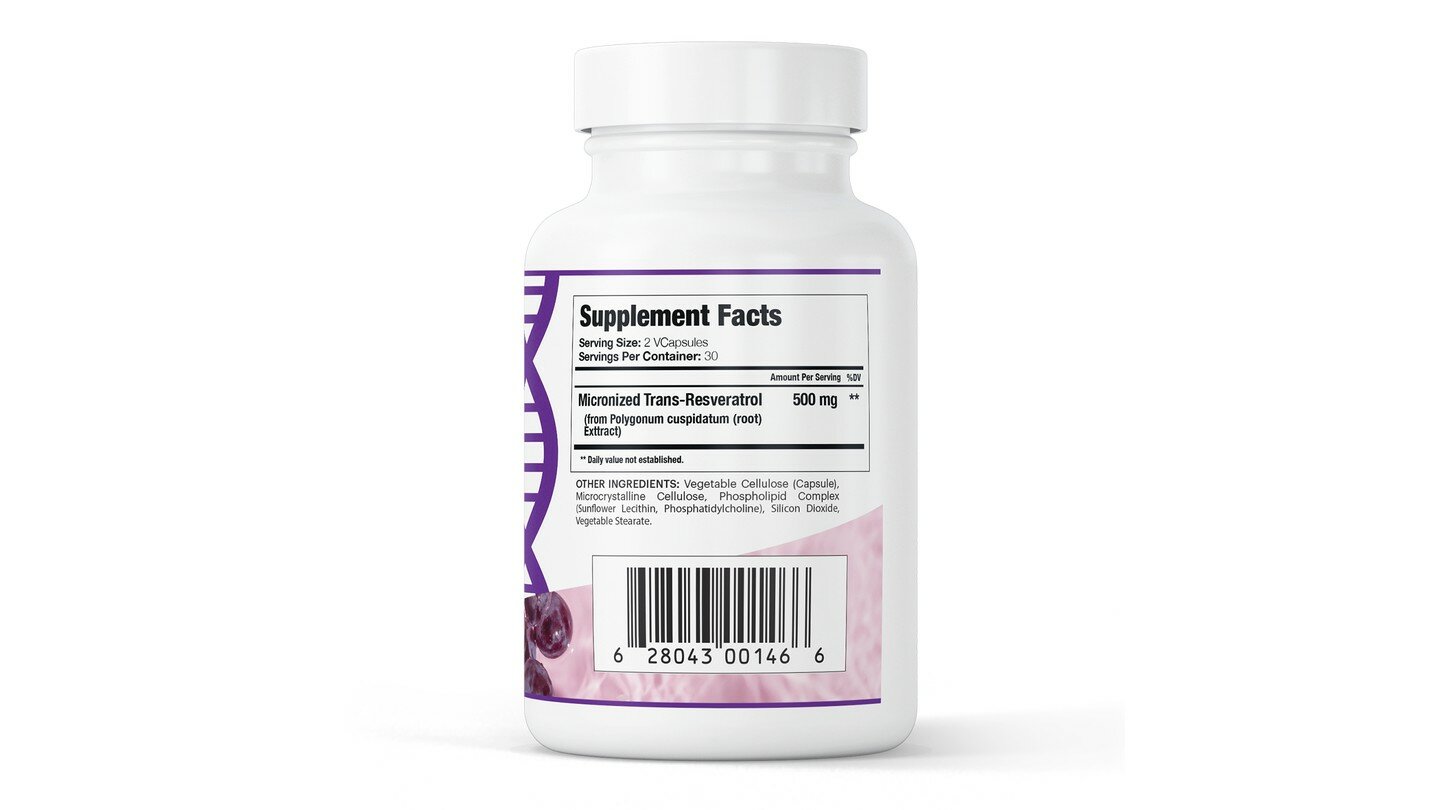
Because no official bottle gallery photographs exist for this product, the registered US label filed in the NIH Dietary Supplement Label Database (NIH DSLD 336119, entered July 24, 2025, UPC 6 28043 00146 6) is the sole verified record of what sits inside the bottle. Reading that panel is refreshingly quick: there is one active ingredient, one exact milligram dose, one named botanical source, and six ordinary inactive ingredients.
That clarity deserves real credit. Many longevity capsules hide resveratrol inside a multi-ingredient proprietary blend where you never learn how many milligrams you actually swallow. Here, the registered panel commits to 500 mg of micronized trans-resveratrol per two-capsule serving, with Daily Value not established.
The one glaring omission on the panel is purity standardisation. The registered label never prints a percentage for the extract, while the maker's own store page and landing page print two different numbers. We unpack that purity split and the serving-size copy trap in full in the label audit next; here, we examine the three functional parts of the capsule itself.
Trans-Resveratrol (Micronized) — 500 mg per 2-capsule serving
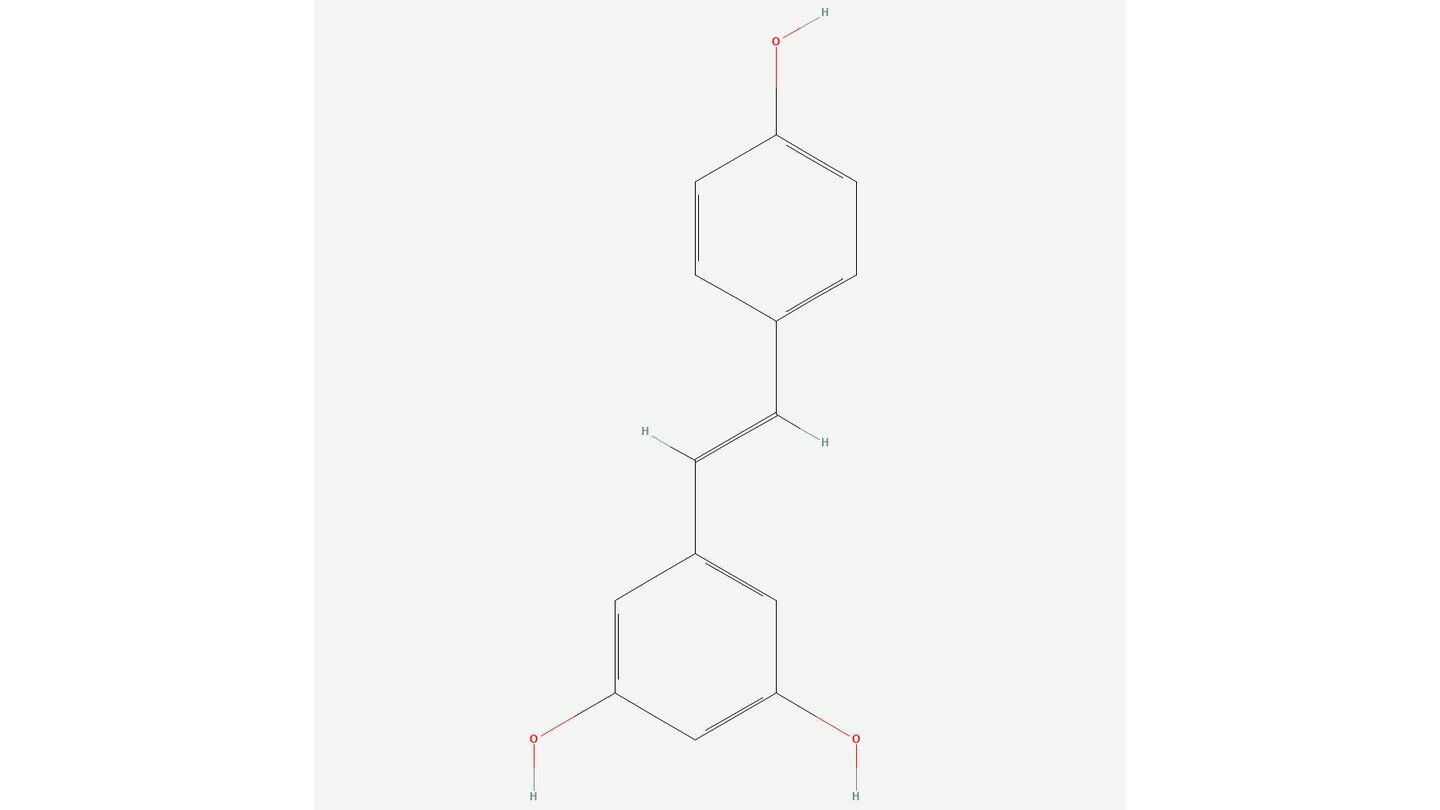
Resveratrol is a naturally occurring polyphenol — a plant compound best known from grape skins, berries, and Japanese knotweed — that acts as an antioxidant in laboratory models. In supplements, chemical geometry matters: resveratrol exists in two mirror forms, cis and trans, and the trans-resveratrol isomer is the form studied in human clinical trials.
GenuinePurity sources its active ingredient from Polygonum cuspidatum (Japanese knotweed) root extract, the standard commercial botanical source for high-dose resveratrol capsules. The label prints 500 mg per two-capsule serving, which equals 250 mg per individual capsule. That 500 mg daily intake sits squarely inside the 150 mg to 2,000 mg daily range tested across published human studies, though higher doses have not consistently produced better results.
The registered panel also describes the powder as "Micronized." In supplement manufacturing, micronizing grinds a raw compound into much smaller particles to improve powder handling and dispersion in fluid. While particle-size reduction is a common formulation tactic for poorly soluble polyphenols, the maker publishes no human absorption study testing whether this micronized powder raises unchanged blood resveratrol compared with standard resveratrol.
Then there is the purity question, stated plainly. The registered label (NIH DSLD 336119) prints no purity or standardisation percentage anywhere on the panel. Meanwhile, the maker's store page claims 99% pure trans-resveratrol and its landing page claims 98% pure. Both figures belong strictly to the maker's web copy, and we cannot verify either number from the bottle's official label record alone.
The liposomal phospholipid complex
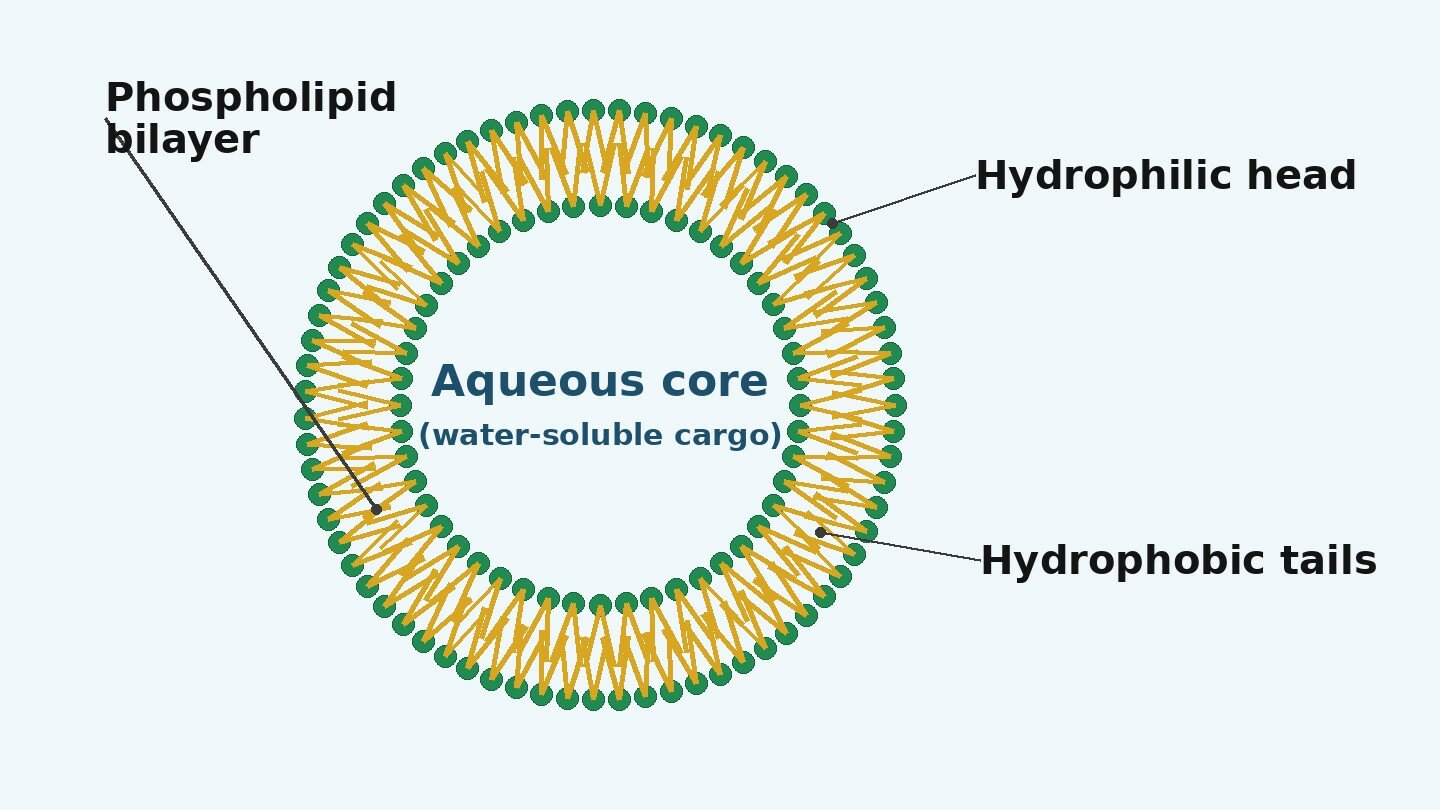
Open the Other Ingredients line on NIH DSLD 336119 and you find two lipid ingredients: sunflower lecithin and phosphatidylcholine. Together, those phospholipids form the basis of what the maker markets as a liposomal delivery system.
Liposomes are microscopic spheres made from phospholipid layers similar to human cell membranes. In theory, wrapping a fat-friendly compound like resveratrol in phospholipids may protect it through the digestive tract and aid uptake across the gut wall. The maker leans hard on this concept, stating on its store page that liposomal encapsulation is designed "to guarantee optimal absorption and cellular effectiveness" and to improve uptake and bioavailability.
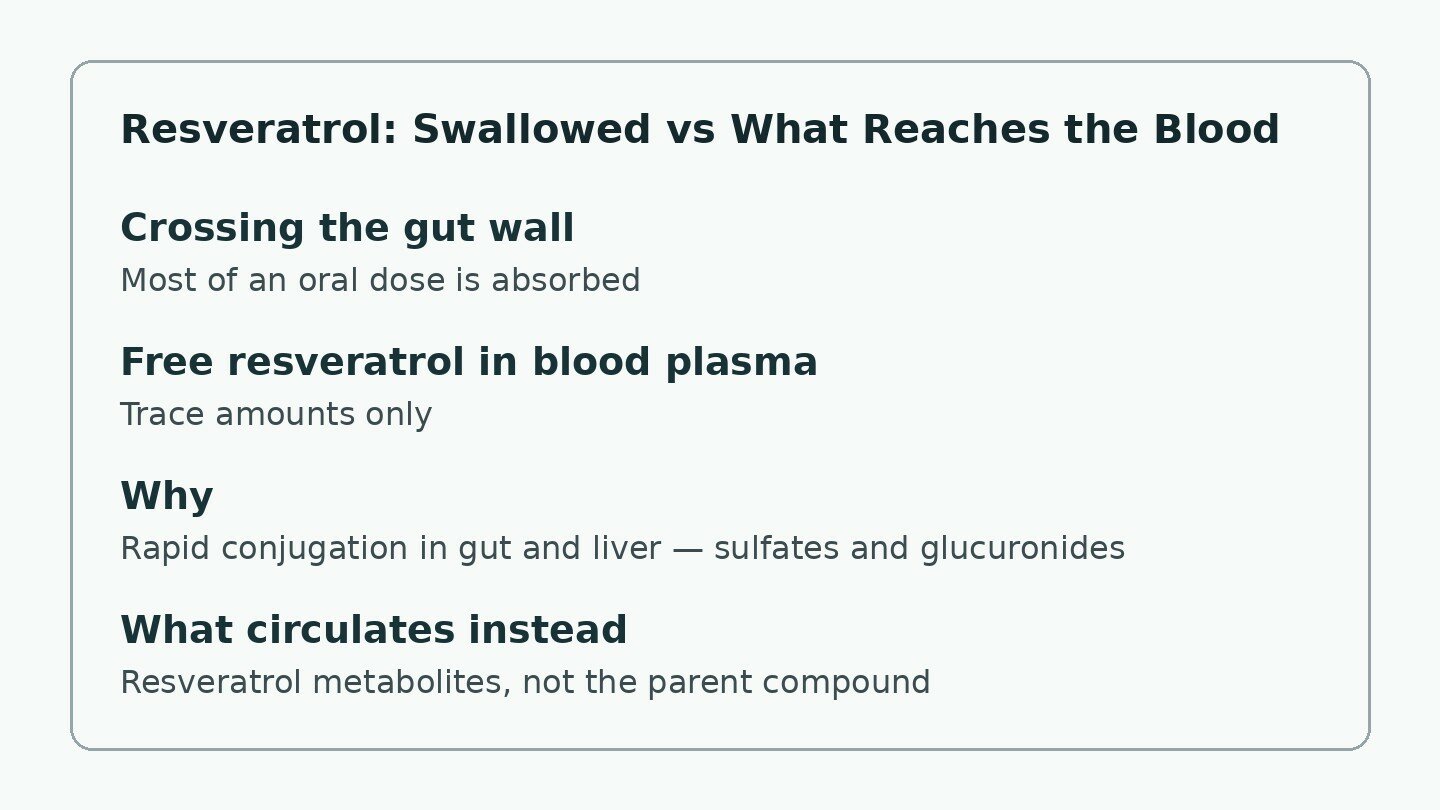
Why do resveratrol makers focus so heavily on delivery? Because human pharmacokinetic data reveals a severe bottleneck. In a foundational human study measuring a 25 mg oral dose, at least 70% of the resveratrol was absorbed across the gut, yet unchanged free resveratrol in blood plasma appeared only in trace amounts under 5 ng/ml because the gut and liver rapidly converted it into sulfate and glucuronide metabolites (Walle et al., Drug Metabolism and Disposition 2004).
Here is the honest limit of GenuinePurity's liposomal claim. First, the registered label lists sunflower lecithin and phosphatidylcholine only as inactive ingredients without printing their milligram amounts, which is normal for excipients but gives no clue to the lipid-to-resveratrol ratio. Second, the maker publishes no absorption percentage and no delivery study for this finished capsule. Third, no published human clinical trial has tested liposomal resveratrol at all, so whether this phospholipid complex meaningfully raises free blood resveratrol remains unproven.
The rest of the capsule
Outside the active polyphenol and the two phospholipids, the registered label (NIH DSLD 336119) lists four standard capsule excipients: cellulose, microcrystalline cellulose, silicon dioxide, and vegetable stearate (printed as stearate on the database entry).
Cellulose forms the outer shell of the "VCapsules" listed in the serving-size line. That means the product uses a plant-based vegetarian capsule rather than animal-derived gelatin, a clear plus for vegetarian buyers or anyone avoiding bovine or porcine gelatin shells.
The remaining three ingredients serve routine manufacturing roles. Microcrystalline cellulose acts as an inert plant-fibre filler so each capsule fills evenly. Silicon dioxide prevents powder clumping during encapsulation, and vegetable stearate helps the powder flow cleanly through high-speed capsule machines. None of these excipients are unusual, and the label contains no synthetic colourings or hidden fillers.
Two practical label notes sit right beneath the ingredient list. First, the registered label includes a broad facility allergen warning stating that the manufacturing plant also processes milk, soy, wheat, egg, peanuts, tree nuts, fish, and crustacean shellfish — essential reading if you manage severe food allergies. Second, the label specifies storage between 15 and 30 °C, which is standard room temperature away from bathroom humidity or direct heat.
The Label Audit: Two Purity Figures on the Website, None on the Label
Most supplement reviews copy whatever percentage sits in the brand's headline and move on. When we audited GenuinePurity Liposomal Trans-Resveratrol, we placed three live records side by side: the registered US bottle label (NIH DSLD 336119), the maker's official store page (read November 2026), and the maker's product landing page.
Because no official bottle gallery images exist for this product, the NIH database filing is the sole authoritative anchor for what actually prints on the container. Comparing that filing against the maker's two sales pages exposes two separate inconsistencies: an unresolved purity split and a serving-size sentence that invites buyers to double their dose.
| Label item | Registered label (NIH DSLD) | The maker's store page | The maker's landing page |
|---|---|---|---|
| Daily dose | 500 mg per 2 capsules | 500 mg | 500 mg |
| Purity figure | None printed | 99% pure | 98% pure |
| Directions | "2 capsules daily preferably with meals" | "Take 2 capsules per day, preferably with food" | — |
| The per-capsule sentence | Defines the serving as two capsules | "Each capsule … provides you with clinically studied doses" — a careless read doubles the dose to 1,000 mg a day | — |
Start with the purity conflict. On its official store page, GenuinePurity prints "99% Pure Trans-Resveratrol - 500mg." On its landing page, the same brand headlines 98% pure trans-resveratrol. Turn to the registered bottle label filed with the NIH, and both figures vanish: the panel prints "Trans-Resveratrol, Micronized — 500 mg" from Polygonum cuspidatum root extract, with no purity percentage anywhere.
Is a one-point difference between 98% and 99% a health hazard? No. Still, it is a textbook quality-control oversight in the maker's own copy, and it leaves buyers with no bottle-level guarantee of which purity specification applies to the batch in their hand.
The second issue carries a more practical risk for daily dosing. The store page writes: "Each capsule of Liposomal Trans-Resveratrol provides you with clinically studied doses." Read that line quickly alongside the 500 mg headline, and it sounds as though each single capsule contains 500 mg — meaning two capsules a day would equal 1,000 mg. Both the registered label (NIH DSLD 336119) and the maker's own blog confirm that 500 mg is the full daily serving across two capsules, or 250 mg per capsule.
Third-party review sites have mostly recycled the older landing-page copy without checking the bottle record. Major reviewers — including Consumer Health Digest, Glozine, and PerformanceInsiders — print 98% purity as settled fact, missing both the store page's 99% figure and the label's silence.
In our audit, Consumer Health Digest also introduced factual errors of its own beyond the purity figure. Its review lists a "90-day refund period" among its pros when the maker's published guarantee is actually 97 days, names a "distribution centre in Las Vegas, Nevada" when the registered label prints Elizabethton, Tennessee, and cites a six-bottle price of $258 rather than $259. Those are reviewer mistakes, not official terms.
So how should a buyer settle the purity question? GenuinePurity's own published Certificate of Analysis policy is the answer. Because the registered label prints no standardisation figure and the website states two different numbers, asking the maker for the current batch's third-party COA is the only concrete way to verify what purity tested out in the lot you buy.
The Evidence, Read Properly
Before judging GenuinePurity Liposomal Trans-Resveratrol, start with one blunt fact: no published human trial has tested this finished capsule. No published human trial has tested liposomal resveratrol from any brand either. Every claim about what this bottle might do rests on human trials of standard oral resveratrol — and that record is far more complicated than supplement headlines suggest.
The first hurdle is bioavailability. In a foundational human pharmacokinetic study using a dietary 25 mg oral dose, at least 70% of the resveratrol crossed the gut wall, yet unchanged free resveratrol in blood plasma appeared only in trace amounts under 5 ng/ml because the body rapidly attached sulfate and glucuronide tags to it (Walle et al., Drug Metabolism and Disposition 2004). Swallowing resveratrol is easy; getting unchanged resveratrol into human circulation is the hard part.
The best-known positive metabolic result came from a randomized, double-blind crossover trial in 11 healthy obese men taking 150 mg of resveratrol (resVida) a day for 30 days (Timmers et al., Cell Metabolism 2011). Systolic blood pressure dropped, the HOMA insulin-sensitivity index improved, and blood glucose, triglycerides, and liver fat fell. Those findings sparked huge excitement, yet the study enrolled only 11 men in one population for a single month.
A larger, higher-dose follow-up failed to repeat those gains. In a double-blind, placebo-controlled parallel trial of 24 obese but otherwise healthy men given 1,500 mg of resveratrol a day (500 mg three times daily) for 4 weeks, insulin sensitivity did not change (Poulsen et al., Diabetes 2013). Blood pressure, energy expenditure, lipid oxidation, body fat, and inflammatory or metabolic biomarkers all stayed flat, leading the authors to write that this lack of effect raises doubt about resveratrol as a human nutritional supplement in metabolic disorders.
For active adults, a third study raises an even sharper question. In a placebo-controlled trial of 27 older men — 14 on resveratrol and 13 on placebo — taking 250 mg a day for 8 weeks alongside high-intensity exercise training, resveratrol blunted the positive cardiovascular effects of the training itself, while the vascular marker VCAM-1 remained unchanged (Gliemann et al., Journal of Physiology 2013). That conclusion came directly from the trial's authors, not from critics on the sidelines.
Brain blood flow tells a narrower story. In a double-blind, placebo-controlled crossover trial of 22 healthy adults given single doses of 250 mg and 500 mg, cerebral blood flow rose in a dose-dependent way during mental tasks (Kennedy et al., American Journal of Clinical Nutrition 2010). Even so, the researchers reported clearly that cognitive function was not affected. Better measured blood flow on a scan did not translate into sharper task performance.
The largest and longest trial looked at neurological decline at much higher doses. In a 52-week phase 2 double-blind, placebo-controlled trial of 119 people with mild-to-moderate Alzheimer disease, participants started at 500 mg a day and escalated by 500 mg every 13 weeks up to 2,000 mg a day (1,000 mg twice daily) (Turner et al., Neurology 2015). The most common adverse events were nausea, diarrhea, and weight loss, and brain volume loss actually increased on resveratrol compared with placebo.
Now line those six papers up against GenuinePurity's 500 mg daily dose and its store-page claims. On paper, 500 mg a day sits inside the 150 mg to 2,000 mg range tested across human studies, matching the higher single dose in Kennedy's blood-flow study and double the daily dose in Gliemann's exercise trial. Yet more milligrams never guaranteed better outcomes: 150 mg moved metabolic markers in 11 men, while 1,500 mg moved nothing in 24 men.
Compare that record with the maker's four store-page promises: stimulating cellular cleaning, improving blood flow, supporting healthy cholesterol, and reducing age-related neurological issues. Only acute cerebral blood flow has a direct human match at 500 mg, without any cognitive gain. Metabolic lipids improved in one tiny 30-day crossover and stayed unchanged in a larger 4-week trial, while the 52-week Alzheimer study reported greater brain volume loss on resveratrol alongside stomach side effects.
What about the liposomal delivery claim? Because the maker publishes no absorption percentage and no delivery study for this capsule, and no human trial of liposomal resveratrol exists, buyers cannot assume this formula solves Walle's plasma-level bottleneck. Adding phospholipids is plausible formulation work, not proven pharmacokinetics.
Step back and look at the entire human record without hype. There is no clinical trial of GenuinePurity Liposomal Trans-Resveratrol, no human trial of liposomal resveratrol, and a scattered set of human studies spanning 150 mg to 2,000 mg a day whose outcomes simply do not line up. The honest verdict on resveratrol in humans is unproven, not disproven, and not consistent.
How Long Does It Take to Work?
GenuinePurity makes no specific timeline promise for this product. Its store page does not tell you to expect results in two weeks, four weeks, or three months, which is honest enough given how little human consensus exists on resveratrol.
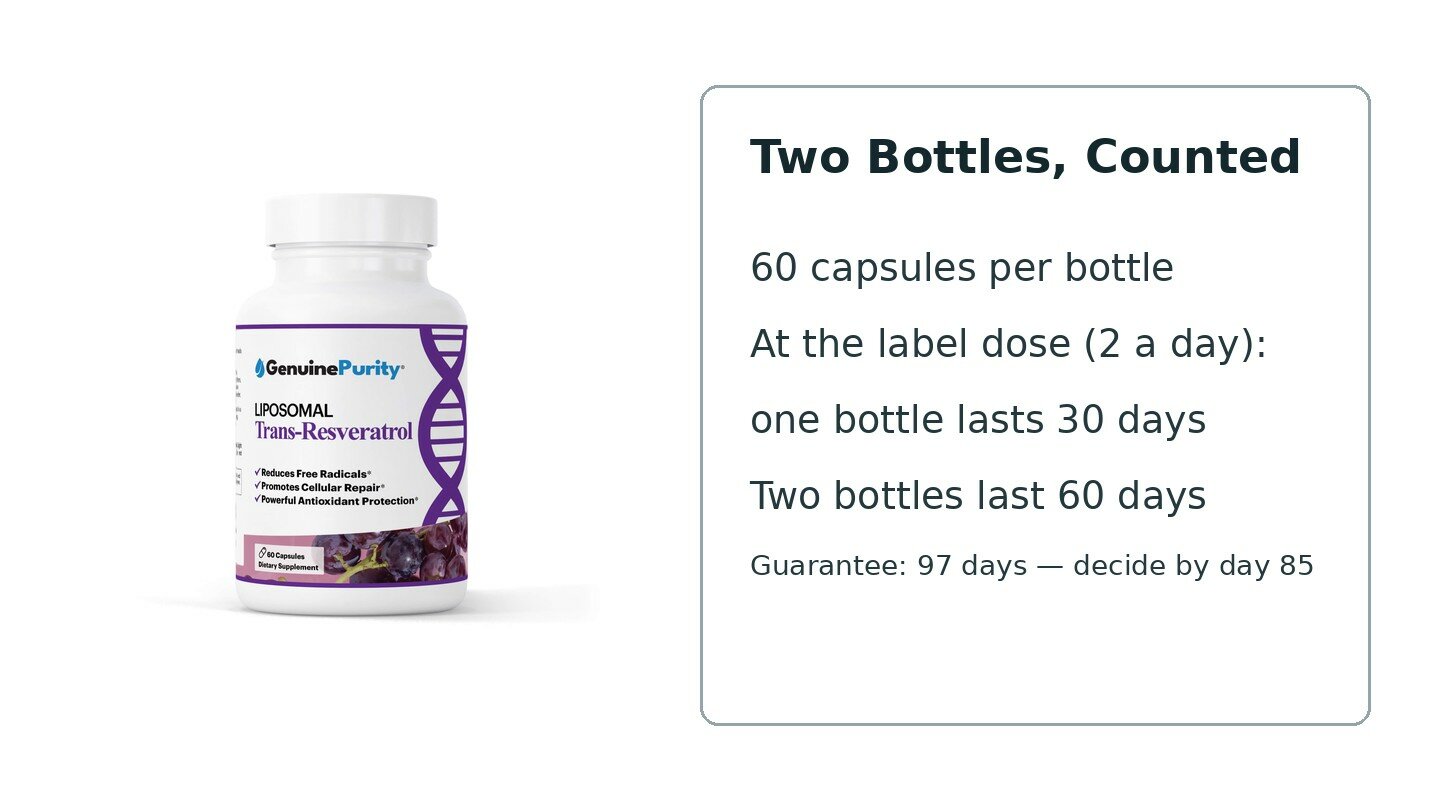
Daily use starts with reading the bottle rather than the store blurb. The registered label (NIH DSLD 336119) directs adults to take 2 capsules daily, preferably with meals, delivering 500 mg in total. Taking the capsules with food aligns with both the printed directions and the capsule's phospholipid complex.
If you look to human trials for realistic timescales, the windows vary widely by endpoint. Short metabolic studies ran 30 days in 11 obese men at 150 mg a day (Timmers et al., Cell Metabolism 2011) and 4 weeks in 24 obese men at 1,500 mg a day with null results (Poulsen et al., Diabetes 2013). Exercise interaction testing ran 8 weeks in 27 older men at 250 mg a day (Gliemann et al., Journal of Physiology 2013), while the phase 2 Alzheimer safety trial ran a full 52 weeks in 119 participants (Turner et al., Neurology 2015).
One nuance matters for expectations. In Kennedy's crossover trial of 22 healthy adults, cerebral blood flow shifted after single 250 mg and 500 mg doses (Kennedy et al., American Journal of Clinical Nutrition 2010), yet cognitive function did not change. An acute blood-flow shift on lab equipment is not something you feel as sharper focus on day one.
Resveratrol is not a stimulant, a pain reliever, or a quick-acting symptom pill. Most buyers who try it are betting on long-term cellular and antioxidant support rather than a sensation they can feel in a few days.
That makes the guarantee window your most practical timeline. One bottle lasts 30 days at two capsules daily, so two bottles give you 60 full days of steady use inside the maker's 97-day money-back guarantee. Set a reminder for about day 85 to decide whether the bottle earns a place in your routine, leaving plenty of shipping time for a return to arrive before day 97.
Is It Safe?
Safety starts with the warnings printed directly on the registered US label (NIH DSLD 336119). Unlike many longevity supplements that carry only a vague one-line disclaimer, this bottle names specific groups who should stay away.
According to the registered label, GenuinePurity Liposomal Trans-Resveratrol is not for pregnant or nursing mothers, and not for children under 18. It also advises against use by anyone with a known medical condition — specifically naming any cardiovascular disorder, hypotension (low blood pressure), and Parkinson's disease.
Those three named conditions deserve close attention. Because human studies have examined blood pressure and vascular pathways, and because low blood pressure is flagged right on the bottle, anyone managing heart disease, blood-pressure swings, or neurological conditions needs a doctor's clearance before touching resveratrol.
Food allergies are another check printed on the registered panel. Although the active capsule uses vegetarian cellulose and contains no gelatin, the label discloses that the manufacturing facility also processes milk, soy, wheat, egg, peanuts, tree nuts, fish, and crustacean shellfish (NIH DSLD 336119). Anyone with severe allergies to those foods should weigh cross-contact risk carefully.
Outside the label itself, the maker's own blog publishes consult-first guidance advising pregnant or breastfeeding women, children, and anyone taking medication to talk to a healthcare professional before starting resveratrol. On manufacturing standards, the registered label states the product is made in the USA in a GMP facility and should be stored between 15 and 30 °C.
One last safety habit comes back to our label audit. Follow the registered bottle's directions — two capsules daily for 500 mg total — and ignore any hasty reading of the store page's "each capsule" sentence that could push you to double the dose to 1,000 mg a day.
Side Effects: What Is Actually Known

At standard supplement-range doses of 150 mg to 500 mg a day, short human trials generally report that resveratrol is well tolerated. Most participants in studies lasting from a single day up to 8 weeks completed dosing without severe side effects.
That tolerance picture shifts as doses climb and treatment stretches out. In the 52-week phase 2 double-blind, placebo-controlled trial of 119 people with mild-to-moderate Alzheimer disease escalating up to 2,000 mg a day, the most common adverse events were gastrointestinal and weight-related: nausea, diarrhea, and weight loss (Turner et al., Neurology 2015). The trial also reported increased brain volume loss in the resveratrol group compared with placebo, a finding researchers noted carefully rather than brushing aside.
Drug interactions are the main everyday risk for adults on prescriptions. Standard clinical caution flags that resveratrol may interact with anticoagulant (blood-thinning) medicines and with prescription drugs broken down by CYP liver enzymes. If you take any blood thinner or regular prescription medication, check with your doctor or pharmacist before adding a 500 mg resveratrol capsule.
Active adults also face a functional downside that belongs on any side-effect checklist. As covered in The Evidence, Read Properly above, an 8-week placebo-controlled trial in 27 older men taking 250 mg a day found that resveratrol blunted the cardiovascular benefits of high-intensity exercise training (Gliemann et al., Journal of Physiology 2013). If regular cardio training is a pillar of your health plan, taking resveratrol alongside it may work against your effort.
Finally, long-term daily use beyond the studied trial windows remains unstudied in humans. Because no human trial has evaluated liposomal resveratrol over months or years, you cannot assume multi-year daily dosing carries zero risk. Stop taking the capsule and speak with a doctor if you notice persistent nausea or diarrhea, unusual bruising or bleeding, light-headedness from low blood pressure, or any new symptom while on prescription care.
What Resveratrol Cannot Replace: Medical Screening and Prescription Care
GenuinePurity Liposomal Trans-Resveratrol is a dietary supplement, not a treatment for high cholesterol, high blood pressure, heart disease, metabolic disorders, or age-related memory decline. Despite the maker's store-page references to blood flow, healthy cholesterol, and neurological health, no polyphenol capsule replaces clinically proven prescription options — such as standard cholesterol-lowering, blood-pressure, or metabolic medicines prescribed alongside monitored lifestyle care. If you have concerns about blood lipids, blood pressure, circulation, or cognitive changes, start with a doctor's evaluation and proper lab testing so underlying medical issues are diagnosed rather than masked.
Is It a Scam?
No — GenuinePurity Liposomal Trans-Resveratrol is not a scam. It is a real supplement from an established company with a frustrating marketing inconsistency sitting right at its centre.
Look first at the legitimacy checks it passes cleanly. The bottle has a live, verifiable US supplement label on file in the NIH Dietary Supplement Label Database (NIH DSLD 336119, UPC 6 28043 00146 6). That record names a real US business address — Genuine Purity, 100 Fidelitone Way, Elizabethton, Tennessee 37643 — under Leading Edge Health, and specifies US GMP manufacturing.
The commercial terms are equally transparent. GenuinePurity publishes its third-party Certificate of Analysis policy, prints a written 97-day money-back guarantee covering up to two opened bottles plus unopened ones, and states its $39 Subscribe & Save rate openly on the store page rather than hiding recurring billing in fine print. It even discloses its recent packaging redesign up front so buyers are not alarmed if an older or newer label design arrives.
So why do sceptics hesitate? Because legitimate brands still cut corners in sales copy. Stating 99% purity on the store page, headlining 98% purity on the landing page, and printing no purity percentage on the registered bottle label is sloppy quality control. Writing that "each capsule" delivers clinically studied doses invites a double-dose misread, and claiming liposomal absorption benefits without publishing a single absorption percentage asks buyers to take the delivery pitch on faith.
You will also find inflated praise and sloppy errors across third-party review sites, including reviewers printing 98% as settled fact or misstating the refund window as 90 days and the hub as Las Vegas. We never quote unverified star ratings or anonymous reviews. Judge this bottle on its audited facts: a legitimate, real product with overconfident copy and mixed science, not a fraudulent operation.
Price and Packs
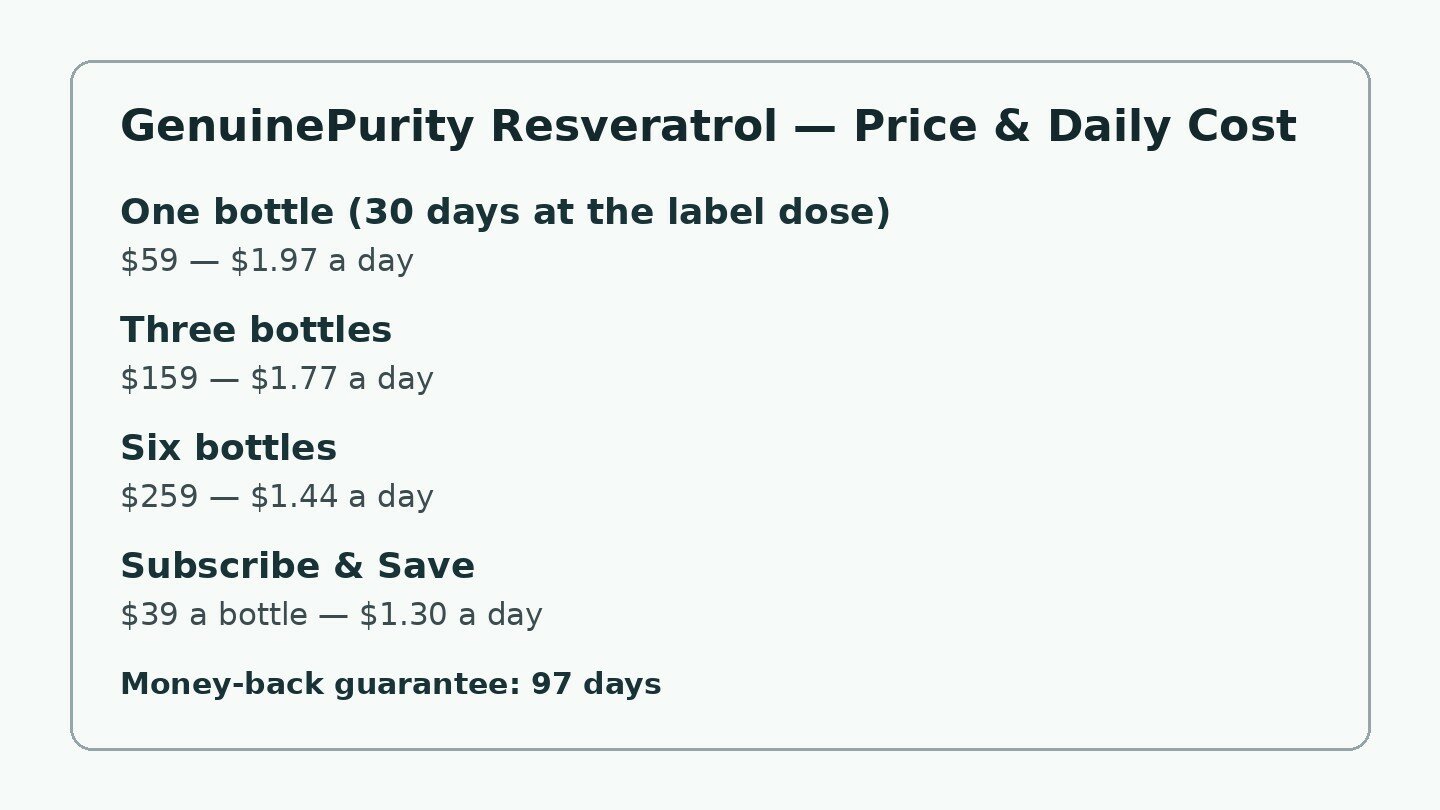
GenuinePurity sells Liposomal Trans-Resveratrol in three one-time bundle tiers plus a recurring monthly subscription on its official store page. Each bottle holds 60 capsules, which equals exactly 30 days at the registered label dose of two capsules daily.
| Purchase option | Total price | Price per bottle | Supply length | Cost per day |
|---|---|---|---|---|
| 1 bottle (one-time) | $59.00 | $59.00 | 30 days | $1.97 |
| 3 bottles (one-time) | $159.00 | $53.00 | 90 days | $1.77 |
| 6 bottles (one-time) | $259.00 | $43.17 | 180 days | $1.44 |
| Subscribe & Save (every 30 days) | $39.00 / month | $39.00 | 30 days | $1.30 |
Across those four tiers, the daily cost runs from $1.30 to $1.97 a day. That places this bottle at the expensive end of GenuinePurity's own longevity shelf — a noticeable premium for a single polyphenol whose human clinical evidence is thin and split.
The biggest single price swing sits between the one-time single bottle ($59) and Subscribe & Save ($39 every 30 days). Subscription knocks $20 off each bottle — about a third off the single-bottle rate — and even beats the six-bottle bulk tier ($43.17 per bottle) without requiring a $259 upfront outlay.
Now run the guarantee maths before choosing a pack. GenuinePurity's 97-day money-back guarantee refunds the full purchase price for your first two opened containers plus any unopened containers, provided your return arrives within 97 days of delivery. Shipping charges are excluded, and the guarantee covers one order per customer.
That policy points straight to a smart fair trial. Two single bottles cost $118 ($59 each) and last 60 days at two capsules daily — giving you two full months inside the 97-day window while keeping both opened bottles covered. Decide by about day 85 so a return reaches the company before day 97. Buying six bottles up front only makes sense if you already know resveratrol fits your plan.
Purchase Options
GenuinePurity Liposomal Trans-Resveratrol is sold via the official website, where the audited one-time packs, the $39 monthly Subscribe & Save tier, and the 97-day money-back guarantee apply. Ordering directly from the maker also ensures you can request the current batch's third-party Certificate of Analysis if you want to verify purity before opening the seal.
Run four quick checks before clicking checkout:
- Pick one-time or subscription on purpose: Because the gap between a single one-time bottle ($59) and Subscribe & Save ($39 every 30 days) is roughly a third, double-check which option is selected before paying.
- Keep your delivery date: The 97-day return clock starts at delivery, not the order date, and your return must arrive within 97 days (decide by about day 85).
- Expect either bottle design: GenuinePurity notes a recent packaging redesign, so your order may ship in either the older or newer label while containing the identical capsule.
- Request the batch COA if purity matters: Since the registered label prints no purity figure, ask customer support for the third-party certificate matching your bottle's lot.
How It Compares
Buyers looking at GenuinePurity rarely look at resveratrol in isolation. Most weigh it against two other longevity products sitting on the exact same GenuinePurity shelf: GenuinePurity NMN and GenuinePurity Longevity Plus.
| Product | Our score | Formula job | Main trade-off |
|---|---|---|---|
| GenuinePurity Resveratrol (this review) | 6.5/10 | Single antioxidant polyphenol (500 mg micronized trans-resveratrol per 2-capsule serving) | Purity figure conflicts across maker pages and is absent on the label; human trial record is mixed |
| GenuinePurity NMN | 7.0/10 | Single NAD+ precursor | Targets a different cellular pathway (NAD+ metabolism rather than polyphenol antioxidant support) |
| GenuinePurity Longevity Plus | 6.5/10 | Multi-ingredient longevity stack | Combined blend rather than a single isolated ingredient you can dose or drop on its own |
These three bottles do genuinely different jobs, so choosing between them depends on what bet you want to make. GenuinePurity Resveratrol (6.5/10) is a single antioxidant polyphenol for buyers who specifically want isolated trans-resveratrol and accept its mixed human trial record and label-purity gap. GenuinePurity NMN (7.0/10) targets NAD+ precursor pathways instead of polyphenol signalling, making it a different biological bet altogether. GenuinePurity Longevity Plus (6.5/10) suits buyers who prefer a combined multi-ingredient longevity stack in one bottle rather than piecing together single-ingredient capsules one by one.
Who Should Buy It — and Who Should Skip It
Who Should Buy It
- Buyers who want one clearly dosed trans-resveratrol capsule: If you specifically want 500 mg of micronized trans-resveratrol from Japanese knotweed with no proprietary blend and a full excipient list on a registered US label, this bottle delivers clean dose disclosure — and the 97-day guarantee lets you test two bottles over 60 days.
- Buyers who value third-party COA access: GenuinePurity publishes Certificates of Analysis as company policy, giving detail-minded shoppers a concrete batch document to request rather than taking website claims on trust.
- Vegetarian-capsule buyers: The registered label specifies plant-based cellulose VCapsules with no animal gelatin.
Who Should Skip It
- Anyone expecting the purity question to be settled on the bottle: It is not. The store page says 99%, the landing page says 98%, and the registered label prints no purity figure at all.
- Anyone training hard for cardiovascular fitness: If you weigh the Gliemann 2013 trial showing 250 mg a day blunted exercise-training cardiovascular gains in older men, taking daily resveratrol alongside hard cardio is a questionable trade-off.
- Anyone on blood thinners, CYP-metabolised drugs, or listed caution conditions: Skip it unless your doctor approves it first — especially if you take anticoagulants or regular prescriptions, or if you are pregnant, nursing, under 18, or have a cardiovascular disorder, low blood pressure, or Parkinson's disease.
- Anyone looking for a quick, felt effect: Human resveratrol trials measured blood, liver, and blood-flow markers rather than rapid felt energy, and results across studies are inconsistent.
Frequently Asked Questions
Does GenuinePurity Resveratrol actually work?
No published clinical trial has tested GenuinePurity Liposomal Trans-Resveratrol itself, and human studies on plain resveratrol are genuinely mixed. A 30-day crossover trial in 11 obese men at 150 mg a day improved blood pressure, insulin sensitivity, glucose, triglycerides, and liver fat (Timmers et al., Cell Metabolism 2011), yet a 4-week placebo-controlled trial in 24 obese men at 1,500 mg a day found no metabolic benefit at all (Poulsen et al., Diabetes 2013). Meanwhile, an 8-week trial in 27 older men at 250 mg a day found resveratrol blunted cardiovascular gains from exercise training (Gliemann et al., Journal of Physiology 2013). The honest answer is unproven, not disproven, and inconsistent.
How pure is it — 98% or 99%?
The maker's own pages do not agree, and the bottle's official label does not settle it. GenuinePurity's store page prints "99% Pure Trans-Resveratrol - 500mg," while its landing page headlines 98% pure. Turn to the registered US label (NIH DSLD 336119), and no purity percentage appears anywhere on the panel. Because we cannot verify either percentage from the bottle record alone, your best step is requesting the current batch's third-party Certificate of Analysis directly from the maker.
How much should I take — 500 mg per capsule or per day?
Take 500 mg per day across two capsules — meaning 250 mg per capsule. The registered US label (NIH DSLD 336119) lists a serving size of 2 VCapsules containing 500 mg of micronized trans-resveratrol, with directions to take "2 capsules daily preferably with meals." The maker's own blog confirms 500 mg is the full daily serving. Do not let the store page's "each capsule" sentence mislead you into doubling your intake to 1,000 mg a day.
Does the liposomal form fix resveratrol's bioavailability problem?
Nobody has proven that in humans yet. Resveratrol's bioavailability problem is well documented: after a 25 mg oral dose in humans, at least 70% was absorbed across the gut, yet rapid conjugation left unchanged resveratrol in plasma at trace levels under 5 ng/ml (Walle et al., Drug Metabolism and Disposition 2004). GenuinePurity pairs micronized trans-resveratrol with sunflower lecithin and phosphatidylcholine and states liposomal encapsulation improves uptake, yet it publishes no absorption percentage and no delivery study for this capsule, and no human trial of liposomal resveratrol exists.
Is resveratrol safe — and who should not take it?
Short human trials at supplement doses generally show good tolerance, though high-dose long-term use up to 2,000 mg a day for 52 weeks in 119 Alzheimer patients caused nausea, diarrhea, and weight loss, alongside greater brain volume loss than placebo (Turner et al., Neurology 2015). The registered label (NIH DSLD 336119) warns against use by pregnant or nursing mothers, children under 18, and anyone with a known medical condition including any cardiovascular disorder, hypotension (low blood pressure), and Parkinson's disease. It also notes a facility processing milk, soy, wheat, egg, peanuts, tree nuts, fish, and crustacean shellfish. Because resveratrol may interact with blood thinners and CYP-metabolised medicines, anyone on prescriptions should consult a doctor first.
Can I take resveratrol with exercise training?
Pause and weigh the human data before pairing resveratrol with hard cardio training. In an 8-week placebo-controlled trial of 27 older men (14 on resveratrol, 13 on placebo) taking 250 mg of resveratrol daily alongside high-intensity exercise training, resveratrol blunted the positive cardiovascular effects of the exercise program (Gliemann et al., Journal of Physiology 2013). While that was a single small trial in older men, athletes and regular exercisers should treat it as a real caution rather than assuming an antioxidant capsule automatically supports training.
Resveratrol vs NMN — which should I choose?
They are two different longevity bets targeting separate biological pathways. GenuinePurity Resveratrol (6.5/10) supplies a single antioxidant polyphenol with a small, mixed human trial record and an unresolved purity claim between the maker's pages and the label. GenuinePurity NMN (7.0/10) supplies an NAD+ precursor aimed at NAD+ metabolism rather than polyphenol signalling. If you want an isolated polyphenol and accept its mixed trials, resveratrol is that lane; if you are exploring NAD+ support instead, NMN sits on the higher-scored side of the same shelf.
Where can I buy GenuinePurity Resveratrol — is it on Amazon?
GenuinePurity Liposomal Trans-Resveratrol is sold via the official website, where we audited the full pricing ladder — $59 for one bottle, $159 for three, $259 for six, and $39 every 30 days on Subscribe & Save — along with the 97-day money-back guarantee covering up to two opened bottles plus unopened ones. We do not verify third-party marketplace listings such as Amazon, and buying through the official website is the straightforward way to confirm authenticity, access batch COA support, and stay covered by the 97-day refund policy.
GenuinePurity Liposomal Trans-Resveratrol — Our Score: 6.5/10
Score: 6.5/10 · Sub-scores: Ingredients 7.5 · Evidence 5.0 · Safety 7.0 · Value 6.0 · Best for: Adults who want a single-ingredient trans-resveratrol with the dose and source printed on a registered label, published batch certificates, and a 97-day guarantee to judge it inside · Main caution: The maker states the purity two ways — 99% pure on its store page, 98% on its landing page — while the registered label prints no purity figure at all; and the human evidence for resveratrol is mixed, with one trial finding it blunted the benefits of exercise training · Fair trial: Two bottles ($59 each) — at two capsules a day they last 60 days, inside the 97-day guarantee; decide by about day 85 so a return arrives in time
Sources & Method
This review was audited against the NIH Dietary Supplement Label Database record for GenuinePurity Liposomal Trans-Resveratrol (NIH DSLD 336119), the maker's official store and landing pages (read November 2026), and six primary human studies: Walle et al. 2004 (PMID 15333514), Timmers et al. 2011 (PMID 22055504), Poulsen et al. 2013 (PMID 23193181), Gliemann et al. 2013 (PMID 23878368), Kennedy et al. 2010 (PMID 20357044), and Turner et al. 2015 (PMID 26362286). Every claim was checked against label disclosures and human clinical trial designs using one fixed SuppChecked scoring method.
Last reviewed: November 2026
