
- Quick Verdict: The Premium Buys Paperwork, Not Potency
- Standard One: A Stated Trans Percentage
- Standard Two: A Defined Dose Per Serving
- Standard Three: A Named Source and a Full Ingredient List
- Standard Four: A Testing Policy You Can Invoke
- Standard Five: A Guarantee in Writing
- What the Premium Does Not Buy
- Frequently Asked Questions
- Final Verdict
Affiliate disclosure: This article contains affiliate links. If you buy through a link on this page, we may earn a commission paid by the manufacturer, at no extra cost to you. We sell GenuinePurity Resveratrol (Our Score 7.5/10) and earn nothing from the generic shelf it is compared against here. "Generic resveratrol" is not one product, so this comparison is run the only fair way: on label standards — the specific, checkable things a premium label is supposed to provide, graded against what the generic shelf typically leaves unstated. Where the premium product falls short of its own standards, we say so in the same terms.
Quick Verdict: The Premium Buys Paperwork, Not Potency
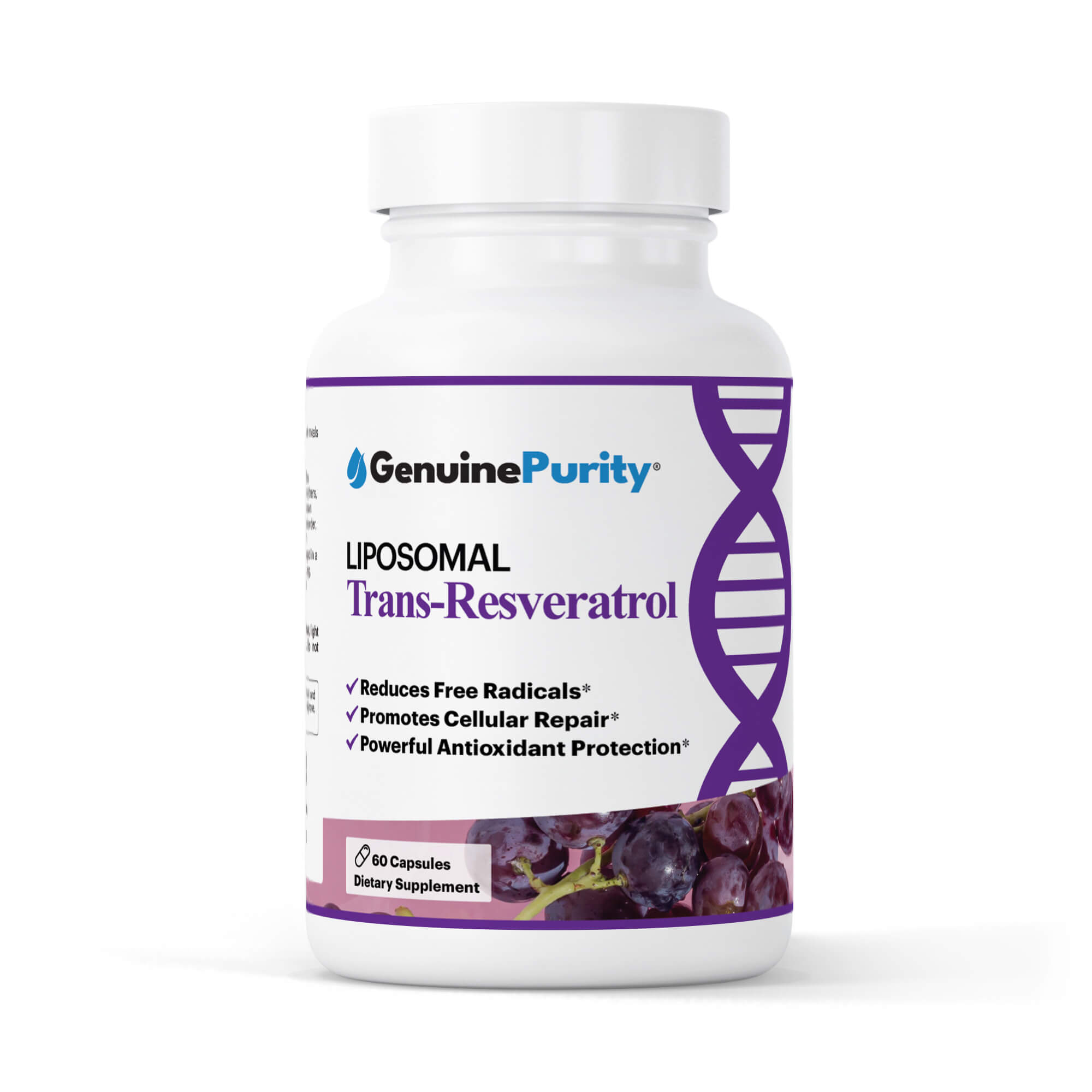
A generic resveratrol capsule and GenuinePurity's contain, in principle, the same molecule. The $59 question is never really about the molecule — it is about how much of the purchase you can verify before you pay. Against the standards that matter — a stated trans-resveratrol percentage, an unambiguous dose per serving, a named source, a full ingredient list, a third-party testing policy, a written guarantee — the premium label provides most of them in writing, and the generic shelf's defining habit is to provide fewer, vaguer versions: "resveratrol complex" blends, per-container totals, no trans percentage, no certificate to ask for. That is what the premium buys. What it does not buy is equally specific: no finished-product trial, no published absorption figure for its liposomal claim, and — the irony this page will not skip — a purity percentage its own maker states two different ways. Verification is the product. Here is the invoice, item by item.
Standard One: A Stated Trans Percentage
Resveratrol's active isomer is the trans form, so the first standard is a label that says how much of the capsule it is. Generic labels commonly stop at a total extract weight — "500 mg resveratrol" — which can describe an extract of any trans share, including a small one, and the buyer has no way to convert it into active milligrams. GenuinePurity states a purity percentage, which is the standard met — and then dents it: its store page says 99% pure, its landing page headlines 98% pure, and the maker has not reconciled the two. The honest grading is that a conflicted figure still outranks a missing one — you can at least see the neighbourhood of the claim and hold the maker to it — but this is the standard on which the premium product is most beatable, and a generic rival that printed one consistent, certified percentage would beat it.
Standard Two: A Defined Dose Per Serving
The second standard is a daily serving a buyer can price against: milligrams of trans-resveratrol per day, with the serving defined. GenuinePurity's is 500 mg per daily serving, two capsules — stated on the product pages and confirmed in the maker's own blog in so many words. (Its store page does carry one sentence that invites a per-capsule misread; the consistent reading is documented.) The generic failure mode here is arithmetic fog: per-bottle totals, "proprietary blends" that list resveratrol among several ingredients under one combined weight, serving sizes buried in directions. A blend line is the single most common way a cheap resveratrol label avoids this standard entirely — once the active shares one weight with other ingredients, no dose claim about it can be checked at all. On this standard the premium label is clean, and it is the standard that matters most, because every value calculation downstream depends on it.
Standard Three: A Named Source and a Full Ingredient List
GenuinePurity names its source — Japanese knotweed root (Polygonum cuspidatum) extract — and publishes the entire capsule: the active, the liposomal Phospholipid Complex (Sunflower Lecithin, Phosphatidylcholine), Vegetable Cellulose, Microcrystalline Cellulose, Silicon Dioxide, Vegetable Stearate. Nothing in the bottle is unreadable. Generic labels range from equally complete to nearly blank; the standard is not that generics always fail it, but that the premium product passes it in full, as a matter of published record, while on the generic shelf completeness is a coin toss the buyer has to check product by product. A named source also does quiet work: it is the kind of specific claim a lab certificate can be issued against, which leads directly to the next standard.
Standard Four: A Testing Policy You Can Invoke
The maker states that its products are tested and certified by third-party laboratories, publishes Certificates of Analysis on its site, and advises buyers — in its own words — to see a COA before purchasing any supplement. That is a policy a buyer can invoke: the certificate either exists for the product or the policy is void. Much of the generic shelf offers no equivalent commitment; where testing is claimed at all, it is often a badge rather than a document. This is, in the end, the core of what a label premium legitimately buys in an unregulated category: not a better molecule, but a maker who has put verifiable statements in writing and can be held to them. It is also a standard with a limit — a policy is a promise about certificates, and the final step, reading the certificate for your batch, remains the buyer's.
Standard Five: A Guarantee in Writing
GenuinePurity's guarantee is 97 days, 100% satisfaction, with the maker stating a full refund of the purchase price for up to two opened bottles and any unopened ones. In a category of slow, subjective effects, the guarantee is the trial: it converts a purchase into a refundable experiment with a deadline. Generic products carry whatever their sellers offer, from written guarantees to none findable at all — the standard is not a number, it is whether the terms exist in writing before you pay. Ninety-seven days also happens to be the longest window in our catalog. Combined with the price maths — $59 for one bottle works out to about $1.97 a day for the full 500 mg serving; $43 per bottle in the six-bottle pack is about $1.43 a day; the $39 subscription is about $1.30 a day — the premium's real shape is visible: roughly two dollars a day, refundable for over three months, for a label you can audit line by line. Whether that is worth it depends entirely on how much of the generic alternative you could audit — and the answer, on most generic labels, is: the price, and little else.
These statements have not been evaluated by the Food and Drug Administration. This product is not intended to diagnose, treat, cure, or prevent any disease.
What the Premium Does Not Buy
Three things, stated as plainly as the five standards. No better evidence: there is no trial of the finished GenuinePurity product; its evidence is ingredient-level journal quotations about glycemic control, without designs, doses or counts — the same tier of evidence a generic maker can cite for the same molecule. No measured delivery advantage: the liposomal system is genuinely on the label, but the maker publishes no absorption figure for this product, so the size of its claimed advantage is unknown in print. No consistency, yet, on its headline specification: 98% here, 99% there. A buyer paying the premium is paying for standards one, two, three, four and five — disclosure, definition, testing policy, guarantee — and should not imagine they have also purchased proof.
Frequently Asked Questions
Is GenuinePurity Resveratrol the best resveratrol supplement? It is the best-documented one we sell, at 7.5/10 — but "best" in this category means "most verifiable," and on one standard (a single, consistent purity figure) it is beatable today by any maker, generic or premium, that prints one certified number and sticks to it.
How do I compare a generic label against it? Run the five standards in order: trans percentage stated? dose per serving defined, outside any blend? source named and contents fully listed? testing policy in writing, with a COA you can ask for? guarantee terms written, and how long? Each "no" is a fact you are being asked to buy on faith — price the faith accordingly.
Is the generic molecule different? Trans-resveratrol is trans-resveratrol; the molecule does not know what it cost. What differs is everything around it — how much of it is verifiably in the capsule, at what stated purity, from what source, under what testing policy and guarantee. The premium is a paperwork purchase. This page's position is that the paperwork is genuinely worth something — and worth exactly what the standards above say it is, no more.
Final Verdict
Choose the premium label if verification is what you are buying: a defined 500 mg serving, a stated purity (with its conflict noted), a named source, a complete contents list, a COA policy and a 97-day refund window — the full audit is on the GenuinePurity Resveratrol page. Choose a generic if you find one that meets the same five standards in writing for less — they exist to be looked for, and the standards, not the brand, are the test. What neither choice buys is evidence the molecule works for aging in humans. On that, the whole shelf is equal, and any label that implies otherwise is the one to walk away from.
Disclaimer: This article is for general information only and is not medical advice. Always consult a qualified healthcare professional before starting any supplement, especially if you have a medical condition or take prescription medication.
Last reviewed: October 2026
