
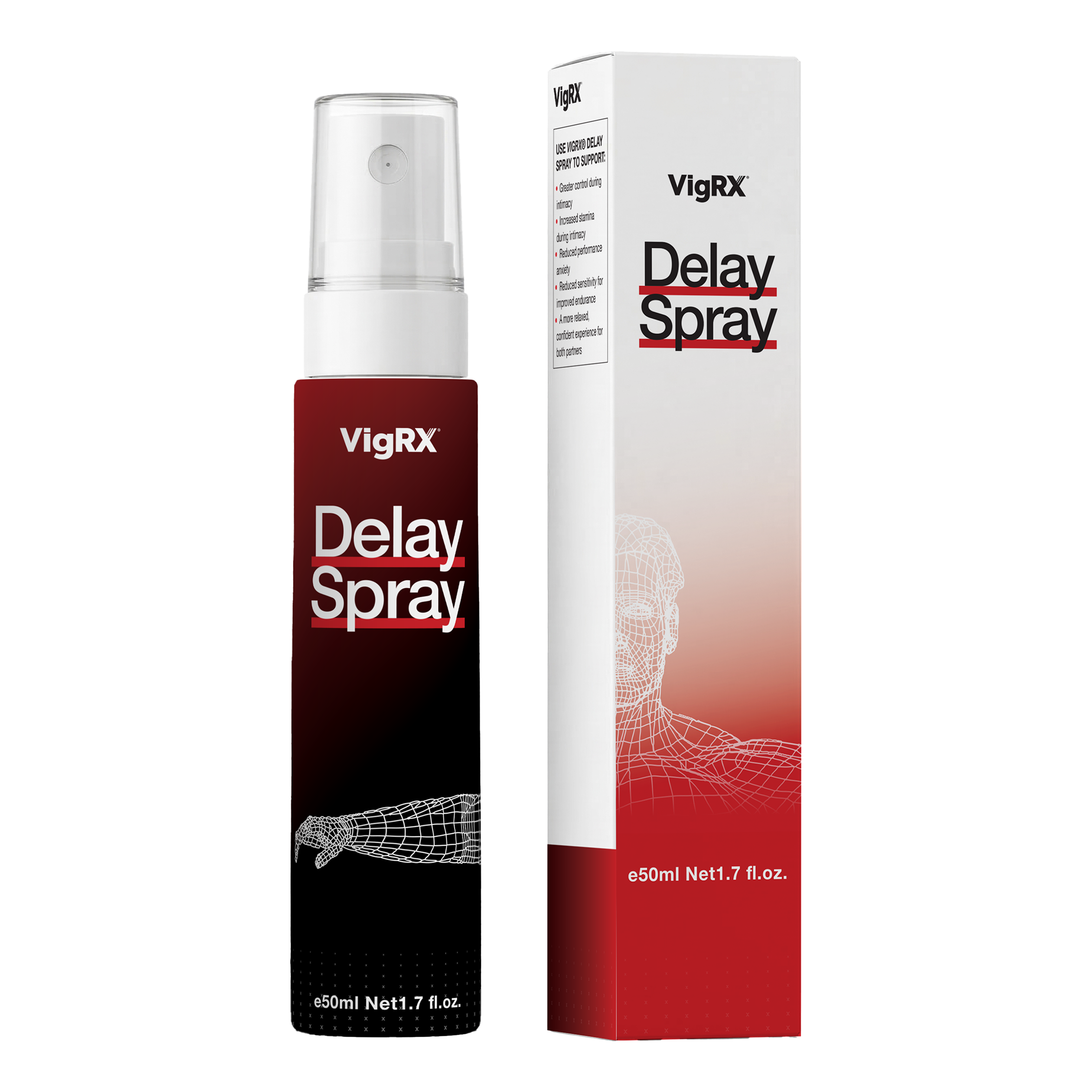
Affiliate disclosure: We sell VigRX Delay Spray and VigRX Delay Wipes through affiliate links and earn a commission if you buy through them. The transfer question is the first concern men raise about this category — including to doctors — so this page answers it from the makers' own label language and from what users and clinicians actually report, and it prints the limits of both. Where a maker's claim is a claim rather than a measurement, we label it as one.
Quick Answer
Yes, a delay spray can numb your partner — if active product is still sitting on your skin when contact happens. Transfer is not a mysterious side effect; it is simple contact between an anaesthetic and a second person's skin. That is also why it is largely controllable. The three controls are waiting (give the spray its full absorption time — the maker of the spray we sell specifies about 10 minutes and ties its "minimal transference" statement to exactly that condition), wiping or washing off the excess once it has absorbed, and a condom as a physical barrier. It is not an accident that when a forum user praised one delay spray above others, the feature he named was that "it doesn't make your partner numb" — in this category, non-transfer is the deciding feature, and a practising andrologist reports "will it hurt my partner?" among the very first questions his patients ask, almost every week.
How Transfer Actually Happens
A delay spray works by leaving benzocaine in contact with the glans long enough to dull its nerve response. Anything the skin has not absorbed remains on the surface as a thin, active residue. Skin-to-skin or mucosal contact moves that residue across — the same pharmacology, applied to a person who never chose it, at a dose nobody measured. Three variables decide how much transfers: how much you applied (the over-application cases in our how-to guide start with men who used far more than directed), how long you waited (absorption is time-dependent; the effect you feel at minute ten is product that has gone in, and what has gone in cannot rub off), and whether the surface was cleaned or covered afterwards. Note the asymmetry the marketing skips: transfer risk is highest exactly when impatience is highest — immediately after spraying. The men most likely to numb a partner are the men who sprayed, skipped the wait, and proceeded.
Control One: The Wait
For VigRX Delay Spray, the maker's directions are 1–3 sprays to the shaft and glans, rubbed in, about 10 minutes before intimacy — and its FAQ states that partner transference is minimal when the spray is applied correctly and allowed the full 10 minutes to absorb. Parse that sentence the way a lawyer would, because the maker wrote it that way: the claim is conditional. "Minimal when used correctly" is not "none," and the condition is the wait. We print the claim as the maker's claim — no transfer study of this finished spray is published anywhere in its material, so there is no measured number to give you, for this product or, candidly, for most of its retail rivals. What the wait buys is physics, not paperwork: absorbed anaesthetic stays in your skin; only the residue is available to transfer.
Control Two: Wiping and Washing Off
Once the spray has absorbed and taken effect, the surface residue has done its job and can be removed. Wiping down — or washing with water — after the wait and before contact removes the transferable layer while leaving the absorbed effect in place. This is the step almost no product page leads with, because "spray, wait, then wipe" is a less romantic instruction than "spray and go," but it is the single most effective transfer control a user has. The maker's own warnings point the same direction: it instructs users to wash thoroughly before oral sex, which is a transfer instruction wearing a warning's clothes — the maker knows residue reaches a partner, and the wash is the fix it prescribes for the highest-contact case. Generalise it: if a surface can be washed before oral contact, it can be wiped before any contact.
Control Three: A Condom — and Why the Labels Disagree
A condom is a physical barrier, and a barrier ends the transfer question mechanically. The labelling, however, is where this category contradicts itself in print, and this page will not flatten the contradiction into one rule. The maker of the spray we sell states the product is water-based and latex-condom compatible. Other delay products carry labels warning they are not compatible with condoms — oil bases can weaken latex — and health-service guidance elsewhere recommends condoms with local anaesthetics precisely to protect the partner. All three positions exist on real labels at the same time. The only honest instruction is the unglamorous one: follow the label of the product in your hand. For the spray we sell, that label says compatible. Do not lend that sentence to any other bottle — and if your spray's label is silent or negative on condoms, the barrier option may be closed for that product and the wait-and-wipe controls carry the whole load.
The Benzocaine-Free Case: The Wipes
VigRX Delay Wipes change the transfer question rather than answering it. Their complete published formula is two botanicals — Zanthoxylum Oil and Peony Extract — with no benzocaine and no synthetic anaesthetic, stated explicitly by the maker. There is no drug anaesthetic in them to transfer, which removes the numbing-transfer mechanism itself. What remains is ordinary contact transfer of a botanical oil, and the maker's handling of it is a study in careful wording: apply the wipe, and allow the formula to absorb fully before activity — its FAQ frames the absorption instruction partly as a transference precaution — and, on condoms, it declines a flat claim entirely: absorb first, and consult the condom manufacturer's guidelines if you have concerns. Two honest limits ride with that. First, the maker publishes no onset time for the wipes, so "absorbed fully" has no minute count attached to it; treat dry-to-the-touch as the minimum reading of the instruction. Second, benzocaine-free is not sensitivity-free: botanical oils can irritate a partner's skin as well as yours, and the maker's own FAQ notes that individual skin sensitivity varies. The wipes trade the spray's measurable risk for a smaller, vaguer one — whether that trade suits you depends on which uncertainty you prefer, and our spray and wipes product pages grade each file on its own paperwork.
The Honest Limitations
Everything reassuring in this article rests on thinner ice than it should. No maker of the products we sell publishes a transfer study — "minimal transference" is a sentence in an FAQ, not a result. The clinical literature on the tested prescription-style sprays treats partner effects as a monitored side effect precisely because transfer is expected pharmacology, not a defect. And the category's label chaos on condoms means general advice — including advice on pages like this one — can never substitute for the specific label you own. What can be said without paper is mechanical and we stand on it: less applied, fully absorbed, excess removed, barrier used where the label allows — each step cuts the transferable dose, and together they cut it to the minimum the format allows.
Frequently Asked Questions
Will delay spray affect my partner?
It can — this is among the most-repeated questions in the category's FAQ sets, and the truthful answer is conditional: unabsorbed anaesthetic transfers on contact and can dull your partner's sensation. Applied at the directed dose, allowed its full absorption time, with the excess wiped off, transfer is minimised — which is exactly the condition the maker of our spray attaches to its own "minimal transference" statement.
Will my partner feel numb?
If residue transfers, yes — that is what the residue is for. The forum user who praised a rival spray for not numbing his partner was describing the exception men shop for, not the category's default. The controls in this article — wait, wipe, condom where the label allows — are how the exception is manufactured.
Can I use delay spray with condoms?
For the spray we sell, the maker states water-based, latex-condom compatible — its label, its claim. The category's labels conflict (some products are not condom-compatible), so the rule is per-product, never per-category. The wipes' maker gives no flat claim: absorb fully first, and defer to the condom manufacturer's guidelines.
"Will it hurt my partner?"
The question a practising andrologist reports hearing from patients almost weekly. Numbing is the realistic harm — discomfort or irritation is possible, particularly for a partner with sensitive skin — and it is dose-and-residue dependent, which puts it under your control more than under the product's. If your partner reports numbness or irritation, stop, wash the area, and treat it as dose information for next time: less product, longer wait.
Disclaimer: This article is for general information only and is not medical advice. Follow your own product's label first — on transfer, washing and condoms, labels in this category genuinely differ. Consult a healthcare professional about any persistent concern.
Last reviewed: October 2026
