
- Quick Verdict: The Studied Name vs the Checkable Label
- CortiSync vs Plain Ashwagandha at a Glance
- What the Blend Buys: A Studied Extract, Plus Six
- What the Blend Costs: Every Number That Matters
- What Plain Ashwagandha Buys — and What It Doesn't
- Evidence Compared, Honestly
- Frequently Asked Questions
- Final Verdict
Affiliate disclosure: We sell CortiSync (PrimeGENIX; our score 6.0/10) through our affiliate link and earn a commission if you buy it. This store stocks no standalone plain-ashwagandha product, so the other side of this comparison is the generic single-ingredient format as a class — its label habits, not one audited rival. Every CortiSync fact below comes from its maker's own pages, including the central problem this comparison turns on: the blend is built on a studied, branded extract, and publishes the amount of none of its seven ingredients.
Quick Verdict: The Studied Name vs the Checkable Label
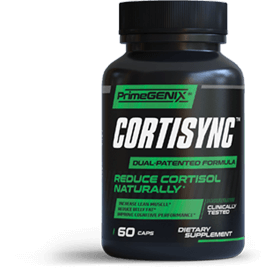
This comparison is a trade between two different kinds of confidence. CortiSync offers the better ingredient story: a formula led by Sensoril®, the patented root-and-leaf ashwagandha extract with maker-cited placebo-controlled studies behind it, surrounded by six more adaptogens. What it withholds is every number that would let you verify the story applies to its capsules — no ingredient amounts are published in text anywhere. Plain ashwagandha — a generic root powder or unbranded extract — offers the opposite: its labels typically print exactly how much you are getting, so the arithmetic is checkable, but the extract-level trial file does not belong to it, because generic root powder is not the extract the studies used. Neither side gives you both halves. The blend has the evidence's name and not its dose; the plain product has the dose and not the evidence. Choose which half you can live without — after reading what each half is actually worth.
CortiSync vs Plain Ashwagandha at a Glance
| CortiSync (PrimeGENIX) | Plain ashwagandha (generic, as a format) | |
| What it is | A 7-adaptogen blend led by Sensoril®, the branded root-and-leaf ashwagandha extract | A single-ingredient product: ashwagandha root powder or an unbranded extract |
| The other ingredients | Holy basil, L-theanine, lemon balm, lychee, magnolia, rhodiola | None — the one ingredient is the product |
| Standardisation | Sensoril's is 10% withanolides — a property of the branded extract | Often none stated; the powder is the plant, unstandardised |
| Amount published? | No — no per-ingredient amounts in text on any maker page; facts panel exists only as images | Typically yes — a single ingredient's amount is the label's whole content |
| Evidence | Maker-cited double-blind, placebo-controlled studies of Sensoril: cortisol −24% vs placebo, stress −62.2% (no sample sizes published); no trial of CortiSync or of the 7-ingredient combination | No product-level file; the branded extracts' studies (Sensoril, KSM-66) do not transfer to generic root powder |
| Price | $59/bottle; $165 for 3; $294 for 6; $49/month on subscription | Varies by maker — outside our audit; generally the cheaper format |
| Guarantee | 67 days, bottles returnable "even if they're empty" per the maker's store page | Varies by maker |
| Our score | 6.0/10 | Not scored — no standalone product in our catalog |
What the Blend Buys: A Studied Extract, Plus Six
CortiSync's design case is genuinely the stronger opening argument. Its lead ingredient is not generic ashwagandha but Sensoril® — root and leaf, standardised to 10% withanolides, studied at 125–250 mg a day, and carrying the most specific numbers in this category: the maker cites double-blind, placebo-controlled ingredient studies reporting cortisol reduced 24% versus placebo and overall stress down 62.2%, alongside further cited results (fatigue, endothelial function, sleep, and a twelve-week strength study). Around that lead, the blend adds six adaptogens with their own category reputations — holy basil, L-theanine, lemon balm, lychee, magnolia and rhodiola — in a two-capsules-with-a-meal daily routine aimed at men in their late 30s to 50s. As a formula on a slide, it is broader and better-branded than a jar of root powder in every way. The argument collapses only when you ask the question the next section asks.
What the Blend Costs: Every Number That Matters
A studied extract helps you only at its studied dose, and CortiSync's maker publishes no ingredient amounts in text — not on the brand site, not on the maker's store page, not on its retail page; the Supplement Facts appear only as images. So the pivotal comparison of this entire page cannot be completed: nobody can confirm from the maker's material whether a serving delivers Sensoril inside its studied 125–250 mg range, or a fraction of it, divided among seven ingredients in unknown proportions. The six supporting adaptogens are in the same position — named, unquantified, and untested in this combination, since every cited study belongs to Sensoril alone. The file's smaller cracks point the same way: the maker's pages put Sensoril's human clinical studies at 12 in some places and 14 in others, and its sleep improvement at both 67% and 70%. And the safety paperwork is assertion rather than information: the maker reports no side effects and publishes no warnings, exclusions or contraindications on any of its pages. None of this proves the blend is weak. It proves its strength cannot be checked — which, on this site's standard, is the finding.
These statements have not been evaluated by the Food and Drug Administration. This product is not intended to diagnose, treat, cure, or prevent any disease. This article is educational and is not medical advice.
What Plain Ashwagandha Buys — and What It Doesn't
The generic product's virtues are modest but real, and they are all about the label. A single-ingredient powder or extract has nowhere to hide: the amount per capsule is the product, printed in milligrams, at a standardisation stated or visibly absent. You can do arithmetic on it — cost per day, dose per day — and arithmetic is the beginning of every honest supplement decision. What that arithmetic cannot buy is the evidence. The cortisol and stress file in this category belongs to the branded extracts as studied; as we set out in Sensoril vs KSM-66, generic root powder is not Sensoril and not KSM-66, and results measured on a 10%-standardised root-and-leaf extract at a defined dose say nothing reliable about an unstandardised powder at an arbitrary one. A plain product also sits outside our audit — its maker, purity and guarantee vary label by label, and none of them has been read the way CortiSync's file has. So the generic's offer is narrower than it first looks: a checkable quantity of an unstudied-in-this-form ingredient, usually at a lower price.
Evidence Compared, Honestly
Stack the two files side by side and the symmetry is uncomfortable for both shelves. CortiSync: real studies, of a real extract, cited by the maker — none of them of this product, none with published sample sizes, and none confirming the extract is present at the studied level. Plain ashwagandha: no studies of the format at all, and a standing temptation — which its sellers rarely resist — to quote the branded extracts' results as if the plant itself had earned them. The blend borrows credibility it may deserve but cannot prove; the powder borrows credibility it has not earned at all. The only position the evidence fully supports is the boring one: the extract-level file is promising, weeks-scale, and dose-dependent — which is why the dose is the fact worth fighting for, and why our Cortisol Supplement Buying Guide makes the printed amount its central check.
Frequently Asked Questions
Is CortiSync better than plain ashwagandha?
On ingredient pedigree, yes: it is built on a studied, standardised, branded extract rather than generic powder. On verifiability, no: the generic label typically prints its amount and CortiSync prints none, so the blend's pedigree cannot be confirmed at the dose. "Better" depends on which of those you weight — this page weights the checkable label, which is why CortiSync sits at 6.0/10 rather than higher.
How much Sensoril is in CortiSync?
Unknown from anything the maker publishes in text. The amounts exist, if anywhere, in an image-only Supplement Facts panel; the studied range for Sensoril is 125–250 mg a day, and whether a serving of CortiSync reaches it cannot be verified from the maker's pages.
Do the seven ingredients work together?
No study of the seven-ingredient combination appears in the maker's material — every cited result belongs to Sensoril alone. The other six are present at unknown doses with no combination evidence behind them. A blend is a hypothesis, not a finding.
Can I just take plain ashwagandha and get the Sensoril results?
There is no basis for expecting that. The results were measured on a standardised root-and-leaf extract at defined doses; generic root powder differs in composition, standardisation and dose. The plant is the same; the studied material is not.
How should I judge whichever I buy?
Over weeks, inside the guarantee. The ingredient file runs on a two-to-twelve-week scale, and CortiSync's 67-day window — bottles returnable even if empty, per the maker's store page — covers roughly nine weeks. A fortnight's impression, of either product, is not a judgement.
Final Verdict
Choose CortiSync if you want the studied extract's design plus a six-adaptogen supporting cast in one routine, at $59 under a 67-day even-if-empty guarantee — and you accept, with eyes open, that its maker quotes the studies and withholds the dose, so the formula's central claim runs on trust. Choose plain ashwagandha if a printed, checkable amount matters more to you than a branded extract's pedigree, and you understand that the generic format carries no trial file of its own and borrows none legitimately. The deeper verdict is the one both labels point to: in this category, evidence without a dose and a dose without evidence are each half a product. CortiSync (6.0/10) is the half with the famous name. Buy the half you choose knowing exactly which half it is.
Disclaimer: This article is for general information only and is not medical advice. Always consult a qualified healthcare professional before starting any supplement, especially if you have a medical condition or take prescription medication.
Last reviewed: October 2026
