
- Quick Answer: Which Testosterone Booster Ingredients Actually Have Evidence?
- What Did the Published Reviews of Testosterone Boosters Actually Find?
- Which Ingredients Have the Most Support?
- Which Popular Ingredients Have Weak or No Support?
- Why Do Doses Matter as Much as Ingredient Names?
- How Do You Check a Real Product's Label Against This List?
- Honest Limitations: An Ingredient Study Is Not a Product Study
Affiliate disclosure: this page contains affiliate links. If you buy through a link here, we may earn a commission at no extra cost to you. We sell testosterone boosters here, and this audit criticizes common ingredients in the category — including some in products we carry. The commission does not change any verdict below: each is tied to published research you can check yourself.
If you want to know which testosterone booster ingredients that work are supported by human studies — and which are on the label because they are cheap or fashionable — the answer is in the research literature, not the marketing copy. We went through the published reviews and trials ingredient by ingredient. Below: a short list with some genuine support, a longer list without it, and a worksheet you can apply to any label, including ours.
One point before the details: no supplement in this category contains testosterone, and none of them treats clinically low testosterone — a medical diagnosis made with blood tests. If you have symptoms and a confirmed low reading, that is a conversation for a doctor, not for a supplement label.
Quick Answer: Which Testosterone Booster Ingredients Actually Have Evidence?
The short version:
- Some human evidence: tongkat ali (longjack), ashwagandha, and fenugreek have each raised testosterone in at least some controlled human trials — modestly, and mostly in specific groups: men with low testosterone, older or overweight men, and men in training programs.
- Weak or no evidence for testosterone: tribulus, D-aspartic acid, horny goat weed, and maca have not raised testosterone in controlled human trials, despite being sold for exactly that. Maca's trials point to desire, not hormones.
"Some evidence" is doing real work in that sentence. It means small, short trials with modest average effects — not proof that any bottle will work for you.
What Did the Published Reviews of Testosterone Boosters Actually Find?
The most useful reality check on this category is a 2020 paper in The World Journal of Men's Health. Researchers took the first 50 testosterone boosters from a Google search and catalogued every ingredient: 109 components. Ninety percent of the products claimed to boost testosterone, yet fewer than a quarter had data supporting their claims. Ingredient by ingredient, the record was as uneven: some had studies suggesting an increase, some showed no change, some suggested a decrease.
A 2021 systematic review of herbs and testosterone in Advances in Nutrition reached a similar conclusion: few high-quality randomized trials exist for any of these herbs, the groups studied differ widely, and firm conclusions are not yet possible. For most ingredients, the honest verdict is not "proven" or "disproven" — it is "barely tested." The exceptions are below.
These statements have not been evaluated by the Food and Drug Administration. The products discussed here are dietary supplements and are not intended to diagnose, treat, cure, or prevent any disease.
Which Ingredients Have the Most Support?
Three ingredients have at least some controlled human trials behind them. Notice the pattern: the evidence is best in men starting with low or borderline testosterone — not in healthy young men with plenty already.
Tongkat ali (Eurycoma longifolia, longjack). A 2022 systematic review and meta-analysis in the journal Medicina pooled five randomized trials and found a significant increase in total testosterone from a standardized root extract, with the effect confirmed in men with low testosterone; the wider review covered nine studies in healthy and hypogonadal men. The authors cautioned that more research is needed — the trials are few and small — but this is the strongest pooled signal we found among booster botanicals.
Ashwagandha (Withania somnifera). Several small randomized trials point the same way. In a 2015 trial, young men doing resistance training who took 600 mg a day of the root extract KSM-66 for eight weeks gained significantly more testosterone than the placebo group. In a 2019 crossover trial, aging, overweight men taking an ashwagandha extract had higher testosterone and DHEA-S than on placebo. It has also been studied in men with low sperm counts. Most trials used branded, standardized root extracts — not generic ashwagandha powder.
Fenugreek. The least consistent of the three. A meta-analysis of four clinical trials, summarized in the Advances in Nutrition review, found a significant increase in total testosterone. The best-known trial, in 120 healthy men aged 43 to 70, used 600 mg a day of the branded extract Testofen for 12 weeks and found total and free testosterone rose versus placebo. But other trials found no significant change, and in some studies libido improved while testosterone stayed within the normal range — suggesting any benefit there may not run through testosterone at all. Real support, then, but mixed — and mostly tied to branded extracts at specific doses.
Which Popular Ingredients Have Weak or No Support?
Tribulus terrestris. The classic booster ingredient — and the clearest failure. A 2014 systematic review of the tribulus research concluded it is ineffective at increasing testosterone in humans, and a later systematic review of ten clinical studies (483 men) found eight reported no significant change in androgen levels. The testosterone story traces back to animal studies and 1990s marketing, not human data.
D-aspartic acid (DAA). An early short study in sedentary men reported a rise — and launched the ingredient. Trials in resistance-trained men — the people who buy it — did not reproduce it: 3 grams a day for 28 days changed nothing, 6 grams a day for 12 weeks changed nothing, and in one trial 6 grams a day reduced total and free testosterone. Whatever DAA does in untrained men with lower starting levels, it has not held up in trained men.
Horny goat weed (Epimedium, icariin). Its active compound, icariin, weakly inhibits PDE5 (the enzyme targeted by prescription erection drugs) in laboratory and animal research. That is an erection mechanism, not a testosterone one — and we could find no published placebo-controlled human trial measuring its effect on testosterone levels. For testosterone, there is no human evidence to audit.
Maca. In a 12-week placebo-controlled trial, healthy men taking 1.5 or 3 grams a day showed no change in testosterone or any other reproductive hormone, and a systematic review found only limited evidence maca improves sexual function. If it does anything, it appears to act on desire — selling it as a testosterone ingredient mislabels the evidence.
Why Do Doses Matter as Much as Ingredient Names?
Even for supported ingredients, the studied version is specific: a named, standardized extract, at a named dose, taken for 8 to 12 weeks. KSM-66 ashwagandha and Testofen fenugreek were each studied at 600 mg a day. The tongkat ali trials used standardized root extracts, not raw root powder. A label can name a winning ingredient and still deliver a fraction of the studied dose — a practice sometimes called "fairy dusting" — or use a cheap generic powder instead of the extract actually tested.
The bigger hiding place is the proprietary blend. When a label groups ingredients into one blend with a single total weight, you cannot tell whether any is present at a meaningful dose — and neither can we. Treat any ingredient without a printed amount as unverified.
Dose also cuts the other way: that same review found boosters with vitamins and minerals dosed above tolerable upper intake levels, and the DAA trials found more of the ingredient performed worse, not better.
How Do You Check a Real Product's Label Against This List?
Four checks work on any label:
- Step 1 — place the ingredients. Find each headline ingredient in the two lists above. If the lead ingredient is on the weak list, you can stop there.
- Step 2 — check the form. Is it the standardized extract the trials used, or an unnamed plant powder?
- Step 3 — compare the dose. Match the printed amount against the dose used in the trials. No printed amount (a proprietary blend) means no comparison is possible.
- Step 4 — check the population. Evidence from men with low testosterone promises nothing for a man whose levels are already normal.
Applied to the three testosterone products in this store, honestly:
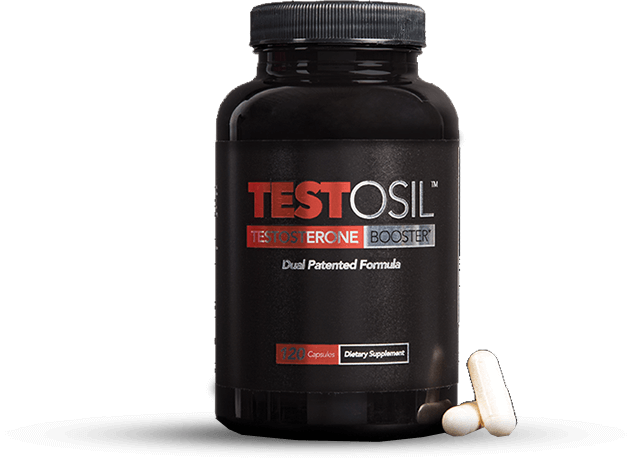
Testosil names its headline ingredient and its amount: KSM-66 ashwagandha at 300 mg — half the 600 mg a day used in the best-known KSM-66 training trial — and the other eleven ingredients in its formula were not listed with individual amounts in the material we reviewed. Transparent on the headline ingredient; the dose comparison is left to you.
TestRX is built around a named ZMA blend: zinc monomethionine aspartate, magnesium aspartate, and vitamin B6 — nutrients, not the botanicals audited above. Zinc and B6 were also among the most common ingredients the World Journal of Men's Health researchers found across all 50 boosters. Individual amounts were not stated in the material we reviewed, so apply steps 2 and 3 to the official Supplement Facts panel.
PrimeGENIX Testodren is a single-ingredient formula with the amount printed: 500 mg of one U.S.-patented compound — the easiest kind of label to audit, with one dose to compare against the research on that extract. The store page does not name the compound, so identify it on the official label, then check which list it belongs on.
If you still want to try one of the better-documented formulas after the checklist, buy from the maker's official store to get the genuine product and its guarantee — the Buy from Official Website links on our product pages lead there.
Honest Limitations: An Ingredient Study Is Not a Product Study
Everything above comes with one caveat: an ingredient study is not a product study. A trial of one standardized extract, at one dose, in one defined group does not prove that a multi-ingredient product containing that ingredient will raise your testosterone. Almost no finished product in this category — including the ones sold here — has been tested in a published trial as a complete formula.
The trials that do exist are small, usually run for weeks rather than months, and often enroll men unlike the typical buyer: those with low testosterone, fertility problems, or high stress. Average effects in those groups were modest even when they were real. A booster is, at best, a nudge. If your testosterone is genuinely low, the evidence-based response is a morning blood test and a doctor, not a stronger supplement. For what a realistic trial period looks like, see our week-by-week guide to how long a testosterone booster takes to work.
To see how boosters compare with prescription treatment, read Testosterone Boosters vs TRT: What's the Difference?
This article is general information, not medical advice, and is not a substitute for a blood test or a clinician's judgment. Talk to your doctor before using any supplement, especially if you take prescription medication, have a diagnosed medical condition, or are under 18.
Last reviewed: October 2026
