
- Quick Answer: How Long Do Testosterone Boosters Take to Work?
- Why Don't Testosterone Boosters Work Overnight?
- Weeks 1–2: What Do Men Typically Report?
- Weeks 3–4: What Do Men Typically Report?
- Weeks 5–8: What Do Men Typically Report?
- Weeks 9–12: What Do Men Typically Report?
- How Long Did the Ingredient Studies Actually Run?
- What Slows Results Down?
- How Do You Know If It's Doing Anything?
- Honest Limitations: Who Do Boosters NOT Help?
Affiliate disclosure: This article contains affiliate links. If you buy through a link on this page, we may earn a commission paid by the manufacturer, at no extra cost to you. That never changes what we write here — and this guide is deliberately honest about timelines, because unrealistic expectations are the main reason men quit a booster too early or stick with one that was never going to help them.
So, how long do testosterone boosters take to work? It is the first question almost every man asks after ordering one, and it is the question marketing pages answer worst. You will see phrases like "feel it fast" with no definition of fast. Here is the plain version: a natural testosterone booster is a slow tool. The first subtle signs — if they come at all — typically show up around weeks 2 to 4. A fair trial runs 8 to 12 weeks. Anything promising dramatic change in a few days is describing something else, because that is not how these products work.
Quick Answer: How Long Do Testosterone Boosters Take to Work?
Most men who respond to a testosterone booster report the earliest changes between weeks 2 and 4 — usually small things first: steadier daytime energy, slightly better training sessions, a modest lift in libido or morning erections. The fuller picture, if there is one, generally needs 8 to 12 weeks of consistent daily use. That range is not a marketing invention. It matches how long the clinical studies on the best-known booster ingredients actually run before they measure anything, and it matches how the body adjusts hormone production: gradually, in small steps, and only within the range your own system can reach. If you feel nothing at all by week 8 to 10, that is useful information too — and this guide explains what to do with it below.
These statements have not been evaluated by the Food and Drug Administration. This product is not intended to diagnose, treat, cure, or prevent any disease. This article is educational and is not medical advice.
Why Don't Testosterone Boosters Work Overnight?
Because they contain no testosterone. That single fact explains the entire timeline. A testosterone booster is a blend of vitamins, minerals, and botanical extracts — ingredients such as ashwagandha, tongkat ali, zinc, and vitamin D — that are intended to support your body's own testosterone production and reduce the things that suppress it, like poor sleep and chronic stress. Nothing in the capsule is a hormone, and nothing in it tops up your testosterone the way a prescription injection or gel does.
Your body also regulates testosterone tightly. Production is controlled by a feedback loop between the brain and the testes, and it moves slowly and within limits. On top of that, testosterone naturally rises and falls across the day — highest in the morning, lower by evening — so a single good day or bad day tells you almost nothing. Put together, this means a booster, at best, nudges a system that adjusts over weeks. Expect a ramp, not a switch.
Weeks 1–2: What Do Men Typically Report?
Honestly? Usually nothing obvious — and that is normal. The most commonly reported experiences in the first two weeks are indirect: slightly better sleep quality, a small lift in mood or motivation, and fewer afternoon energy crashes. These are reports, not promises; some men notice them, many notice nothing yet, and expectation alone can produce the same impressions in the first fortnight.
What you should do in weeks 1–2 is set up your measuring system while motivation is high: note your baseline. Write down, in a few honest lines, your current energy, libido, training performance, and sleep. You will thank yourself at week 8, because memory is a terrible measuring instrument — it rewrites the past to match how you feel today.
Weeks 3–4: What Do Men Typically Report?
This is where first real signals are most often described by men who go on to respond well: workouts that feel a little more productive, recovering a bit faster between sessions, a clearer sense of drive, and libido that is modestly more present. Strength and body-composition changes, if any, are still small at this stage — muscle is built over months, not weekends, and no supplement changes that arithmetic.
If you reach the end of week 4 having noticed absolutely nothing — not in energy, mood, sleep, or desire — do not panic and do not double the dose. Do check the basics listed further down (consistency, sleep, alcohol), because those are the usual culprits, and give the full trial window a chance before judging.
Weeks 5–8: What Do Men Typically Report?
Weeks 5 to 8 are the heart of the trial window. This is the period in which men who respond typically describe the pattern stabilising: more consistent energy across the week rather than good days and bad days, training loads creeping up, and a general sense that the earlier small changes have held rather than faded. It is also the window researchers chose for the best-known ingredient studies — the landmark ashwagandha resistance-training trial, for example, ran for eight weeks before measuring testosterone and strength, which tells you when the scientists expected to see something measurable.
This is a good moment for a first honest review against your week 1–2 notes. Are the changes real, repeated, and written down — or are you grading yourself from memory on a good day? Only the diary knows.
Weeks 9–12: What Do Men Typically Report?
By weeks 9 to 12 you are at the end of a fair trial. Men who respond generally describe a plateau: the benefits they noticed earlier are simply their new normal, not something still climbing. That plateau is itself the answer. If a well-chosen formula, taken consistently for 12 weeks with decent sleep, has produced clear, documented improvement, continuing makes sense. If it has produced nothing you can point to in your own notes, continuing is just a subscription to hope — and the honest move is to stop and think about causes instead.
Men considering a minimalist, single-ingredient approach often look at formulas like PrimeGENIX Testodren alongside the multi-ingredient blends. Whichever route you take, the same 8-to-12-week rule applies: judge any booster at the end of the full window, not in the middle of it.
How Long Did the Ingredient Studies Actually Run?
This is the most useful reality check in the whole article. When researchers test the ingredients inside testosterone boosters, they do not measure results after a long weekend. They run trials for weeks or months, because they know hormone-related changes are slow:
- Ashwagandha: the best-known trials ran 8 weeks — including a randomised, placebo-controlled trial in men following a resistance-training programme, and a separate 8-week trial in aging, overweight men. Eight weeks was the point at which testosterone and strength outcomes were measured, not the starting line.
- Tongkat ali (Eurycoma longifolia): human trials are typically short and small, commonly running 4 to 12 weeks — a 4-week trial in stressed adults, and 12-week trials in men, among others. Researchers consistently treat a month as the minimum window and often go longer.
The pattern is consistent: nobody credible measures a booster ingredient at one or two weeks and calls it done. When a study's own authors wait 8 to 12 weeks before drawing a conclusion, a customer judging a product at day 10 is not being impatient — he is using a completely different, and meaningless, standard.
For a closer look at what is actually inside these formulas, see our ingredient-by-ingredient check of which testosterone booster ingredients have evidence behind them.
What Slows Results Down?
Assuming the product is reasonable, the brakes on your results are usually in your routine, not your capsule:
- Sleep. Most of your daily testosterone production is tied to sleep, and short or broken sleep is one of the most reliable ways to suppress it. A booster taken by a man sleeping five hours a night is fighting its own owner.
- Alcohol. Regular heavy drinking works directly against testosterone production and against sleep quality. Even moderate daily drinking can blunt the very changes you are trying to notice.
- Inconsistency. Taking a booster "most days" is not the trial the studies ran. They used daily dosing, every day, for the full period. Missed days stretch your timeline and muddy your verdict.
- An unrealistic baseline. If your testosterone is already solidly normal, there is little headroom for a nutritional product to show you anything dramatic. The men most likely to notice a difference are those whose levels or lifestyle left room to improve.
- Untreated health issues. Thyroid problems, sleep apnoea, certain medications, and significant weight gain can all sit behind low energy and low libido — and none of them are fixed by a supplement.
How Do You Know If It's Doing Anything?
Use two instruments, in this order:
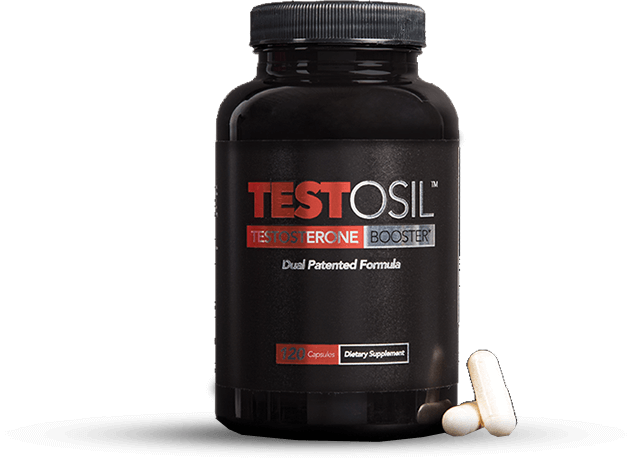
1. A simple symptom diary. Once a week, rate the same four things from 1 to 10: morning energy, libido, training performance, and sleep quality. Two minutes, same day each week. After 8 to 12 weeks you will have a trend instead of a hunch. This is the honest way to evaluate blends like Testosil, which is built around KSM-66 ashwagandha — the very extract used in the 8-week training trial — or any other booster: your own recorded experience over the full window.
2. A blood test. Feelings can suggest; only a laboratory measures. If you want to know your testosterone, the only valid route is a morning blood test — testosterone peaks early in the day, so clinics draw it in the morning — and because levels fluctuate, a low result is normally confirmed with a second morning test before anyone calls it low testosterone. No diary, wearable, or online quiz substitutes for that.
One practical point: if you test, test before you start a booster and again after 10–12 weeks, both times in the morning. That gives you a clean before-and-after instead of two unrelated numbers.
Honest Limitations: Who Do Boosters NOT Help?
Every honest guide has to draw this line clearly. Testosterone boosters are nutritional supplements for men whose levels are in or near the normal range and who want support for energy, training, and libido. They are not a treatment for clinically low testosterone.
If your symptoms are significant — persistent loss of libido, erectile difficulties, depressed mood, loss of muscle and increased body fat despite effort — the correct next step is a doctor and the two morning blood tests described above, not a stronger supplement. Men diagnosed with genuinely low testosterone may need medical treatment such as prescription testosterone therapy, which is a doctor-supervised decision with its own monitoring and risks. No capsule reviewed or sold through this site is a substitute for that evaluation, and any product page that implies otherwise should not be trusted.
If your levels are clinically low, a supplement is not the answer: see Testosterone Boosters vs TRT: What's the Difference?
The same honesty applies to expectations: a booster that suits you will feel like a modest, gradual lift over two to three months — not a transformation in a week. Judged on that realistic standard, the formulas on this site — including TestRX, whose formula includes tongkat ali, an ingredient researchers typically study over 4 to 12 weeks — deserve the full 8-to-12-week window before you decide.
If you are ready to run that fair trial, compare the formulas side by side on our product pages and use the Buy from Official Website links there to order from the manufacturer's own store — that is also the only way the makers' money-back guarantees apply. Give it the full window, keep the diary, and let your own notes make the final call.
Disclaimer: This article is for general information only and is not medical advice. Dietary supplements are not evaluated by the FDA for effectiveness, and these statements have not been evaluated by the Food and Drug Administration. These products are not intended to diagnose, treat, cure, or prevent any disease. Talk to your doctor before starting any supplement, especially if you take medication or have a medical condition. Last reviewed: October 2026.
