
- Quick Answer
- How the FDA's Fraud Database Works
- What the Analyses Found
- The Five Red Flags
- Calibrating Risk: Category Problem vs Product Record
- The Checking Routine, in Four Steps
- When is ED a symptom you should see a doctor about instead of buying supplements?
- Frequently Asked Questions
- How do I check a specific product against the FDA database?
- Does "all natural" on the label mean the product is drug-free?
- If a product works suspiciously well and fast, what does that suggest?
- Are products sold on big marketplaces safer?
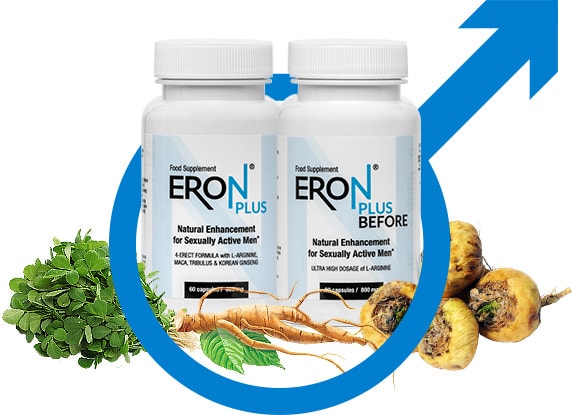
- Has the product reviewed on this site, Eron Plus, been flagged by the FDA?
- I've been taking a product like this without problems. What should I do?
- Read This Next
Disclosure: This article contains affiliate links. If you buy through them, we may earn a commission at no extra cost to you. It never changes our conclusions.
Quick Answer
The category has a documented adulteration problem, and that sentence deserves to be read precisely. Between 2007 and 2016, the US Food and Drug Administration flagged 776 supplement products containing unapproved drug ingredients — and 353 of them (45.5%) were marketed for sexual enhancement, the largest single category.
That is a fact about the category, not a verdict on any individual product. Most products in this aisle have never been flagged for anything. Your defence is not fear; it is a checking routine, and this article's job is to hand you that routine.
How the FDA's Fraud Database Works
Supplements in the US are not approved before sale. The FDA acts afterwards, when it finds a problem — typically through adverse-event reports, inspections, or testing of products it has reason to suspect. Confirmed cases land in its public Health Fraud Product Database, searchable by product name.
A listing means the agency's laboratory, or testing it relies on, found something that should not be there — usually an undeclared prescription drug. The FDA then issues a public notification, and sometimes the product is voluntarily recalled.
The distinction between those two outcomes matters. A notification is the FDA telling the public; a recall is the product actually leaving shelves. In the decade analysed below, the 776 flagged products produced 342 public notifications and 360 voluntary recalls — meaning a large share of products known to contain hidden drugs were never formally recalled at all.
Two limits matter for how you use it. First, absence from the database is not a safety certificate: the FDA itself notes its lists cover only a small fraction of the contaminated products on the market. Second, the database answers one question only — "has this product been caught?" — not "is this product good?"
How products get caught is worth knowing, because it explains the database's shape. In the 2014–2016 portion of the records, 38.6% of identified adulterated products came through online sampling and 34.3% through examination of international mail shipments — the FDA largely finds what it goes looking for, in the channels it watches.
That sampling logic means the database over-represents exactly the channels regulators already distrust — marketplace listings, imported products, gas-station brands — and under-represents everything else. An unlisted product from a watched channel has been lucky or clean; an unlisted product from an unwatched one has simply not been sampled.
What the Analyses Found
The scale comes from Tucker and colleagues' 2018 analysis in JAMA Network Open, which worked through the FDA's tainted-supplements records for 2007–2016: 776 adulterated products from 146 different companies.
Sexual enhancement was the largest category — 353 of the 776 products (45.5%). Among those 353 products, 166 (47.0%) contained sildenafil, the active ingredient of Viagra, none of it declared. Across all 776 products, 97.6% of the hidden ingredients were not declared on the label.
The adulterants are not always the approved drugs themselves. A 2023 review of the analytical literature counted 112 distinct unapproved PDE5 inhibitors — designer analogues of sildenafil, tadalafil and vardenafil — found in sexual-enhancement products between 2003 and 2023. Analogues have never been safety-tested in humans at all.
Some products hid more than an erection drug. Across the 776 flagged products, 20.2% contained more than one unapproved ingredient, and 14 of the 353 sexual-enhancement products (4.0%) contained dapoxetine — an SSRI antidepressant not approved in the US — alongside or instead of the expected PDE5 drugs.
And enforcement is porous: fewer than half of the flagged products (360 of 776, or 46.4%) were subject to a voluntary recall, and follow-up studies have found warned products still on sale. Catching a product is not the same as removing the problem.
The Five Red Flags
The FDA's own fraudulent-products guidance lists warning signs for this category. Distilled, the five that matter most:
- Instant-effect promises. Claims of working in minutes, or lasting 24–72 hours, describe drug pharmacology. An herbal capsule making them is either exaggerating or containing something it should not.
- Proprietary blends with no amounts. A label that lists ingredient names but no doses prevents every check in this article. Opacity is not proof of adulteration — it is the removal of your ability to tell.
- "No side effects" claims. Every pharmacologically active substance has effects and cautions. A blanket safety promise is a marketing statement, and in this category it correlates with the least careful makers.
- Gas-station, auction-site and marketplace channels. The FDA-flagged products concentrate in exactly these channels. The seller's own storefront is not a guarantee, but anonymous marketplace listings are the riskiest source of all.
- Doctor-persona marketing. Invented doctors, borrowed white coats and fake endorsements are a fraud pattern the FDA names explicitly. Real clinical evidence does not need a costume.
Calibrating Risk: Category Problem vs Product Record
Here is the distinction this article exists to protect, because both errors are common. Error one: "the category is dirty, so every product is spiked." Error two: "my product was never flagged, so the category problem doesn't apply to me."
An undisclosed-amount label is a transparency failure. It is not evidence of adulteration, and nothing on this page should be read as claiming otherwise about any specific product.
Take the two-part formula this site reviews, Eron Plus, as the transparency example: names-only ingredients, directions that contradict themselves between pages, and a maker who claims no side effects. Those are audit failures we can document. The product has no FDA adulteration listing that we can find — a different fact, stated just as plainly.
Our longer companion piece, on male-enhancement pills, FDA approval claims and red flags, works through the approval-myth side of the same problem. This article's narrower point stands alone: judge a product on its own record, and judge the category risk as real.
It is equally worth naming what the good end of this category looks like, because it exists: full doses on the label, directions that agree with themselves, claims sized to the trial record, and no doctor costumes.
A product meeting that standard has earned the right to be judged on its evidence rather than its category — which is the only fair deal on offer, for makers and buyers alike.
The Checking Routine, in Four Steps
Everything above condenses into a routine that takes about ten minutes before any purchase in this category.
Step one: search the database. Look up the exact product name and the selling company in the FDA's Health Fraud Product Database, including spelling variants from the packaging. A hit ends the process. No hit moves you to step two — not to the checkout.
Step two: audit the label. Amounts printed for every ingredient? Directions consistent everywhere they appear? A guarantee whose terms match its badge? Each failure is information about how the maker operates when nobody is watching.
Step three: check the channel. The maker's own storefront over marketplace listings, and never the gas-station or auction channel where flagged products concentrate. Where a product is sold is part of what it is.
Step four: interrogate the claims. Instant effects, "no side effects", permanent size, doctor personas — the five red flags above. One flag is a caution; three flags are a verdict, and the correct response to a verdict is to walk away rather than to discount it.
When is ED a symptom you should see a doctor about instead of buying supplements?
The last safety fact is about the symptom, not the supplements. Erection problems can be an early marker of cardiovascular disease — the small arteries involved show disease years before the heart announces it.
In the Multi-Ethnic Study of Atherosclerosis, 6.3% of men who reported ED went on to have a heart attack, cardiac arrest or stroke over about four years, against 2.6% of men who did not report ED. New or worsening ED deserves a check-up on its own merits.
Chest pain, erections lasting over four hours, or sudden vision or hearing changes are same-day problems. Set the supplement question aside and get medical care.
Frequently Asked Questions
How do I check a specific product against the FDA database?
Search the product's exact name — and the company name, if shown — in the FDA's Health Fraud Product Database. Then repeat the search with any variant spellings on the packaging. No result lowers concern; it does not eliminate it, because the database only holds products the FDA has caught.
Does "all natural" on the label mean the product is drug-free?
No. The flagged products were overwhelmingly marketed as natural, and 97.6% of the hidden drug ingredients in the 2007–2016 analysis were undeclared. "All natural" is a marketing phrase with no regulatory definition in this category and no testing behind it.
If a product works suspiciously well and fast, what does that suggest?
It is the pattern regulators warn about. Herbal ingredients act slowly and modestly on the trial record; a capsule that works in 30 minutes like a drug raises the possibility that it contains one. That is a reason to stop and check the database, not a bonus.
Are products sold on big marketplaces safer?
Not measurably. Marketplace listings are one of the channels where flagged products concentrate, and listings can persist under new names after a warning. The maker's own storefront, a disclosed full label, and a clean database search are the strongest combination available to a buyer.
Has the product reviewed on this site, Eron Plus, been flagged by the FDA?
We can find no FDA adulteration listing for it, and this article does not claim otherwise. Its documented problems are of the other kind: an ingredients list with no amounts, self-contradicting directions, and a "no side effects" claim. Those are reasons our review scores it 4.3/10 — they are transparency failures, not contamination findings.
I've been taking a product like this without problems. What should I do?
Run the four-step check on it now: database, label, channel, claims. If it fails materially, the prudent course is to stop and switch the conversation to a pharmacist — particularly if you take any prescription medicine. Feeling fine so far is weak evidence about a hidden ingredient whose risk is situational, such as a future nitrate prescription.
Last reviewed: October 2026. This article is educational and is not medical advice.
