
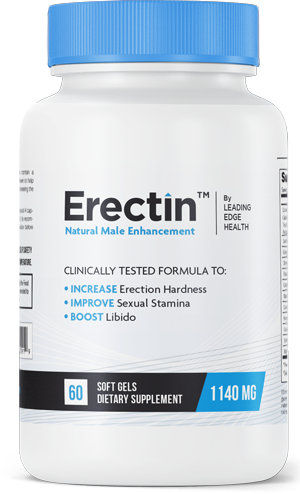
- Quick Answer: Are Male Enhancement Pills Safe?
- Are Male Enhancement Pills FDA Approved?
- What Has the FDA Actually Found in These Products?
- Is a Branded Formula the Same Risk as a Gas-Station Pill?
- Which Ingredients Carry Their Own Risks?
- What Are the Red Flags of an Unsafe Product?
- Who Should Never Self-Prescribe in This Category?
- What Should You Do If You Have a Bad Reaction?
Affiliate disclosure: This article contains affiliate links. If you buy through a link on this page, we may earn a commission paid by the manufacturer, at no extra cost to you. That never changes what we publish — and on a safety topic it means saying plainly that some products in this category have caused real harm, and that even the better-known formulas we cover are not risk-free.
Are male enhancement pills safe? The honest answer is that the question has no single answer, because "male enhancement pills" is not one product — it is a category that ranges from labelled formulas sold by a named company to anonymous tablets in a gas-station blister pack. Those two products sit in completely different risk classes. This guide separates them: what the law actually requires, what the FDA has found in the worst products, which risks remain even in legitimate formulas, and the red flags that should make you walk away from any bottle.
Quick Answer: Are Male Enhancement Pills Safe?
No supplement in this category is FDA-approved for safety or effectiveness before it is sold — that is simply not how the law works for dietary supplements, and any seller claiming "FDA approved" is misusing the term. The FDA has repeatedly found hidden prescription drugs — sildenafil, tadalafil, and chemical lookalikes — in hundreds of sexual-enhancement products, mostly anonymous ones sold through marketplaces, gas stations, and spam offers. A labelled formula bought from a named maker's own store is a different and lower risk, but "natural" is still not a safety guarantee: real ingredients have real interactions. Safety in this category is something you check, product by product — it is never something the label can promise you.
Are Male Enhancement Pills FDA Approved?
No — and understanding why is the single most important safety fact on this page. Under the Dietary Supplement Health and Education Act (DSHEA), the law that governs supplements in the United States, manufacturers do not need FDA approval before selling a dietary supplement. Unlike prescription drugs, supplements are not reviewed by the FDA for safety or effectiveness before they reach the market. The maker's responsibility is to ensure its product is safe and its claims are truthful; the FDA's role is largely reactive — it acts after products are already on sale, when problems are reported or testing finds a violation.
That flips the burden of proof most buyers assume. With a prescription drug, the government checked first. With a supplement, you are the first checkpoint. It also means that an "FDA approved" badge on a supplement website is itself a red flag: at best it is sloppy marketing, at worst it is a deliberate lie, because no such approval exists to claim. (A facility can be registered with the FDA, or make products under good manufacturing practices — both are real, and neither is an approval.)
What Has the FDA Actually Found in These Products?
The agency maintains a public database of tainted products, and sexual-enhancement supplements are one of its largest categories. Over the years the FDA has issued warnings about hundreds of products in this space after laboratory testing found undeclared pharmaceutical ingredients — most often sildenafil or tadalafil (the active ingredients in Viagra and Cialis), or close chemical analogues that have never been tested in people at all. The pattern is consistent: the products are typically anonymous or semi-anonymous brands, sold through online marketplaces, auction sites, gas stations, convenience stores, and spam advertising, often with names designed to sound like the prescription drugs they secretly imitate.
Why does a hidden drug matter if the drug itself is legitimate? Three reasons. First, dose: nobody knows how much is in the tablet, and testing has found amounts that can exceed a prescription dose. Second, interaction: sildenafil and tadalafil must never be combined with nitrate medications prescribed for chest pain, because the combination can drop blood pressure to dangerous levels — a man who thinks he bought an herbal pill has no reason to know he is taking that risk. Third, the analogues: some hidden ingredients are modified molecules invented to evade detection, with no safety testing behind them at all. A product that hides its ingredients has told you everything about how it will treat your safety.
These statements have not been evaluated by the Food and Drug Administration. This product is not intended to diagnose, treat, cure, or prevent any disease. This article is educational and is not medical advice.
Is a Branded Formula the Same Risk as a Gas-Station Pill?
No — and pretending otherwise would be as dishonest as pretending all pills are safe. The formulas we cover on this site, such as VigRX Plus and TestRX, differ from the tainted-product pattern in the ways that matter: they are sold by a named company with a real address and customer service, they publish a full ingredient list, they are made to a fixed formula, and the maker stands behind them with a money-back guarantee that only works if customers can find the company again. A business built on repeat orders and refunds has something to lose from harming people; an anonymous blister pack does not.
But keep the limits of that reassurance in view. A published ingredient list tells you what is supposed to be in the bottle; it is not independent proof of what is in your bottle, and no regulator has verified the formula's safety or effectiveness in advance. Branded formulas also lean on the same marketing language as the rest of the category. The honest position is: lower risk is not no risk, and the remaining risks are mostly about the ingredients themselves and how they interact with your body and your medication — which is the next section.
Which Ingredients Carry Their Own Risks?
Even a perfectly manufactured, honestly labelled formula contains biologically active ingredients. "Natural" describes where an ingredient comes from, not what it does in your body — several prescription drugs are plant-derived. The interactions most often flagged in this category:
- Ginkgo biloba. Appears in many male formulas, including VigRX Plus. Ginkgo is routinely flagged for a possible increased bleeding risk, particularly alongside blood thinners such as warfarin or daily aspirin, and before surgery.
- L-arginine. An amino acid used to support blood flow. Because it affects blood vessels, it is a caution alongside blood-pressure medication — the combination can push blood pressure lower than intended.
- Stimulant-type ingredients. Some formulas in the wider category include yohimbe or similar stimulant botanicals, which are associated with raised heart rate and blood pressure, anxiety, and a long list of reported adverse events. Check any label for them and treat their presence seriously, especially with a heart condition.
- Herbal blends generally. Ginseng, horny goat weed (epimedium), tribulus and others are pharmacologically active by design — that is the entire sales pitch. Anything strong enough to change how you feel is strong enough to interact with something else you take.
The practical rule: the risk of a supplement is rarely the supplement alone. It is the supplement plus your prescriptions, your conditions, and your age. That combination is exactly what no label can assess for you — and exactly what a pharmacist can, in about two minutes, if you show them the ingredient list.
We keep a full checklist for spotting fakes and buying safely here: How to Buy Supplements Safely Online (and Avoid Counterfeits).
What Are the Red Flags of an Unsafe Product?
Before the ingredient list, judge the sales pitch. These warning signs recur in the products the FDA warns about and in the category's worst sellers:
- "FDA approved" on a supplement — as explained above, that approval does not exist.
- Instant or same-night results promised from an herbal product — botanicals do not work that way; a pill that does work that fast is a reason to suspect a hidden drug, not to celebrate.
- Permanent size claims. No pill has been shown to permanently enlarge anything. Size promises are the category's oldest lie.
- "No side effects." Anything active enough to work has potential side effects. This claim is marketing, not pharmacology.
- No full ingredient list, or a "proprietary blend" that hides every amount — you cannot check interactions you cannot see.
- No real company behind it — no address, no phone number, no returns process, sold only through marketplaces, spam email, or social-media ads with comments disabled.
- Names and packaging imitating prescription drugs, or sold loose, in unmarked packs, or "not for retail sale."
A product does not need every flag to be a bad bet. Two or three of these together should end the consideration — there are enough labelled, accountable alternatives that no anonymous pill is ever worth the gamble.
Who Should Never Self-Prescribe in This Category?
- Men with heart disease, or who take nitrates (such as nitroglycerin) for chest pain. This is the interaction behind the FDA's most serious warnings. Do not experiment here — at all.
- Men on blood-pressure medication. Blood-flow ingredients plus your prescription can overshoot. Doctor or pharmacist first, always.
- Men on blood thinners, for the ginkgo-type reasons above.
- Anyone under 18. These products are formulated and marketed for adult men, full stop.
- Men whose erection problems are new, worsening, or persistent. Standard medical guidance treats ongoing erectile dysfunction as a possible early warning sign of cardiovascular disease. The safe move is a check-up that looks for the cause — not a supplement that papers over the signal.
None of this is meant to frighten you off the category entirely. It is meant to put the decisions in the right order: health conditions and prescriptions first, product second. If you are a healthy adult taking no medication, a labelled formula from an accountable maker, used at the label dose, is the lowest-risk way this category offers — and even then, the timelines are gradual, as we set out in our guide to how these products build up over weeks.
See that timeline here: How Long Do Male Enhancement Supplements Take to Work? An Honest Timeline.
What Should You Do If You Have a Bad Reaction?
Stop taking the product — immediately, not after one more dose to "make sure." Keep the packaging, including the bottle and any outer box: the lot number and seller details matter if the product turns out to be part of a wider problem. If symptoms are severe — chest pain, a sudden drop in blood pressure, an erection lasting more than four hours, fainting, or anything that frightens you — treat it as the medical emergency it may be and seek urgent care, and tell the clinicians exactly what you took.
Then report it. In the United States, adverse events from supplements can be reported to the FDA's MedWatch programme, online or by phone. Reporting is not bureaucracy for its own sake: because supplements reach the market without pre-approval, the FDA's warning system runs on these reports. The tainted-product database exists because people filed them. Your report is, quite literally, how the next buyer gets protected.
The bottom line: male enhancement pills are not one thing. The anonymous end of this category has a documented record of hidden drugs and real harm, and no price is low enough to make it sensible. The accountable end — named makers, published ingredients, a guarantee you could actually use — is a smaller, manageable risk, provided you check the ingredient list against your own medication and conditions first. If you browse the formulas on this site, browse them the way this article reads: labels open, red flags in mind, and your pharmacist on speed dial for anything that interacts.
Disclaimer: This article is for general information only and is not medical advice. Always consult a qualified healthcare professional before starting any supplement, especially if you have a medical condition or take prescription medication. Individual results vary, and no result is guaranteed.
Last reviewed: October 2026
