
Affiliate disclosure: This article contains affiliate links. If you buy through a link on this page, we may earn a commission paid by the manufacturer, at no extra cost to you. That never changes what we publish — and here it means answering "no" to a question where a vaguer answer would probably sell more pills.
Can male enhancement pills increase testosterone? The question makes sense on the surface: these products are marketed around male performance, libido and vitality, and testosterone sits behind all three. But marketing language and mechanism are different things. Enhancement formulas are built to support erections and desire. Testosterone is a hormone your body produces — and no enhancement pill has good evidence of raising it. Here is the short version, then the evidence behind it.
Quick Answer: Can Male Enhancement Pills Increase Testosterone?
No good evidence says they can. Male enhancement pills are erection-support formulas: their ingredients are aimed at blood flow, arousal and libido, not at hormone production. The best-studied product in the category had its users' testosterone actually measured in a clinical trial — and it did not move significantly. If your concern is genuinely low testosterone, that is a blood-test-and-doctor matter, and neither an enhancement pill nor a booster treats it.
Why Are Enhancement Pills and Testosterone Two Different Jobs?
An erection is mainly a blood-flow event. Enhancement formulas are assembled around that fact: ingredients intended to support circulation and arousal, taken daily or as directed, with any effect judged on sexual function. Testosterone production is a separate system — a hormone made in the testes under signals from the brain, influenced by sleep, weight, illness and age. A formula can plausibly nudge the first system without touching the second at all.
The ingredient list shows the divide. The best-known "male" botanical in these formulas, horny goat weed, has an active compound (icariin) that weakly inhibits PDE5 — the same enzyme prescription erection drugs target — in laboratory and animal research. That is an erection mechanism, and there is no published placebo-controlled human trial of it raising testosterone. Maca, another regular in these blends, has been tested in men and showed no change in testosterone or other reproductive hormones; where it appears to act, it acts on desire. Tribulus, marketed for decades as a testosterone ingredient, has repeatedly failed to raise testosterone in human trials. The enhancement shelf and the hormone shelf share vocabulary. They do not share mechanisms.
What Did the Best Enhancement Study Actually Measure?
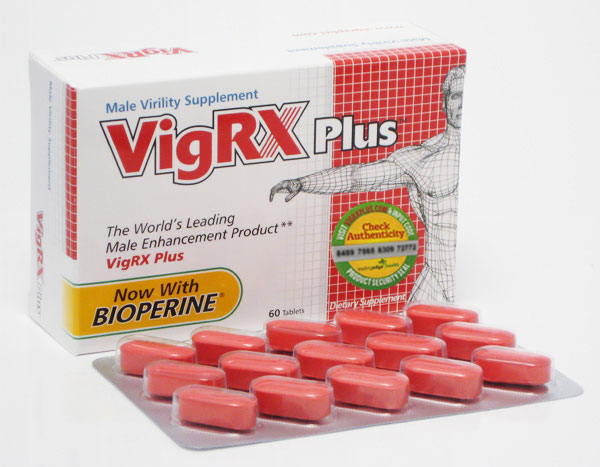
The strongest evidence in this category belongs to VigRX Plus, which was tested as a finished product in a randomized, double-blind, placebo-controlled trial: 78 men with mild to moderate erectile dysfunction, measured over 84 days. Erection scores improved meaningfully against placebo. And here is the part directly relevant to your question: the trial also measured testosterone — and found no significant effect on it. The product did the job it was designed for, and testosterone was not part of the result.
That is one product and one trial, and a single study cannot speak for every bottle in the category. But it is the best-measured answer available, and it points the same way as the ingredient evidence: when researchers actually check hormone levels instead of repeating the marketing, the increase is not there. We break the study down in full — including the higher dose it used and the guarantee gap — in our article on how long VigRX Plus takes to work and what its 84-day study measured.
These statements have not been evaluated by the Food and Drug Administration. This product is not intended to diagnose, treat, cure, or prevent any disease. This article is educational and is not medical advice.
But Don't Some Ingredients Appear in Both Kinds of Formula?
Yes — and the overlap is real, so it deserves a straight answer rather than a dismissal. Maca, tribulus and horny goat weed show up in testosterone boosters too, and a few enhancement formulas include ingredients from the booster world. Three things separate that overlap from evidence. First, as the ingredient audit above shows, the shared ingredients are mostly the ones with the weakest testosterone records — the ones that failed to raise it when tested. Second, even the booster ingredients with genuine support behind them — ashwagandha, fenugreek, tongkat ali — showed modest effects, mostly in men who started with low levels; that evidence does not transfer to a different formula at a different dose built for a different purpose. Third, dose: an ingredient included for libido flavour in an enhancement blend is rarely present at the amount used in its testosterone trials. We check each booster ingredient against the research, one by one, in our audit of testosterone booster ingredients and what actually has evidence.
What If Your Testosterone Really Is Low?
Then no pill on this page is the answer — including the testosterone boosters, which contain no testosterone and are not treatments for deficiency either. Low testosterone is a diagnosis, made from symptoms plus two separate early-morning blood tests, and sometimes it is itself a symptom of something else that needs finding. An enhancement pill taken for a hormone problem does a quiet double harm: it leaves the real issue unmeasured, and its libido effects, if any, can mask the signal that should have sent you for a test. Measure first. If the tests say deficiency, the treatment conversation is with a doctor.
The bottom line: male enhancement pills are built for erections and desire, and the one rigorous trial that measured testosterone found it unchanged. Judge these products on sexual function — the outcome they are actually designed and studied for — and judge your testosterone with a blood test, not a label claim. If an enhancement formula is what you are after, the product pages on this site show exactly what each one contains; if testosterone is the worry, the test comes first.
Disclaimer: This article is for general information only and is not medical advice. Always consult a qualified healthcare professional before starting any supplement, especially if you have a medical condition or take prescription medication. Individual results vary, and no result is guaranteed.
Last reviewed: October 2026
