
- Quick Verdict
- At a Glance: Fertility Factor 5 vs Semenax
- The Distinction Everything Else Depends On
- What Each One Is For
- Ingredients and Formula Compared
- Evidence Compared: A Product Study vs Ingredient Studies at the Right Dose
- Timeline and Guarantee Compared
- Price and Value Compared
- Safety, and Who Should Avoid Each
- Frequently Asked Questions
- Final Verdict
Affiliate disclosure: This article contains affiliate links. If you buy through a link on this page, we may earn a commission paid by the manufacturer, at no extra cost to you. That never changes what we publish — and here it means saying plainly, before any score appears, that this comparison is not a rivalry. Fertility Factor 5 and Semenax are shelved together, priced within ten dollars of each other, and constantly set side by side in roundup tables — but they were built for two different jobs. One targets the sperm parameters a semen analysis measures. The other targets the volume of the ejaculate itself. Picking the "better" one before naming which job you need done is how money gets wasted in this corner of the store.
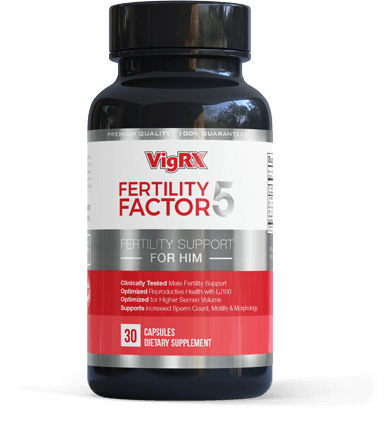
Fertility Factor 5 (our score 8.0/10) is a male fertility formula from Leading Edge Health's VigRX family, built around LJ100 at the studied dose. Semenax (our score 9.5/10) is the volume formula — the documented benchmark of its category, with a fully disclosed label and a maker-run placebo-controlled study. Both are daily supplements under a 67-day guarantee. This page explains what each is actually for, what evidence stands behind each claim, and how to tell which question you are really asking.
Quick Verdict
You are trying to conceive, and a semen analysis has flagged count, motility or morphology: Fertility Factor 5 is the product built for that conversation — five ingredients aimed at sperm parameters, its hero ingredient at the exact dose of the fertility study its maker cites, judged by a follow-up semen analysis at three months. You want larger volume and more intense orgasms, and fertility is not the issue: Semenax — the only product here with a study of the finished formula, a fully published label, and a stated timeline. You are not sure which problem you have: neither, yet. The answer starts with a semen analysis, not a checkout — volume and fertility are different measurements, and only one of them shows up on a lab report.
At a Glance: Fertility Factor 5 vs Semenax
| Fertility Factor 5 | Semenax | |
|---|---|---|
| Our score | 8.0/10 | 9.5/10 |
| Best for | Male-factor fertility concerns: sperm count, motility, morphology | Semen volume and orgasm intensity |
| Format / daily dose | Once daily (the maker does not state the exact number of capsules per day) | Capsules — 4 daily (2 morning, 2 night, with meals); 120 per bottle |
| Price for 1 month | $69; 3 months $169 ($56/bottle), 6 months $299 ($50/bottle). MSRP $79 | $59.95; 3 bottles $154.95, 6 for $289.95, 12 for $399.95 |
| Guarantee | 67-day money-back guarantee | 67-day money-back guarantee |
| Published evidence | Ingredient-level: several studies at or near the product dose, incl. a placebo-controlled LJ100 trial; no trial of the finished formula | Maker-reported randomized, double-blind, placebo-controlled study of the finished product (63 men, two months) |
The Distinction Everything Else Depends On
Volume is how much fluid an ejaculate contains. It is visible, it varies with hydration and with time since the last ejaculation, and it is what Semenax's study measured. Fertility is what is in the fluid: how many sperm, how well they move (motility), and how normally they are formed (morphology). Those are the parameters a semen analysis reports, and they are what Fertility Factor 5's formula is aimed at.
The two overlap in marketing and diverge in biology. A man can have generous volume and a low sperm count; a man can have modest volume and excellent parameters. Neither product's material measures the other's outcome: Semenax's study measured volume only — not fertility, not testosterone — and Fertility Factor 5 has no finished-formula study of any kind. Semenax's own merchant notes that increased sperm production naturally results in increased fertility, and Fertility Factor 5's maker lists increased semen volume among its aims. Treat both crossover lines as marketing, on both sides. We work through the underlying numbers in our guide to how much semen is normal, and how much it takes to conceive.
What Each One Is For
Fertility Factor 5 is positioned for men — and couples — who are trying to conceive where male-factor issues are the obstacle: low sperm count, poor motility, poor morphology. Its stated aims are to improve those three parameters, support spermatogenesis (sperm production), and support libido and sexual function along the way. Unusually for this category, it tells you how to judge it: the maker recommends a semen analysis after at least three months — a measurable endpoint rather than a feeling. Our full audit is in Fertility Factor 5, Answered.
Semenax is positioned for men aged 21 to 60-plus who want to increase the volume of ejaculation, with bigger, more intense orgasms as the headline claim. It does not position itself as a fertility treatment, whatever its marketing gestures toward. Its full timeline and study breakdown are covered in how long does Semenax take to work?, and its head-to-head with the other volume formula is our Semenax vs Volume Pills comparison.
Ingredients and Formula Compared
Fertility Factor 5 names five ingredients and claims no proprietary blend. The hero is LJ100, the patented Tongkat Ali extract, at 200 mg per daily serving — stated by the maker to be the same amount used in the fertility trial it builds its case on. Around it: Panax ginseng, zinc (described by the maker as a "clinically proven dose," amount unpublished), selenium (no label panel published; an amount can only be inferred indirectly from the maker's corporate page, so treat it as unverified), and BioPerine, included to aid absorption of the nutrients. Five named ingredients, one verified amount — the most important one.
Semenax publishes its full label: 18 ingredients, each with its amount per daily serving — Butea Superba 500 mg, L-Carnitine 500 mg, Maca 400 mg, Pine Bark Extract 300 mg, L-Arginine HCL 250 mg, L-Lysine 250 mg, and a further twelve at stated amounts down to 50 mg each. Because every amount is printed, you — or your doctor — can compare each dose against what research on that ingredient actually used. It is the most auditable label in this corner of the store.
Different auditing shapes, same lesson as everywhere in this category: Semenax can be checked completely and Fertility Factor 5 can be checked at its hero dose. What neither label can tell you is whether the formula works — that is the evidence section, and it splits the other way.
Evidence Compared: A Product Study vs Ingredient Studies at the Right Dose
Semenax holds the stronger document. Per the maker, it was tested in a randomized, double-blind, placebo-controlled study run by Vedic Lifesciences: 63 men aged 30 to 60 took Semenax or a placebo for two months, and significantly more of the men taking Semenax achieved an increase in semen volume of 20 percent or more (p=0.0008 — a statistical measure indicating the difference was very unlikely to be chance). The design is the right kind, and a result stated as a threshold is more honest than a cherry-picked average. The limits, at full strength: one study, run for the maker, of modest size, not independently replicated — and it measured volume only. It says nothing about sperm count, motility or conception.
Fertility Factor 5 has no study of the finished formula, and the maker does not claim otherwise. Its evidence is ingredient-level — but stronger ingredient-level evidence than this category usually has: several studies at or near the product's doses, including a study of 75 men given 200 mg of LJ100 daily (the same dose and ingredient as the product) and a separate double-blind, placebo-controlled LJ100 study of 26 men on sexual function. Two honest complications belong here. First, the maker's own pages disagree about the LJ100 fertility trial — the brand site reports a semen analysis at three months and 11 spontaneous pregnancies across six months, while the maker's corporate page describes a nine-month study with different figures (15% of partners impregnated); the conflict is the maker's and remains unresolved on its own sites. Second, one study the maker's retail page cites used 300 mg of LJ100 daily — more than the product's 200 mg. The 200 mg fertility study matches the dose; that one does not.
The summary a scoreboard cannot show: Semenax's evidence is about the product but only about volume. Fertility Factor 5's evidence is about fertility parameters but only about an ingredient. Which file matters is decided entirely by which problem you have.
Timeline and Guarantee Compared
Both products carry the same 67-day money-back guarantee, and both timelines strain against it in the same way — Semenax less, Fertility Factor 5 more.
Semenax: the maker states most men notice a difference in 2 to 3 weeks, with results building over 8 to 12 weeks, and its study measured at two months. The guarantee covers essentially the full period over which its effect was measured — you can run the same length of trial the researchers ran and still decide at the end of it.
Fertility Factor 5: the maker recommends judging by a semen analysis after at least three months — sperm production is a months-long cycle, and there is no honest shorter answer. But the refund window closes at 67 days, roughly a month before that judging point. If you buy it, buy it knowing your enforceable decision point is day 60, on incomplete information, or accept that a full three-month verdict sits outside the guarantee. The maker's own 3-month pack ($169) is the sensible purchase shape for the timeline it recommends; it does not extend the refund window.
Price and Value Compared
Fertility Factor 5 is $69 for one month (MSRP $79), $169 for three months ($56 a bottle) and $299 for six ($50 a bottle). Semenax is $59.95 for one bottle, $154.95 for three (about $52 a bottle), $289.95 for six (about $48) and $399.95 for twelve (about $33). Semenax is cheaper at every rung and publishes the longer ladder. Fertility Factor 5's pricing is perfectly legible too — it simply starts $9 higher and asks for a three-month commitment to match its own judging advice. On our Value sub-scores the comparison lands accordingly (Fertility Factor 5: 7.5/10) — but a price comparison between two products doing different jobs should be the last step of the decision, not the first.
Safety, and Who Should Avoid Each
Neither maker publishes a product-specific side-effect list. Semenax's public amounts are a practical safety advantage: a doctor or pharmacist can see exactly what you are taking and judge interactions concretely. Fertility Factor 5's maker states the formula is all-natural with no known adverse side effects, but publishes no warnings or exclusions at all — treat that as a gap, not as reassurance, as we say in its review.
- Anyone under 18 — both products; Semenax is positioned for adult men, 21 and over.
- Women who are pregnant or nursing — both products.
- Anyone taking prescription medication, or with a health condition, without asking a doctor first — both products, per the makers' own standard direction.
- Couples undergoing fertility treatment — talk to your fertility specialist before adding either product. Male fertility problems can have medical causes a supplement cannot address, and a supplement trial running alongside treatment muddies every measurement you are paying for.
- Anyone whose low volume arrived suddenly, or comes with pain or blood in the semen — that is a medical pattern, not a supplement one, whichever product you were considering.
These statements have not been evaluated by the Food and Drug Administration. These products are not intended to diagnose, treat, cure, or prevent any disease. This article is educational and is not medical advice.
Frequently Asked Questions
Can Semenax improve fertility?
Its marketing gestures at it; its evidence does not. The one study of Semenax measured semen volume — not sperm count, motility, morphology or conception rates. Volume and fertility are different measurements, and a supplement that demonstrably moves one has shown nothing about the other. If fertility is the goal, Semenax is not the documented tool for it, at any score.
Does Fertility Factor 5 increase volume too?
The maker lists increased semen volume among its aims, but the evidence it cites is about sperm parameters at the LJ100 dose — count, morphology, motility — not a measured volume result, and there is no trial of the finished formula. If volume is your primary aim, that is Semenax's measured territory; if parameters are, Fertility Factor 5 is the aimed product.
Which should I buy first if I have both concerns?
Start with the measurement, not a product: a semen analysis tells you whether count, motility or morphology actually need attention. If the parameters are the problem, Fertility Factor 5 matches the brief. If the parameters are fine and volume is the dissatisfaction, Semenax. Taking both at once makes it impossible to tell what changed, and no maker's material covers the combination.
Why does Semenax score higher if it can't help fertility?
Because scores are awarded for the product's own job. Semenax earns 9.5/10 as a volume formula: full label, product-level study, stated timeline that fits its guarantee. Fertility Factor 5 earns 8.0/10 as a fertility formula: a dose-matched hero ingredient and honest judging advice, held back by the absence of a finished-formula trial, four unverified amounts, and a guarantee that closes before its own judging point. A higher score on a different job does not make Semenax a fertility product.
Is there anything between them — a volume product aimed at fertility?
In this store, the honest answer is that the boundary is also patrolled by two neighbours: Volume Pills, the other volume formula (compared with Semenax in the head-to-head linked above), and SemEnhance, a companion product aimed at semen taste rather than volume or fertility. None of them collapses the distinction this page is built on: count, motility and morphology are one job; volume is another.
Final Verdict
Choose Fertility Factor 5 if fertility is the live question — a semen analysis has flagged count, motility or morphology, or you are preparing to have one done. It is the only product here aimed at those parameters, its hero ingredient sits at its studied dose, and its maker tells you to judge it by a lab result at three months. Score for its job: 8.0/10. Buy the three-month pack if you buy at all, and keep the day-60 guarantee arithmetic in view.
Choose Semenax if volume and orgasm intensity are the aim and fertility is not the issue. It is the best-documented product in this comparison — full label, the pair's only product study, a timeline that fits its guarantee — and our highest score in this category at 9.5/10. Just do not buy it as a fertility supplement; its paperwork does not say that, and neither do we.
Whichever you choose, buy through the official store so the 67-day guarantee is real, via the "Buy from Official Website" button on our product pages: Fertility Factor 5 · Semenax.
These statements have not been evaluated by the Food and Drug Administration. These products are not intended to diagnose, treat, cure, or prevent any disease.
Disclaimer: This article is for general information only and is not medical advice. Always consult a qualified healthcare professional before starting any supplement, especially if you have a medical condition or take prescription medication. Individual results vary, and no result is guaranteed.
Last reviewed: October 2026
