
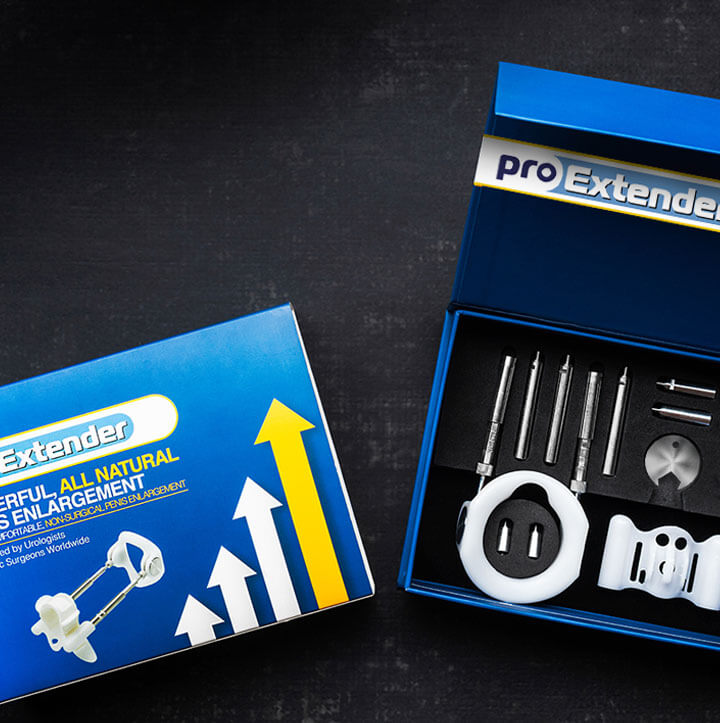
Affiliate disclosure: This article contains affiliate links. If you buy through a link on this page, we may earn a commission paid by the manufacturer, at no extra cost to you. That never changes what we publish — and on this page our interest runs against a simple story in either direction, because the disagreement itself is the story. Ask about penis extenders in a forum and you will find men reporting real, measured gains. Ask a urologist — in a clinic, or on the doctor-answered question sites where men put the same question to physicians directly — and you will often get caution, scepticism, or a flat "don't." Both sides are describing something true. They are just not describing the same men, the same evidence, or the same question. This article explains why the gap exists, using the documents this store audits every week.
Quick Answer: Two Samples, Two Conclusions
Users judge extenders by the men who finished the course and measured. Doctors judge them by the whole population — including the men who quit, the men who hurt themselves, and the men whose problem was never size to begin with. The formal evidence underneath both views is thin: a handful of small studies, no large definitive trial, and no standard protocol. Into that vacuum, each side pours its own experience. Traction has a genuine clinical foothold — urology literature describes extenders as a minimally invasive elongation option, and traction has defined medical uses, notably in Peyronie's disease and after prostate surgery. But the consumer version of the claim ("wear this, gain inches") rests on far less than the clinical version, and doctors who push back are usually pushing back on the consumer version. Both things are true at once, which is exactly why the argument never settles.
What the Users Are Seeing
Start with the users' side, because it is not imaginary. Traction is a real technique: sustained mechanical tension is used across medicine to lengthen tissue, and studies of extender-class devices have recorded average gains on the order of 1–3 cm over about six months. The Turin study by Gontero and colleagues — summarised on the maker of ProExtender's own site — found average gains of about 0.9 inches flaccid and up to half an inch erect over six months. Men who complete a six-month, hours-a-day course and measure carefully are plausibly measuring something real. Forums amplify those men, because they are the ones with a result worth posting.
What forums do not amplify: the much larger group who bought a device, wore it for three weeks, and stopped. They have nothing to report, so they don't — and every extender's evidence file, in every sense, is built from the finishers. The makers' numbers come from the same filtered pool: the one device-specific study behind ProExtender (1998, 18 men) reports that "all patients achieved penile lengthening" — a 100% success rate the homepage repeats proudly, in a study with no control group, run at 12 hours a day, whose participants were selected, supervised and followed up every two weeks. That is what a finishers-only sample looks like when it is dressed as a study.
What the Doctors Are Seeing
Now the clinic's side. A urologist meets a different cross-section: the man who used a device aggressively and caused pain or injury; the man with Peyronie's disease who self-treated through the painful, active phase instead of being assessed; the man whose distress about size is the actual clinical problem — most men who seek enlargement are within the normal range, and no device treats the anxiety that sent them shopping. Doctors also see the base rates users never think about: how many buyers finish a 4–6 month course at 5–6 hours a day (the routine in ProExtender's own usage guide, examined in our wear-time guide)? Nobody publishes that number, but every clinician suspects it is small — and a treatment nobody completes has an effectiveness of roughly zero in the real world, whatever it does in a supervised study.
Doctors are also trained to discount exactly the kind of evidence this category produces. Small samples. No control groups. Symposium presentations instead of peer-reviewed trials. Protocols (12 hours a day in the ProExtender study) that the same maker's consumer instructions quietly halve. When a physician on a Q&A site answers "there's no good evidence these work," they usually mean: no evidence of the standard I am required to act on. That is a stricter claim than "nothing has ever been measured" — and it is compatible with every user report being honest.
The Question Each Side Is Actually Answering
Much of the disagreement dissolves once you separate the three questions being collapsed into one:
- "Can traction lengthen penile tissue at all?" — The literature's answer is a qualified yes: modest average gains, measured, over months. This is the question users hear answered.
- "Will this device, used as its maker instructs consumers, deliver those gains to a typical buyer?" — Unproven. The studied protocol and the sold protocol differ, completion rates are unknown, and no large trial of any consumer extender as actually used exists. This is the question doctors hear asked.
- "Should this man, with this anatomy and this medical history, use one?" — A clinical judgement, not a product question. For diagnosed Peyronie's in the stable phase or post-surgical rehabilitation, many urologists answer yes and supervise it (see our Peyronie's guide). For a healthy man with normal anatomy and high anxiety, the same doctor may answer no — because the expected benefit is small, the burden is large, and the underlying concern is not one a device addresses.
Marketing collapses all three into the first question's yes. Sceptical one-liners collapse them into the second question's no. The useful position is per-question — which is why our full evidence audit, Do Penis Extenders Actually Work?, grades the device study, the class literature and the maker's instructions separately.
Why the Evidence Stays Too Weak to Settle It
It is worth asking why, after three decades of devices, there is no decisive trial. Partly money: a large, sham-controlled, year-long traction trial is expensive, and devices are sold profitably without one. Partly design: blinding a traction study is nearly impossible (men know whether they are wearing a device for six hours), recruitment for a 12-hour-a-day protocol is brutal, and "success" itself is contested — stretched-flaccid measurements, erect measurements, and user satisfaction are three different endpoints that studies mix freely. And partly incentives: makers already have their marketing ("clinically proven," "100% success rate"), and academia gains little from re-measuring a consumer gadget. The result is a permanent evidence twilight — enough signal that doctors cannot honestly call traction nonsense, enough weakness that they cannot honestly call it proven. The disagreement is not a failure of either side. It is what a genuinely unsettled evidence base sounds like.
How to Use Both Sides
Treat user reports as evidence about finishers: what a completed course can produce, and what the daily burden actually feels like — information no study publishes. Treat urology caution as evidence about everyone else and everything else: completion, injury, misdiagnosis, and whether size is even the problem. Then place the maker's own documents where they belong — as the weakest source in the room. When ProExtender's homepage claims "100% safety without injury" and a "completely painless" process while its own usage guide anticipates soreness, warns "don't go to extremes" and publishes no contraindications at all, the disagreement between the homepage and the guide tells you more about this product than any forum thread. Our ProExtender review scores it 6.0/10 on exactly that basis: a real technique, a small real study, and sales copy that consistently outruns both.
These statements have not been evaluated by the Food and Drug Administration. This product is not intended to diagnose, treat, cure, or prevent any disease. This article is educational and is not medical advice.
Disclaimer: This article is for general information only and is not medical advice. Always consult a qualified healthcare professional before using a traction device, especially if you have a medical condition, penile curvature or pain, or take prescription medication. Individual results vary, and no result is guaranteed.
Last reviewed: October 2026
