
- Quick Answer: Is It Normal for Libido to Change After 40?
- Why Does Libido Change After 40?
- Is It Low Desire, or Is It Discomfort?
- What Actually Helps, in Order?
- What About Libido Supplements for Women — What Can They Honestly Do?
- Which Ingredients Do Women's Formulas Use, and What Is the Evidence?
- When Should You Talk to a Doctor?
Affiliate disclosure: This article contains affiliate links to products sold through this store. If you buy through one of these links, we may earn a commission from the manufacturer, at no extra cost to you. That never changes what we say here — and this guide is deliberately honest about where supplements belong in the picture: near the end of the list, not the beginning.
If you are experiencing low libido in women after 40 — in your own body — the first thing worth hearing is that you are not unusual, and nothing about you is broken. A change in desire during your forties and fifties is one of the most common, and least talked about, parts of the menopause transition. It also rarely has a single cause: hormones, sleep, physical comfort, stress, medication, and relationship factors usually stack on top of each other.
Quick Answer: Is It Normal for Libido to Change After 40?
Yes. Desire commonly changes during perimenopause, which typically begins in the mid-forties, and after menopause, reached at around age 51 on average. For some women the shift is gradual; for others it feels sudden. Some women notice no change at all; a few feel more interested than before.
Two things matter most. First, a change in desire only needs attention if it bothers you — a lower libido that you are comfortable with is not a medical problem. Second, when it does bother you, it is rarely something you simply have to accept. Working through the causes in a sensible order — comfort and sleep first, supplements last — is how this guide proceeds.
Why Does Libido Change After 40?
Hormone shifts. During perimenopause, estrogen levels fluctuate and then fall. Estrogen supports vaginal tissue health, natural lubrication, and blood flow to the genitals, so as it declines, arousal can become slower and less reliable, and tissue thinner and drier. Testosterone, which also contributes to women's desire, gradually declines from around age 40 onward — often starting before periods become irregular. Progesterone falls too, and its decline is linked with lighter, more broken sleep.
Sleep and exhaustion. Hot flushes and night sweats fragment sleep, and few things flatten desire as reliably as chronic tiredness. For many women, it is partly an energy problem in disguise.
Mood, stress, and life load. The forties and fifties often carry peak caring responsibilities — children, ageing parents, demanding work — alongside mood changes that can accompany the menopause transition. Desire is sensitive to all of it.
Medication. Some prescription medicines can dampen desire or arousal as a side effect; antidepressants are a well-known example, whose sexual side effects have been studied in their own right. If your desire changed around the time a medication started, that timing is worth raising with your doctor — never by stopping a medicine on your own, but by asking what alternatives exist.
Relationship factors. In long-term relationships, desire often becomes less spontaneous and more responsive — something that grows out of closeness, touch, and feeling wanted. A partner's own health changes, unspoken frustration, or years of routine can all lower the temperature, and none of that is a hormone problem.
Is It Low Desire, or Is It Discomfort?
These two problems are constantly confused, and they need different fixes — so it is worth working out which one is leading for you.
Discomfort is physical. As estrogen falls, vaginal tissue can become thinner, less elastic, and drier — a change doctors call genitourinary syndrome of menopause. Sex that was once comfortable can become sore or painful. Low desire, by contrast, is about interest itself: fewer sexual thoughts, less inclination to initiate, less response when a partner does.
The two feed each other. If sex has started to hurt, anticipating that discomfort is one of the most powerful suppressors of desire — you may still be interested in principle, but your body has learned to say no first. So ask yourself two questions. Do I still feel drawn to intimacy, but avoid it because it is uncomfortable? Then discomfort is probably the place to start. Do I rarely think about sex at all, even when I am rested and relaxed? Then desire itself is the thread to follow.
For discomfort, the starting points are simple and available without prescription: a lubricant for in-the-moment comfort, and a vaginal moisturiser used regularly for ongoing dryness. If dryness and soreness persist despite those, a doctor can discuss further options with you. A libido supplement does not treat dryness.
For related background on a different supplement category, see our guide HGH Supplements Explained: What They Are, What They Are Not.
What Actually Helps, in Order?
1. Sleep and stress first. Because exhaustion sits underneath so much of this, better sleep is often the highest-return change: a cooler bedroom, a consistent wind-down, and addressing night sweats where you can. Reducing the overall stress load matters too.
2. Treat discomfort. Use the lubricants and moisturisers described above, and give tissue time to become comfortable again. Removing pain from the picture often lets desire return on its own.
3. Talk, and rebuild context. Tell your partner what has changed and what you need; most partners would rather know than guess. Closeness that is not aimed at sex — affection, time, touch without an agenda — is frequently what responsive desire grows from. Removing pressure is often the mechanism, not a consolation prize.
4. Review the practicalities. Check the medication question with your doctor or pharmacist, and mind the unglamorous basics: alcohol, general health, and genuine downtime.
5. Then, if you wish, supplements. Only then does it make sense to consider a daily women's formula — as one modest support among several.
Please note: dietary supplements are not medicines. The statements in this article have not been evaluated by the Food and Drug Administration, and supplements are not intended to diagnose, treat, cure, or prevent any disease or medical condition, including menopause symptoms.
What About Libido Supplements for Women — What Can They Honestly Do?
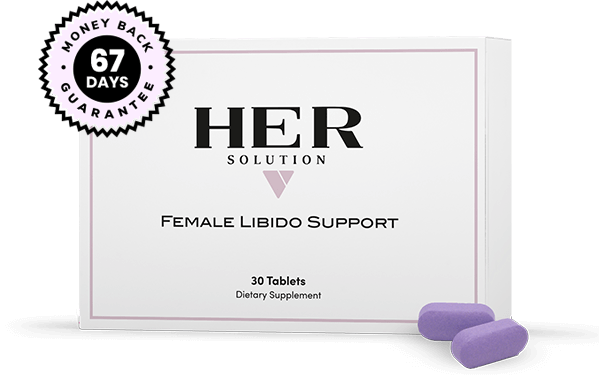
The women's formulas sold through this store — daily supplements such as HerSolution and Provestra — are positioned to support desire and arousal as part of a daily routine. That word "support" is doing honest work, and it is worth being precise about what it means.
A supplement like this is not a medicine, it is not hormone therapy, and it cannot reverse the hormonal changes of menopause. It will not fix dryness caused by thinning tissue, repair a strained relationship, or substitute for sleep. What it is positioned to do is offer nutritional and botanical support for desire and arousal, for women whose main remaining issue — after comfort, sleep, and context are addressed — is that their interest itself feels muted.
Set your expectations accordingly: these are gradual products. Any effect builds over weeks of daily use, not days, and for most women a good outcome honestly looks like "somewhat more interest, somewhat more responsiveness" — not a transformation. The evidence base for this whole category is limited, as the next section shows. And buy only from the manufacturer's official website, where you deal with the maker directly.
Before you order, see our guide to how to buy supplements safely online and avoid counterfeits.
Which Ingredients Do Women's Formulas Use, and What Is the Evidence?
Almost everything below is ingredient-level evidence from small studies — a much weaker thing than proof that any particular product works.
Maca. This Andean root is the most studied of the group. A systematic review found only a handful of small trials of maca in menopausal women — around 85 participants in total — with mixed results: improvements in desire, arousal, or orgasm in some studies, and no effect on desire in one. In one small six-week trial, postmenopausal women taking maca reported improved sexual function scores while their hormone levels did not change — suggesting any effect does not come from acting like a hormone. Maca has also been studied in women whose sexual difficulties were linked to antidepressants. Verdict: genuinely interesting, genuinely preliminary.
L-arginine. An amino acid involved in blood flow, which matters for arousal. Nearly all the research is on combinations — blends of L-arginine with ginseng, ginkgo, and damiana, tested in trials of about four weeks, where women reported improvements in desire and satisfaction that varied by menopausal stage. Reviewers note some of these trials carry a risk of bias, and because the ingredients were blended, no one can honestly credit L-arginine alone.
Ginkgo biloba. Included in formulas for its circulation effects. A systematic review of the clinical trials concluded that ginkgo alone appears to have only a limited effect on sexual function, though it may do more in combination with other ingredients. One caution is firmly established, though: ginkgo can increase bleeding risk, so it is a poor idea alongside blood-thinning medication without medical advice.
The pattern across all three is the same: small studies, short durations, blended formulas, and results that suggest possibility rather than proof. A product containing these ingredients is a reasonable experiment for some women — it is not a promise.
When Should You Talk to a Doctor?
Supplements and self-help sit at one end of the scale. A doctor's appointment is the right step when:
- Low desire distresses you or is straining your relationship — that alone is reason enough; you do not need to earn the appointment with worse symptoms.
- The change was sudden, or arrives alongside other new symptoms, rather than drifting in gradually with the menopause transition.
- You suspect a medication is involved. Do not stop or reduce a prescribed medicine yourself; ask about alternatives or dose instead.
- Sex is painful, or dryness and soreness continue despite lubricants and moisturisers.
- Anything feels unusual for you — your own sense that something is off is worth a professional look.
A clinician can check for other health causes, review your medications properly, and talk through the full range of options with you — including whether any prescription or hormone-based treatment is appropriate in your situation, a decision that belongs in that room, not in an article.
Changes in desire after 40 are common, multiply caused, and — when they trouble you — worth addressing in the right order: rest, comfort, connection, a medication check, and only then a supplement, chosen with level expectations. If you decide a daily formula fits that picture, the two options in this store are HerSolution and Provestra; order through the Buy from Official Website route so you are dealing with the manufacturer directly.
Disclaimer: This article is for general information and education only. It is not medical advice and is not a substitute for the advice of your own doctor or another qualified healthcare professional. Always talk to a healthcare professional before starting any supplement, especially if you are pregnant or nursing, take prescription medication (including blood thinners or antidepressants), or have a medical condition.
Last reviewed: October 2026
