
- Quick Answer: What Are the Side Effects of HGH Supplements?
- First: There Is No HGH in These Products — and That Cuts Both Ways
- What Side Effects Do the Amino-Acid Formulas Cause?
- Why Do the Glandular Ingredients Deserve Their Own Section?
- Who Must Not Take HGH Supplements?
- How Do These Risks Differ From Real HGH's Risks?
- What Should You Do Before — and During — Taking One?
Affiliate disclosure: This article contains affiliate links. If you buy through a link on this page, we may earn a commission paid by the manufacturer, at no extra cost to you. That never changes what we publish — and on a side-effects page it matters most: this page lists risks only, including for products we sell, because a reader who finds the risk list somewhere else will not trust anything else we say.
What are the side effects of HGH supplements? It is the question this category least likes to answer, partly because the name itself confuses the answer. These products are not the hormone — so they do not carry the hormone drug's risk list — but "not the drug" is not the same as "nothing to know." What follows is the risk profile of what is actually in the bottle: amino-acid formulas with herbal and glandular ingredients. For what these products are and how they are supposed to work, our explainer HGH Supplements Explained covers it; this page is the caution label.
Quick Answer: What Are the Side Effects of HGH Supplements?
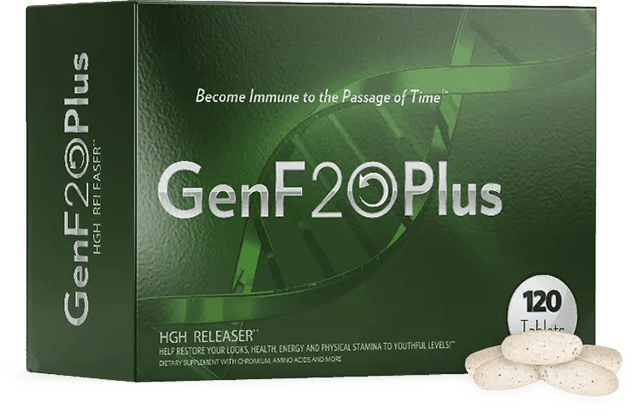
The commonly reported effects are mild and unglamorous: digestive upset — stomach discomfort, loose stool, nausea — is the most frequent complaint, particularly while your body adjusts. Individual ingredients can occasionally cause headaches, and GABA, present in many of these formulas, can cause drowsiness in some people. There is no published pattern of serious harm associated with the best-known product we cover, GenF20 Plus . But two honest qualifiers stand next to that: supplements are not put through drug-style pre-market safety trials, so an absence of reported harm is not a completed proof of safety — and some people should not take these formulas at all. Both lists are below.
First: There Is No HGH in These Products — and That Cuts Both Ways
Nothing sold legally over the counter contains human growth hormone. Real HGH is a prescription-only drug, given by injection under medical supervision. The supplements in this category — GenF20 Plus, and the related formula GenFX from the same maker — are built mainly on amino acids such as L-Arginine, L-Glutamine, L-Glycine, L-Lysine and L-Ornithine, intended to support the pituitary gland's own release of growth hormone. That distinction shapes this whole page. You are not exposed to the hormone itself, so you are not exposed to the drug's risk profile. You are exposed to everything actually in the formula — and a formula is a longer list than the marketing suggests.
What Side Effects Do the Amino-Acid Formulas Cause?
Set expectations at the right level. Amino-acid-based formulas are generally mild, and the side effects reported for this category are the ordinary kind:
- Digestive upset is the common one: stomach discomfort, loose stool, or nausea, particularly as your body adjusts. This is the complaint to expect if you expect any.
- Headaches are reported occasionally with individual ingredients in these blends.
- Drowsiness can occur in some people from GABA — an amino-acid-like compound included in many formulas and also sold on its own for relaxation. It is a sensible reason to pay attention to when in the day you take a formula, and to how you feel before driving or working.
- No stimulant effect: these formulas contain no stimulant jolt and no drug active — the wired, jittery profile belongs to other supplement categories, not this one.
One format note: with GenF20 Plus, the complete system is tablets and an oral spray used alongside them, so everything on this page applies to the system as a whole, not to the tablets alone. And if you take any product in this category and something feels wrong — a reaction that persists, anything unusual — the correct move is to stop and, if it continues, see a doctor, keeping the packaging so the product can be identified precisely.
These statements have not been evaluated by the Food and Drug Administration. This product is not intended to diagnose, treat, cure, or prevent any disease. This article is educational and is not medical advice.
Why Do the Glandular Ingredients Deserve Their Own Section?
Because they are the part of the label most buyers never read. Formulas like GenF20 Plus include Deer Antler Velvet, Colostrum, and Pituitary (Anterior) Powder alongside the amino acids. The deer antler velvet and pituitary powder are glandular, animal-derived ingredients — dried, powdered animal tissue, included on the theory that they support the body's corresponding systems. Three practical consequences. Colostrum is a dairy product — the first milk produced after calving — which makes it a hard stop for anyone with a milk allergy. Animal-derived is itself a decision: some buyers are perfectly comfortable with glandular ingredients; others avoid them on principle or because they avoid animal products, and either position is legitimate — you are entitled to know they are in the formula before you decide. And the amounts are published for the product we cover (16 ingredients with per-tablet amounts), which means you can show the full list to a doctor rather than describing it from memory. That is the label working as it should.
Who Must Not Take HGH Supplements?
- Anyone under 18. Products aimed at adult hormone support are not formulated or intended for minors; a still-developing endocrine system is not a place for hormone-adjacent experimentation.
- Women who are pregnant or breastfeeding. The precautionary answer for this entire category is no, absent a doctor's explicit advice. Safety is not established.
- Anyone with a milk allergy. The formula contains colostrum, a dairy product. Read this as a hard stop, not a caution.
- Anyone with a hormone-sensitive condition — or a history of one. A product whose entire purpose is to influence a hormone pathway is a decision for your treating clinician, not a casual experiment.
- Anyone with a current or past cancer diagnosis. Growth hormone and IGF-1 are growth signals; experimenting with anything marketed around them without an oncologist's input is not sensible.
- People with diabetes or blood-sugar problems. Growth hormone interacts with glucose metabolism — even prescription HGH is flagged for effects on blood sugar — so this category should not be used without medical advice.
- Anyone taking prescription medication. Interactions with supplements are understudied rather than nonexistent. Clear it with your doctor or pharmacist first, and show them the full ingredient list.
How Do These Risks Differ From Real HGH's Risks?
This is the comparison the category's name invites, so let us make it precisely. Real HGH (somatropin) is an actual hormone drug: prescription-only, injected, supervised by a doctor, approved for specific diagnosed conditions such as growth hormone deficiency, expensive — and carrying real risks and monitoring requirements , which is exactly why it is dispensed the way it is. The supplements on this page are not that product, do not contain that hormone, and do not carry that drug risk profile. Anyone who converts that sentence into "so supplements are proven safe," however, has added a step the evidence does not contain. Supplements are not safety-tested like drugs before they reach the shelf. The honest position is a two-sided one: the risk list for these formulas is shorter and milder than the drug's — and it is also less completely mapped. Mild and known beats dramatic and known, but "less completely mapped" is a real property, not fine print.
What Should You Do Before — and During — Taking One?
- Read the whole label, including the glandular ingredients and the amounts. If a product will not publish them, that is information.
- If you take any prescription medication, ask first. One conversation with your doctor or pharmacist closes most of the uncertainty on this page, and the published ingredient list makes it an easy conversation to have.
- Treat new symptoms as data, not as a phase. Digestive upset while adjusting is common and usually settles; anything persistent or unusual is a reason to stop and seek advice, not to double the dose.
- If you have symptoms of actual growth hormone deficiency, skip the category. The right step is testing and medical care — a supplement is not a substitute for treatment of a diagnosed condition.
The bottom line: HGH supplements are amino-acid formulas with a hormone's name, and their side-effect profile matches what they actually are: digestive upset as the common complaint, occasional headaches, possible drowsiness from GABA, glandular ingredients that some people must avoid and others reasonably choose to — and a firm no for anyone pregnant, under 18, milk-allergic, living with a hormone-sensitive condition or a cancer or blood-sugar history, or taking prescription medication without a doctor's say-so. That is a manageable risk list for a healthy adult who has read it. It is not an empty one — and any page that tells you it is empty is selling, not informing.
Disclaimer: This article is for general information only and is not medical advice. Always consult a qualified healthcare professional before starting any supplement, especially if you have a medical condition or take prescription medication. Individual results vary, and no result is guaranteed.
Last reviewed: October 2026
