
- Quick Answer: How Do You Buy a Scar Cream Sensibly?
- Check 1: Scar Type First — Including the Exception
- Check 2: A Full INCI List Published — or Walk Away
- Check 3: Concentration Honesty — the Study Dose vs the Formula Dose
- Check 4: One Maker, One Formula — the Two-List Caution
- Check 5: The Guarantee Maths — Price the Course, Then Check the Clock
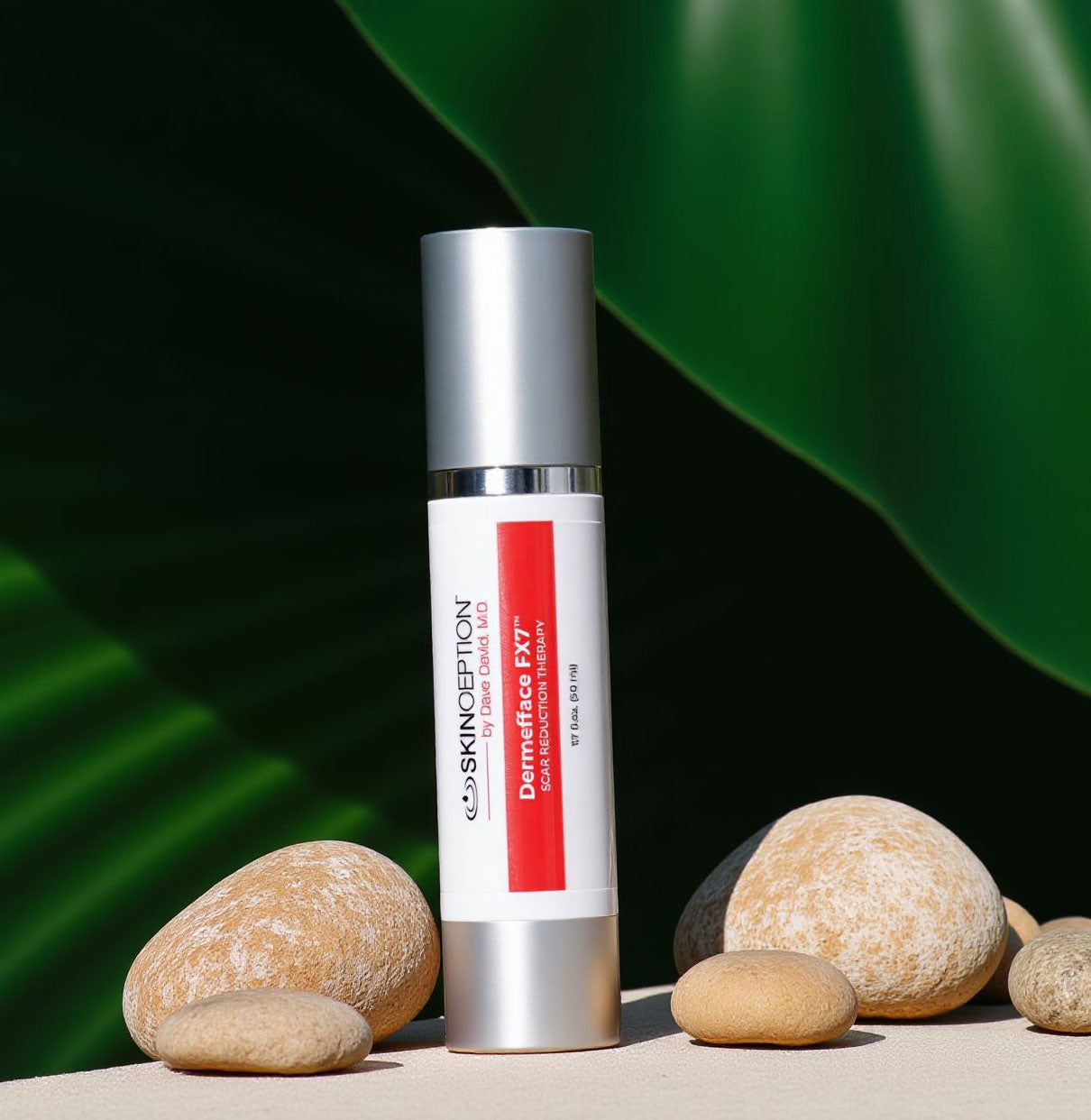
- The Worked Example: Dermefface FX7 Against Every Check
Affiliate disclosure: This article contains affiliate links. If you buy through a link on this page, we may earn a commission paid by the manufacturer, at no extra cost to you. That never changes what we publish — and here it means writing a guide you can use against our own product. This store sells one scar cream, Dermefface FX7 ; the last section of this page holds it up against every check below, including the two checks it only partly passes, and you can check our working.
Most scar creams are bought in the wrong order: ingredient claims first, price second, and whether the cream is even meant for their kind of scar last — if at all. That wastes money, because a scar cream is a slow, months-long course aimed at one specific piece of tissue. This guide reverses the order. Scar type first. Then the full ingredient list. Then whether the concentrations behind the studies match the tube. Then whether the maker's own pages agree with each other. And only then the money: what a full course costs, and whether the guarantee lasts long enough to judge it.
Quick Answer: How Do You Buy a Scar Cream Sensibly?
Run five checks, in this order. One: confirm your scar type is one the maker actually lists — and check the exceptions first, because at least one common scar type is routinely excluded. Two: demand a full INCI ingredient list; if the maker will not publish one, walk away. Three: compare the concentration in any study the maker cites against the formula — a study at 5% does not evidence a cream at 2%. Four: check whether the maker's own pages print the same formula; two conflicting lists are a transparency finding, not a footnote. Five: price the full recommended course — not the first tube — against the guarantee window, noting where that guarantee's day count comes from.
Check 1: Scar Type First — Including the Exception
Scars are not one thing, and makers know it even when their headlines pretend otherwise. Our worked example's maker lists the scar types it addresses as acne, burns, hypertrophic, chicken pox and surgery scars, "and more," and positions the cream for both established and still-developing scars. That list is the product's real label — anything outside it is a hope, not a claim. Read a maker's list the way you would read an inclusion list in a contract, and read the exclusions even more carefully than the inclusions.
The exclusion that matters most in this category is the keloid exception . Keloid scars — the raised, expanding kind that grow beyond the original wound — are the single stated exception for Dermefface FX7: its maker says treatment of keloid scars should be discussed with your doctor, and does not list keloids among the types the cream addresses. A maker that prints an exception is giving you usable information; a maker whose page implies every scar is suitable is giving you none. If your scar is a keloid, this check ends the purchase conversation for this cream, whatever the ingredient list says.
Two further rules belong here. First, closed wounds only : begin only once the wound is closed and dry, with sutures, stitches and staples removed — a scar cream is never a wound treatment. Second, match the scar to the timeline before the price: this maker states minor surface scars take three to four months and deep surgery or injury scars at least six months. Our companion post, Dermefface FX7, Answered , works through the scar-type questions in full.
Check 2: A Full INCI List Published — or Walk Away
The INCI list is the complete, standardised ingredient declaration — every ingredient in the tube, in the industry's naming format. It is the minimum document a serious topical product owes you, because without it there is nothing to audit: no way to check for an ingredient you avoid, no way to compare two creams except by their adjectives, and no way to test the marketing against the contents. The rule is deliberately blunt: if a maker will not publish a full INCI list, walk away , however good the before-and-after photographs look.
Our worked example passes this check on its brand page — and the pass is worth describing precisely, because it also shows the check's limit. The brand page (skinception.com) publishes a complete list: Aqua; Dimethicone; Panthenol; Hexapeptide-9; Allantoin; Rosa rubiginosa (rosehip) seed oil; Carbomer; Triethanolamine; Phenoxyethanol; Potassium sorbate. Ten ingredients, fully named. What that page does not publish is amounts — no percentages for any of them. A full INCI list tells you what is in the tube; it does not tell you how much. That gap is exactly what the next check is for.
Check 3: Concentration Honesty — the Study Dose vs the Formula Dose
Ingredient studies are run at specific concentrations, and a result at one strength is not evidence at another. So whenever a maker cites a study, ask two numbers: the concentration the study used, and the concentration in the product you would actually apply. If the maker publishes only the first, you are being shown the evidence for a different, stronger cream than the one for sale.
This category's clearest example sits inside our own product's material. The cited niacinamide study — an eight-week application in which 89% of participants reported a "noticeable" or "significant" decrease in hyperpigmentation — used niacinamide at 5% . The same maker's formula list puts the product's niacinamide at 2% . The study supports the ingredient at more than twice the formula's strength; whether 2% performs the same is not established by the maker's material. We call this the niacinamide gap, and it is priced into our Evidence sub-score (5.5/10). The same discipline applies to the other headline figures: the type I collagen increase of 1190% (Pro-Coll-One+) and type III increase of 1257% (Vitalayer) are ingredient-supplier laboratory numbers, including work in cultured human fibroblasts — not measurements from applying this cream to scars — and the one named human trial (Vitalayer's supplier trial) tested that single ingredient at 3% for 56 days on 25 female volunteers with an average age of 60, measuring wrinkles and moisture, not scars. There is no trial of the finished cream. Publishing concentrations at all puts a maker ahead of most of this shelf — but it makes the gap checkable, not absent.
These statements have not been evaluated by the Food and Drug Administration. This product is not intended to diagnose, treat, cure, or prevent any disease. This article is educational and is not medical advice.
Check 4: One Maker, One Formula — the Two-List Caution
Before you buy, do one unglamorous thing: compare the formula on the maker's brand page with the formula anywhere else the maker sells or describes the same product. They should be the same list. When they are not, you no longer know exactly which bottle you are buying — and that uncertainty belongs in the decision, at full weight.
Our worked example is the cautionary case. The brand page's list (check 2) contains dimethicone, hexapeptide-9 and rosehip seed oil, and none of the named branded actives. The maker's own retail page prints a different formulation, with concentrations — Symglucan (10%), Pentavitin (5%), Dl-Panthenol (5%), Vitalayer (3%), Pro-Coll-One+ (2%), Niacinamide (2%) and Allantoin (0.5%), delivered with Hydrolite 5 — plus a full INCI list including beta-glucan, saccharide isomerate and hydrolyzed soybean fiber. The two lists cannot both describe the current bottle; the overlap is panthenol and allantoin. Our house rule: the brand page is the formula of record, and the retail percentages are the maker's detailed, possibly previous, formulation. Note what this does to check 3: the 2% niacinamide figure itself comes from the retail list, so the dose-gap audit rests on secondary material until the maker reconciles its pages. Two conflicting lists do not make a product a scam; they make its documentation unfinished — and unfinished documentation is a risk to price in.
Check 5: The Guarantee Maths — Price the Course, Then Check the Clock
Scar creams are sold by the tube and used by the course, so do the course arithmetic first. Per the maker's retail FAQ, one pump lasts about 30 days applied to a single scar area — roughly one month, at $59.95 . The maker's course lengths are three to six months: 3 pumps $129.95 , 6 pumps $199.95 . The honest price of trying this product as its maker directs is therefore $129.95 to $199.95, with first changes expected beginning around four weeks and a minimum 90-day commitment. Budgeting $59.95 for a scar result prices a third of a minor-scar course.
Now set the course against the guarantee — and check where its number comes from, because here the provenance is part of the fact. The maker's brand page promises that your scars will fade but prints no day count at all . The 90-day figure comes from the maker's own retail FAQ: try it for 90 days and return within 97 days of purchase for a full refund of the product price, minus shipping; for multi-container orders, return the first three empty containers plus all additional unopened containers within the same window, with refunds limited to one order per customer. Older third-party listings citing 67 days are contradicted by that FAQ. On those terms the maths is unusually fair: the 90-day window covers the maker's minimum commitment and a full minor-scar course, though a six-month deep-scar course runs well past it. A guarantee whose day count you cannot find on the maker's own pages is not a guarantee you should bank on.
The Worked Example: Dermefface FX7 Against Every Check
Here is Dermefface FX7 ($59.95 per pump) marked with the rules above. Check 1, scar type: pass, with the exception printed — acne, burn, hypertrophic, chicken pox and surgery scars listed; keloids excluded and referred to a doctor; closed, dry wounds only; sensitive skin directed to patch-test first. Check 2, INCI: pass — a full ten-ingredient list on the brand page, though without amounts. Check 3, concentrations: partial — concentrations are published in the maker's retail material, which is rare, but the headline niacinamide study used 5% against the formula's 2%, all evidence is ingredient-level, and no trial of the finished cream exists. Check 4, one formula: fail, for now — the brand and retail pages print materially different formulas; until the maker reconciles them, the brand page is the record and the percentages provisional. Check 5, guarantee maths: pass on the retail FAQ's terms — about a month per pump, a realistic $129.95–$199.95 course, and a 90-day guarantee (return within 97 days, refund minus shipping) covering the minimum course — with the caveat that the brand page prints no day count.
That pattern is why the product earns 7.0/10 in our review — Ingredients 7.5, Evidence 5.5, Safety 7.5, Value 5.5. Its sibling Kollagen Intensiv does a different job — overall skin ageing rather than scars — and our guide to what to look for in an anti-aging cream applies the same label literacy to that shelf.
The bottom line: buy a scar cream in this order — scar type first, with the keloid exception and closed-wound rule checked before anything else; a full INCI list or no purchase; study concentrations matched against formula concentrations; one formula across the maker's pages; and course maths set against a guarantee whose day count you have actually located. A cream that survives those five checks is a reasonable, guaranteed trial.
Disclaimer: This article is for general information only and is not medical advice. Always consult a qualified healthcare professional before starting any supplement, especially if you have a medical condition or take prescription medication. Individual results vary, and no result is guaranteed.
Last reviewed: October 2026
