
- Quick Answer: The Evidence Grades
- Extenders: Measured Gains, at a Measured Price in Hours
- Pumps: A Legitimate Device Answering a Different Question
- Pills: Erection Claims Wearing Size Clothing
- Side-by-Side: Method, Evidence, Burden, Cost
- How to Decide: Match the Method to the Actual Problem
- A Note on the Fourth Option Nobody Asked About: Surgery
Affiliate disclosure: This article contains affiliate links. If you buy through a link on this page, we may earn a commission paid by the manufacturer, at no extra cost to you. That never changes what we publish — and this site sells two of the three categories below (an extender and a shelf of pills) while selling no pumps at all, so the grading here cannot be explained by what we stock. It is explained by the evidence, which is lopsided: of the three methods men buy to increase penis size, exactly one has ever produced a measured length gain in a human study. This guide grades each method on what is actually published — not on what its marketing promises — and tells you which problem each method genuinely addresses, because they are not interchangeable.
Quick Answer: The Evidence Grades
- Extenders (traction): the only method with size evidence. Small studies of extender-class devices report average length gains of roughly 1–3 cm over about six months of daily, hours-long wear. Evidence grade: real but modest, and hard-earned.
- Pumps (vacuum devices): a real medical tool, no size evidence. Vacuum erection devices are an established aid for achieving an erection for intercourse. The effect is temporary by design, and no credible published evidence shows permanent enlargement. Evidence grade for size: none.
- Pills: no size evidence at all. No supplement pill has a published trial showing increased penis size. The best-documented pill in this store was trialled for erection quality — a different outcome. Evidence grade for size: none. For erection support, product-specific and limited (below).
If size is the goal, the rest of this article explains why the ranking falls that way — and why men still buy all three.
Extenders: Measured Gains, at a Measured Price in Hours
An extender holds the penis under gentle, sustained traction for hours a day, over months. The mechanism — tissue adapting to sustained mechanical load — is borrowed from orthopaedics, and it is why traction alone, of the three methods, has a clinical literature. The quotes makers rely on are class-level: the British Journal of Urology (2008) called penile extenders "a minimally invasive and effective treatment option to elongate the penile shaft," and a 2010 National Library of Medicine line calls extenders "the only evidence-based technique of penile elongation." The best-known class study (Gontero, Turin) measured average gains of about 0.9 inches flaccid and up to half an inch erect over six months — with a device that, as one maker's own site concedes, "did not live up to its claim."
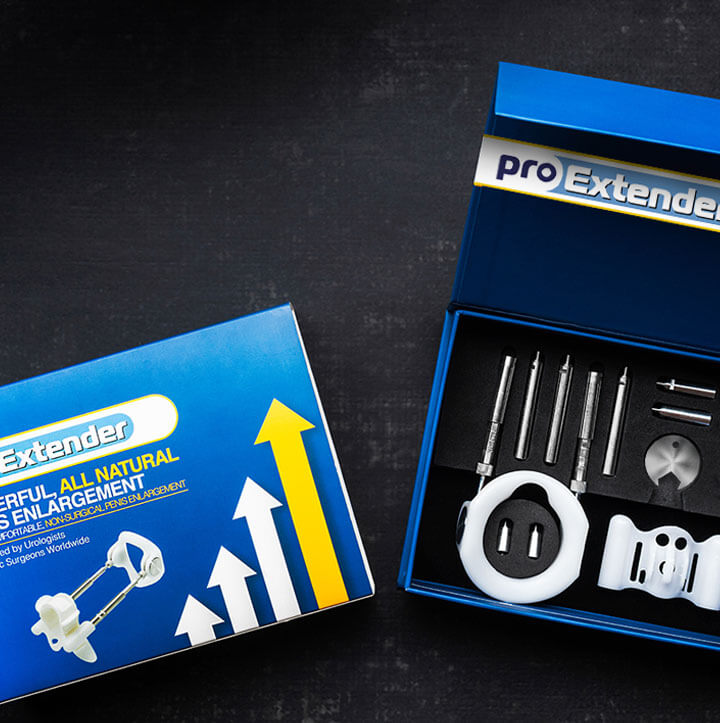
The device-specific evidence is thinner. For ProExtender, the extender in this store, the one study of the product itself is a 1998 symposium report: 18 men, 12 hours a day, an average erect gain of 2.8 cm — labelled "preliminary" by the maker, with no control group described, and run at double the 5–6 hours a day the maker's usage guide now recommends. Our score for it is 6.0/10, and the full audit is Do Penis Extenders Actually Work? The honest summary for the category: gains are plausible and measured, averages are modest, variance is wide, and the cost is roughly a thousand hours of wear. Traction also has the category's one genuine medical second use — it is studied and used for Peyronie's curvature and post-surgical length preservation, under medical supervision (see our Peyronie's guide).
Pumps: A Legitimate Device Answering a Different Question
A penis pump (vacuum erection device) draws blood into the penis by negative pressure; a constriction ring then holds the erection for intercourse. As an erection aid, this is established, mainstream medical equipment — urologists recommend vacuum devices for erectile dysfunction, including after prostate surgery, and their effectiveness for producing a usable erection is not in serious dispute. We sell no pumps on this site, and we say this plainly anyway: for the job they are designed for, they work.
For enlargement, the picture is empty. The pump's effect is a temporary engorgement that subsides when the ring comes off; no published study demonstrates permanent length or girth gains from pump use, and the "pump for size" marketing that fills search results attaches no trial, no measurement protocol and no follow-up to its claims. There are also real misuse risks the size-marketing omits: excessive vacuum or session length can bruise, damage tissue and worsen the very function men are trying to improve. Grade: a medical erection aid with zero published size evidence — buy one for erections if a doctor suggests it, never for growth.
Pills: Erection Claims Wearing Size Clothing
No pill — herbal, "male enhancement," or otherwise — has a published human trial demonstrating increased penis size. Not one, from any maker, including ours. What the best pills in this category have is evidence about erections, and the two outcomes are constantly blurred in marketing because firmer erections measure and photograph larger. Keep them separate:
- VigRX Plus was tested in a randomized, placebo-controlled trial (78 men, 84 days, published 2012): erectile-function scores rose from about 16 to about 25 in the product group against a flat placebo. Caveats we print everywhere: the trial dose was double today's label dose, the sponsor was the company behind the product, and the trial found no size outcome because it never measured one — it measured function.
- Erectin likewise rests on a maker-cited placebo-controlled trial of its formula for erection support — again, function, not size.
- Volume products such as Semenax and Volume Pills address semen volume and orgasm intensity — a third, separate outcome that marketing also dresses in size language.
So a pill can be a rational purchase for erection quality — judged on its own trial, at its own outcome — while being an evidence-free purchase for size. Any pill page that implies growth ("bigger," "longer") without a size trial behind it is selling the blur, not the product. Our pill reviews score documentation for exactly this reason, and none of them credits a size claim.
Side-by-Side: Method, Evidence, Burden, Cost
| Extenders | Pumps | Pills | |
|---|---|---|---|
| What it actually does | Sustained traction; tissue adaptation over months | Vacuum-drawn erection, held by a ring, for intercourse | Daily formula aimed at blood flow / erection quality |
| Published size evidence | Yes — small studies, ~1–3 cm averages over ~6 months | None for permanent size | None |
| Published evidence for its other use | Peyronie's / post-surgical length preservation (clinical literature) | Erection aid for ED — established medical use | Erection quality — product-specific trials for a few formulas |
| Daily burden | 5–6+ hours a day for 4–6 months (per maker guides) | Minutes, at time of use | Seconds — capsules with meals |
| Typical cost | One-time; $189 for ProExtender (maker's cart); category range $100–$400 per the maker's retail store | One-time device cost; medical-grade units vary | Monthly; e.g. $69/box VigRX Plus, falling per-box on bundles |
| Main risks / gaps | Soreness, injury if forced; protocols untested as sold; no contraindications published by some makers | Bruising / tissue damage from overuse; temporary effect sold as growth | Unpublished doses on many labels; absolute safety claims; interactions unaddressed by makers |
How to Decide: Match the Method to the Actual Problem
If the problem is size, and you accept months of daily hours: traction is the only method with anything to grade. Go in on the study numbers, not the homepage numbers; read the guarantee conditions before purchase (ProExtender's are conditional — ProExtender, Answered lays them out); and if curvature is part of the picture, a urologist precedes the purchase, not follows it.
If the problem is erections that won't happen or won't hold: that is erectile dysfunction, and its evidence-based ladder starts with a doctor — vacuum devices sit on that ladder legitimately, as do prescription medications that no supplement page replaces. A trialled erection-support pill is a reasonable documented experiment within that conversation, not a substitute for it.
If the problem is erection firmness and confidence, without an ED diagnosis: the pill shelf is the low-burden option — chosen on published trials and published labels, judged over 8–12 weeks, with the guarantee deadline (day 60 of 67, typically) marked in advance.
And if the problem is that the numbers in your head don't match the numbers in the studies: most men who shop this category are within the normal range, and no method here changes that arithmetic much — the largest extender averages are around an inch, earned over half a year. That is not a reason to feel sold short; it is the fact base every honest purchase in this category should start from.
A Note on the Fourth Option Nobody Asked About: Surgery
Surgery is the comparison point the device makers themselves raise, so it belongs in a complete grading. ProExtender's homepage cites a study published in European Urology in which 42 men underwent enlargement surgery and 65% were unsatisfied, at prices the maker quotes as "$5,000… $10,000… $15,000 and beyond." That is a maker's selected citation, not our audit of the surgical literature — but the underlying shape is not controversial: surgery is the most expensive, least reversible option in this category, with real complication risks, and it is a decision for a specialist consultation rather than a buying guide. It is included here so the three graded methods are not mistaken for the whole landscape.
These statements have not been evaluated by the Food and Drug Administration. These products are not intended to diagnose, treat, cure, or prevent any disease. This article is educational and is not medical advice.
Disclaimer: This article is for general information only and is not medical advice. Always consult a qualified healthcare professional before starting any supplement or device, especially if you have a medical condition or take prescription medication. Individual results vary, and no result is guaranteed.
Last reviewed: October 2026
