
Affiliate disclosure: This article contains affiliate links. If you buy through a link on this page, we may earn a commission paid by the manufacturer, at no extra cost to you. That never changes what we publish — and here it means saying plainly what most comparison pages hide: neither product has been put through a trial of the finished formula, both lean on studies of their ingredients, and the real differences between them are the guarantee, the label, and the routine — not magic.
Testosil and TestRX are the two mid-priced testosterone boosters in this store's range, both from Leading Edge Health, both $69 for a first month. On the surface they look interchangeable. They are not. One sells you the strongest refund terms in the catalogue and a headline ingredient with a genuine study behind it. The other sells you the most open label in the range — every ingredient, every amount — and a bodybuilding angle. This page puts them side by side, section by section, using only what each maker publishes.
Quick Verdict
Choose TestRX if you want to know exactly what you are swallowing, in what amounts, and you train: its full formula is published, its score in our review is higher (8.0/10), and its positioning is built around muscle growth, energy and recovery. Choose Testosil if the risk of wasting money worries you more than the label does: its lifetime guarantee removes the refund deadline entirely, and its headline ingredient, KSM-66, carries the single strongest ingredient study in this comparison — even though that study used twice the standard daily serving. Both are daily supplements judged over weeks, and neither has been trialled as a finished product.
Testosil vs TestRX at a Glance
| Testosil | TestRX | |
|---|---|---|
| Our score | 7.5/10 | 8.0/10 |
| Best for | Risk-averse buyers; men 25+ wanting muscle, energy and libido support behind a lifetime guarantee | Label readers and lifters; men noticing age-related testosterone decline |
| Format / daily dose | Capsules; one serving = 4 capsules, 1–2 servings daily | Capsules; 120 per box, a one-month supply (daily capsule count not specified in the maker's material we reviewed) |
| Price for 1 month | $69 (one bottle at the one-serving routine) | $69 (one box) |
| Guarantee | Lifetime, as stated by the merchant | 67-day money-back guarantee |
| Published evidence | One double-blind, placebo-controlled study of the headline ingredient (KSM-66) — not of Testosil itself | Maker-cited studies of two ingredients (ZMA; D-aspartic acid) — not of TestRX itself |
What Each One Is For
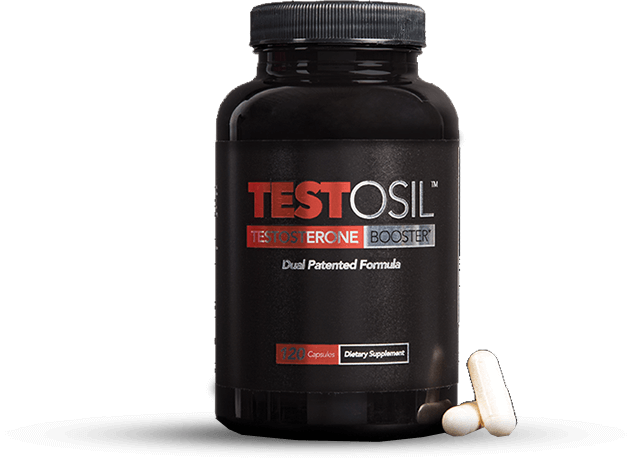
Testosil is positioned for men aged 25 and over who want to support testosterone in the service of muscle mass, energy and libido. It is the guarantee-led entry in the range: the maker's marketing leads with the formula's "clinically-validated ingredients" and the lifetime guarantee behind them. Our Testosil FAQ answers the product's own questions in full.
TestRX is the bodybuilding-angled entry: a natural testosterone booster that the merchant also presents as a natural bodybuilding supplement that helps with protein synthesis, pointing to bigger muscle growth, more energy and faster recovery. It is formulated for men noticing age-related testosterone decline — the maker notes testosterone typically falls after the age of 30. Our TestRX FAQ covers its timeline, use and safety in the same way.
The overlap is large — both are daily, non-prescription supplements that support the body's own production rather than supplying the hormone — but the intent differs in emphasis: Testosil sells reassurance, TestRX sells a training-support formula with an open label.
Ingredients and Formula Compared
This is where the two products diverge most sharply, and it is a genuine philosophical split.
Testosil contains 12 ingredients: KSM-66 ashwagandha root extract, fenugreek seed extract, ZMA (zinc, magnesium and vitamin B6), D-aspartic acid, L-arginine HCL, Panax ginseng, garlic bulb extract, pantothenic acid (vitamin B5), vitamin D3 and AstraGin, which the maker includes to support absorption. Of those twelve, exactly one amount is disclosed: the KSM-66, at 300 mg per serving. The other amounts are not published, so the blend as a whole cannot be audited dose by dose.
TestRX publishes everything. Per serving: fenugreek seed extract (50% saponins) 300 mg, D-aspartic acid 2,300 mg, magnesium (as magnesium aspartate) 200 mg, zinc (as zinc monomethionine) 10 mg, vitamin B6 5 mg, vitamin K2 (MK4) 20 mcg, and vitamin D3 1,140 IU. The formula is built around the ZMA combination — zinc monomethionine aspartate, magnesium aspartate and vitamin B6 — with fenugreek, D-aspartic acid, D3 and K2 around it.
Read the contrast carefully. TestRX's shorter list is fully checkable: you can compare each amount against the amounts used in research on that ingredient. Testosil's longer list gives you more ingredients but less information — breadth without doses. Neither approach proves a product works; but if "show your working" matters to you, only one of these labels does it.
Evidence Compared
Neither finished product has been trialled, and both makers cite ingredient studies. The quality and the fit of those citations differ.
Testosil's anchor is the stronger single study: an 8-week, double-blind, placebo-controlled trial in which 57 men aged 18 to 50 took 300 mg of KSM-66 twice daily alongside resistance training; testosterone rose by 96.2 ng/dL against 18.0 ng/dL on placebo (p = 0.004), and cortisol fell by 27.9%. Proper design, real numbers. The catch is dose: the study used 600 mg of KSM-66 a day. Testosil provides 300 mg per serving, so the studied amount arrives only on the maximum two-serving routine — not on the standard one-serving day most buyers will actually follow. And it remains a study of one ingredient, in training men, not of this formula.
TestRX's citations are two ingredient studies. In a 2000 study the maker cites, ZMA was associated with a 30% testosterone increase in NCAA football players over a training period. In a 2009 study, D-aspartic acid raised testosterone by up to 43% in 12 days in 20 of 23 men. Both are real findings about ingredients — and both are narrower than they sound: trained young athletes in one case, a small, short study in the other. Neither tested TestRX, and neither tested men like most of its buyers.
Our scoring reflects that balance: TestRX 8.0/10 against Testosil 7.5/10 — the gap comes from the fully disclosed label and the formula's construction, not from stronger evidence, because on evidence alone the honest headline is that Testosil owns the best single study and TestRX owns the more transparent set of citations. If you have not yet established that a booster is even your question, read our signs of low testosterone checklist first — several of those symptoms have causes no supplement on this page addresses.
Timeline Compared
TestRX is the only one of the two whose maker publishes a results timeline: most men notice more energy and stamina within the first month, with the most noticeable results between one and three months of daily use. Testosil's maker publishes no timeline at all; the only timeframe in its material is the eight weeks of the KSM-66 study — a frame borrowed from the ingredient's research, not a promise about the bottle.
Practically, judge both the same way: a full two months of consistent daily use before drawing conclusions. That is longer than TestRX's guarantee comfortably covers (see below) and exactly the span Testosil's guarantee was built to absorb.
Price and Value Compared
Headline prices are identical — $69 for a first month — and then the routines pull them apart.
Testosil is sold at $69 for one bottle, $177 for three ($59 per bottle) and $294 for six ($49 per bottle). One bottle is a 30-day supply at the standard one-serving routine: $69 a month. But remember the evidence section: reaching the KSM-66 dose used in the study means two servings a day, which halves a bottle's life to 15 days and doubles the effective cost to roughly $138 a month at single-bottle pricing. The label allows both routines; they are very different purchases.
TestRX is $69 for one box, then $199 for three boxes, $389 for six and $747 for twelve — the per-box price falls more slowly than Testosil's, and there is no dosing fork in its arithmetic: one box is one month, full stop.
Over a two-month trial at standard routines, the two cost the same $138 either way. The value difference is not the sticker; it is what stands behind the money, which is the next section.
Guarantee Compared
This is Testosil's home ground, and it is not close. As the merchant states it, Testosil carries a lifetime guarantee: you can return your bottles — opened and unopened — at any time, for a full refund on all unopened bottles and on one opened bottle. Read it precisely: a one-bottle trial is fully protected forever; a multi-bottle order is protected on every unopened bottle plus the first opened one. No deadline ever closes while you judge the product.
TestRX carries a 67-day money-back guarantee with tighter mechanics: try it for 60 days (two containers) and, if you are not satisfied, return the first two empty containers plus any unopened ones within 67 days of delivery for a refund excluding shipping; it applies to one order per customer. Set that against the maker's own timeline — most noticeable results at one to three months, up to roughly 90 days — and the mismatch is real: your practical decision point is around day 60, before the full judging window the maker describes has closed.
If refund risk is your deciding factor, this section settles the comparison. If it is not, the label section above probably does.
Safety, and Who Should Avoid Each
Neither maker publishes a product-specific side-effect list, and with no trial of either finished product there is no trial safety data for either. What differs is checkability: TestRX's fully disclosed amounts let you — and your doctor — see exactly what is in each serving, while Testosil's undisclosed blend amounts cannot be checked against anything. Before either, it is worth reading what is known at category level in our guide to what a normal testosterone level is and whether your symptoms point at testosterone at all.
The exclusions are the same for both, and they are the maker's own for each product:
- Anyone under 18. Both are adult men's formulas — Testosil positioned for men 25 and over.
- Women. TestRX is explicitly not intended for women; pregnant or nursing women are excluded for both products in any case.
- Anyone taking prescription medication, or with a health condition, without asking a doctor first.
- Anyone with uninvestigated low testosterone. A blood test and a diagnosis come before any supplement; neither product is a treatment.
- Anyone expecting instant results. Both makers frame their products in weeks and months.
These statements have not been evaluated by the Food and Drug Administration. These products are not intended to diagnose, treat, cure, or prevent any disease. This article is educational and is not medical advice.
Frequently Asked Questions
Which is better, Testosil or TestRX?
Better depends on your priority. TestRX scores higher in our review (8.0/10 vs 7.5/10) on the strength of its fully disclosed formula and bodybuilding positioning. Testosil wins outright on guarantee — lifetime against 67 days — and holds the stronger single ingredient study. There is no version of this comparison in which one product wins every section.
Has either product been clinically tested?
Neither finished formula has. Testosil's maker points to a double-blind, placebo-controlled study of its headline ingredient, KSM-66 — tested at 600 mg a day, twice Testosil's standard serving. TestRX's maker cites studies of two of its ingredients, ZMA and D-aspartic acid. Ingredient evidence is real evidence, but it is not a product trial.
Which is cheaper over two months?
At standard routines, identical: $69 a month each, so $138 for a two-month trial bought as single units. Testosil's multi-bottle pricing falls faster ($49 per bottle at six), while the two-serving Testosil routine that matches the studied KSM-66 dose doubles its monthly cost to about $138. TestRX multi-box prices are $199 (3), $389 (6) and $747 (12).
Can I take both together?
Nothing in either maker's material recommends stacking them, and their formulas overlap — both contain fenugreek, ZMA components and D-aspartic acid — so combining them duplicates ingredients at unknown combined amounts. Pick one, judge it on its own timeline, and use its guarantee if it does not earn a second order. If you are still deciding whether the category is worth it at all, our honest cost–benefit answer on testosterone boosters works through the wider math.
Which should a man over 40 choose?
TestRX is the one explicitly formulated for men noticing age-related decline after 30, and its published timeline and open label suit a careful buyer at any age. Testosil's guarantee suits a cautious one. A third product in this range is built specifically for men over 40 — it is the subject of our Testosil vs Testodren comparison — but between these two, age alone does not separate them; your attitude to the label and the guarantee does.
Final Verdict
Pick TestRX if you read labels, you train, and you want a bodybuilding-angled formula whose every amount you can verify — and you accept a 67-day guarantee whose decision point lands around day 60, before the maker's own one-to-three-month window fully closes. It is our higher-scored product of the two, at the same $69 entry price.
Pick Testosil if the guarantee is the product for you: lifetime cover with no deadline, a broader 12-ingredient formula, and a headline ingredient backed by a genuine placebo-controlled study — accepting that only one ingredient's amount is disclosed, and that matching the studied dose means the two-serving routine at roughly double the monthly cost.
Both are bought, if bought, through the official store, where the guarantees live: the Testosil product page and the TestRX product page each link there through the Buy from Official Website button.
Disclaimer: This article is for general information only and is not medical advice. Always consult a qualified healthcare professional before starting any supplement, especially if you have a medical condition or take prescription medication. Individual results vary, and no result is guaranteed.
Last reviewed: October 2026