
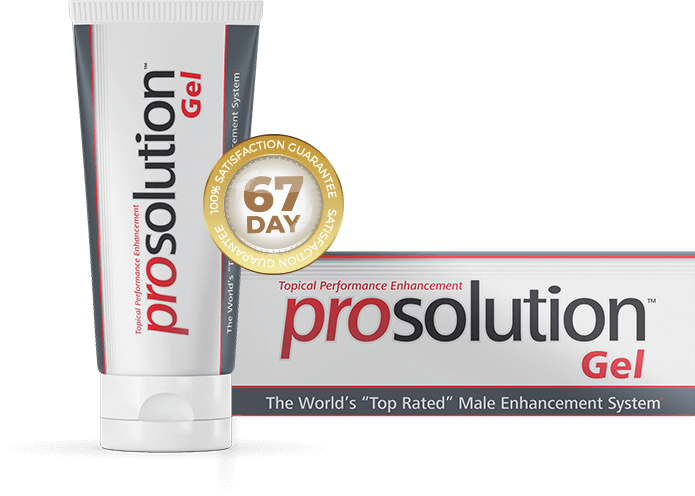
Affiliate disclosure: Our store sells both ProSolution Gel and ProSolution Pills through affiliate links, and we may earn a commission whichever you buy, at no extra cost to you. Every fact below comes from the maker Leading Edge Health's own pages for each product, audited separately for our two reviews. We score the Pills 5.0/10 and the Gel 4.0/10 — and this comparison exists because the family name does real damage here: these products share a brand, a guarantee and an endorsing name, and almost nothing else. If you arrived looking for ProSolution Plus, that is a third product again; we separate it from the Pills in ProSolution Pills vs ProSolution Plus.
Quick Verdict
ProSolution Pills is a daily oral formula for erection quality and libido — a routine measured in weeks, at $59 a box, with the family's better paperwork: a published ingredient list, published pack pricing, and one piece of product-specific (laboratory) evidence. ProSolution Gel is an on-demand topical — applied before sex, nothing swallowed — at $49 a tube, with the family's thinnest file: a brand page that names one ingredient, no study cited anywhere, and usage copy pasted in from a daily pill. The choice is first about the job — a standing routine versus an in-the-moment product — and only then about the evidence, where the Pills lead by a small and somewhat embarrassing margin.
ProSolution Gel vs ProSolution Pills at a Glance
| ProSolution Gel | ProSolution Pills | |
| Our score | 4.0/10 | 5.0/10 |
| Built for | On-demand erection support — applied before sex | Erection quality and libido — a daily formula |
| Format / use | Water-based gel; apply to the shaft and massage in | Tablets — 60 per box; maker states 2 a day in its study section, no formal directions label |
| Price | $49 for one tube (maker's list $59); tube volume not published | $59 for one month (retail $69); 3 months $119; 5 months $179 |
| Guarantee | 67-day money-back guarantee | 67-day money-back guarantee |
| Finished-product evidence | None — no study cited anywhere, for the gel or any ingredient | One pre-clinical laboratory assay (in-vitro enzyme test). No human trial. |
| Ingredient publication | Brand page names 1 active (L-Arginine); the full 16-item label appears only on the maker's retail store | Full 13-ingredient list published; no amount for any ingredient |
Two Different Jobs
The formats decide the jobs. The Gel is an event product: its brand page sells "instant, on-contact results," applied to the shaft and massaged in as step one of an encounter, with L-Arginine supposedly delivered through the skin to boost nitric oxide where it is applied. Nothing about it is a routine. The Pills are the opposite shape: a daily tablet aimed at desire, readiness, erection quality and stamina over weeks — positioned by the maker as a natural alternative to prescription erection pills, with a claimed track record of over a decade. A man whose problem is general and standing — libido and erection quality day to day — is the Pills' brief. A man who wants something that exists only in the moment is the Gel's. Treating them as alternatives on a shelf, rather than tools for different occasions, is the first error the shared name encourages — and the maker encourages it, marketing the family as a "system" and letting one endorsing herbalist's quote serve every product in it.
The Paperwork: One Empty File, One Thin One
Start with the Gel's brand page, because it is the strangest document in this comparison. It names a single active ingredient — L-Arginine — inside an unnamed "synergistic blend." The full sixteen-item label (which includes menthol and the preservative methylparaben) is published only on the maker's retail store page. No study of any kind is cited for the gel or for any ingredient; support is a nitric-oxide narrative and a linked video element. And in the middle of the page sits a passage instructing buyers to apply the gel daily for a minimum of 60 to 90 days to "correct the many hormonal, nutritional and stress-induced imbalances" — daily-pill copy, written for an oral product, pasted onto a gel nobody applies to correct a nutritional deficit. The retail-store page completes the picture with an endorsement block headed by one doctor's name and signed by another's — the same G. Alexander herbalist endorsement that appears on the Pills' page, doing duty for both.
The Pills' file is thin but coherent. The full thirteen-ingredient list is published (Solidilin™, Drilizen™, Korean Ginseng, Butea Superba, Momordica, Cordyceps and the rest), pack pricing is published, and there is one piece of product-specific evidence: a laboratory study in which a 1,300 mg tablet inhibited the Rho-kinase II enzyme in a test system. That is a mechanism observation in a dish — not a trial in men — and the maker publishes no human trial of the Pills, no amount for any ingredient, and (in common with its sibling) no contraindications or warnings of any kind. But it is a file about this product. The Gel's brand paperwork, one named ingredient deep, is a file about a family.
These statements have not been evaluated by the Food and Drug Administration. These products are not intended to diagnose, treat, cure, or prevent any disease. This article is educational and is not medical advice.
Price, Guarantee and the Cost You Can't Compute
The Gel is cheaper to start: $49 for one tube against the maker's $59 list price. The Pills start at $59 for one month (retail $69) and publish the family's best ladder — three months for $119, five for $179, free US shipping on the multi-packs. The guarantee is the same instrument for both: 67 days, use for up to 60, return the containers within 67 days of delivery for a refund excluding shipping. The comparison breaks down on the Gel's side of the ledger, because its maker publishes no tube volume and no applications per tube anywhere — the $49 cannot be turned into a cost per use or a cost per month, so the apparently cheaper product may be the dearer one in practice and nobody can audit it either way. The Pills, whatever their faults, can be priced to the day. On value paperwork, as on evidence paperwork, the oral product is simply the more finished document.
Safety Paperwork Compared
Both files fail, in their native ways. The Gel is a leave-on genital topical containing menthol and methylparaben, marketed by its own brand page for daily use over 60 to 90 days — and its published safety content is a feature line, "No Known Side Effects," whose asterisk leads to no visible footnote, plus a claim of not numbing a partner. No irritation, skin or partner-transfer guidance exists on the brand page. The Pills claim "no known side effects" absolutely, publish no contraindications, and carry two items that deserved a caution and got none: a headline compound the maker says contains L-Dopa, and its own ingredient notes recording anti-spermatogenesis findings in rats for Momordica. For the Gel, the operative reader is a man with sensitive skin or a partner with sensitivities; for the Pills, it is any man on medication — a question we examine in full in ProSolution Pills and Your Medication. In both cases, the absence of warnings is a gap in the paperwork, not a property of the products.
Frequently Asked Questions
Are ProSolution Gel and ProSolution Pills the same formula in two forms?
No. They share no published ingredient list: the Pills are a thirteen-ingredient oral botanical formula, while the Gel's full label — published only on the maker's retail store — is a water-based topical built around L-Arginine with menthol, aloe and a preservative system. Same brand family, different products, different jobs.
Which works faster?
The Gel is sold on immediacy — its maker says effects "kick in immediately" — but no study times it, or any ProSolution product. The Pills make no speed claim at all; they are a daily formula judged over weeks. One claim is unmeasured, the other is honestly absent. Our timing audit is in How Fast Do Topical Gels Work.
Which has better evidence?
The Pills, narrowly: one pre-clinical laboratory assay of the actual tablet, plus ingredient-level citations. The Gel has no cited study of any kind — for the product or any ingredient. Neither has a human trial; the comparison is between a thin file and an empty one.
Can I use both together?
The maker markets the ProSolution family as a system, but no study covers the pairing, and the Gel's paperwork cannot even settle its own ingredient list on its brand page. Combining two unstudied products is a decision to make with open eyes — and, if you take medication, with your doctor.
Is either of these ProSolution Plus?
No — and the confusion is understandable, because the family shares branding and guarantee graphics across all three. ProSolution Plus is a separate, ejaculation-control formula with its own human study; neither the Gel nor the Pills can borrow it. Our three-way separation starts with ProSolution Pills vs ProSolution Plus.
Final Verdict
Choose ProSolution Pills for a standing problem and a daily routine. At $59 with published pack pricing, a published ingredient list and the family's one piece of product-specific evidence, it is the more auditable purchase — bought knowing the evidence is a laboratory assay, the doses are secret and the warnings are absent. Our score: 5.0/10, on the ProSolution Pills page. Choose ProSolution Gel only for the format itself — an on-demand topical, nothing swallowed — at $49 under the same 67-day guarantee, bought knowing its brand page names one ingredient, cites no study, and cannot tell you how much product is in the tube. Our score: 4.0/10, on the ProSolution Gel page. Same name, same maker, same guarantee — and, underneath, two different jobs with two very different paper trails.
Disclaimer: This article is for general information only and is not medical advice. Always consult a qualified healthcare professional before starting any supplement, especially if you have a medical condition or take prescription medication.
Last reviewed: October 2026
