
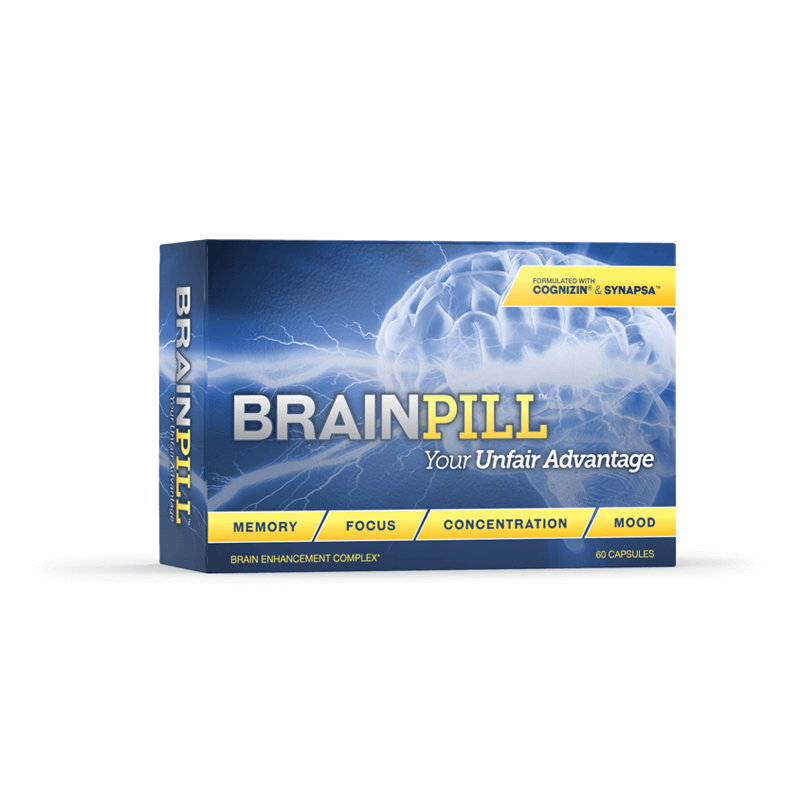
Affiliate disclosure: We sell BrainPill through our SellHealth affiliate programme and earn a commission if you buy it through our link. We do not sell NooCube and earn nothing from it. Every NooCube fact below comes from its official site (noocube.com, checked October 2026); pricing is the official store's published pricing as issued by the brand. BrainPill carries our audit score (6.5/10); NooCube is outside our catalog audit, so we compare its published facts without assigning it a score.
Quick Verdict: Evidence vs Usability
BrainPill and NooCube split the trust question down the middle. BrainPill owns the single strongest evidence document in this comparison — a registered, finished-product trial (NCT03198936) with the full report public — but publishes no ingredient amounts and no directions. NooCube publishes its directions (2 capsules each morning), states a full-disclosure label policy with no proprietary blends, and prices a bottle at $64.99 — but offers no finished-product trial; its evidence, including its hero ingredient's study, is ingredient-level. Both carry 60-plus-day guarantees (67 vs 60 days), both are caffeine-free, and — less flatteringly — both brands reach for the same marketing phrases: claims of no side-effects, and "FDA-approved ingredients" language that describes an approval supplements do not have.
BrainPill vs NooCube at a Glance
| BrainPill | NooCube | |
| Price, 1 bottle | $69.95 | $64.99 (3 for $129.99; 5 for $194.99) |
| Directions | None published; 60-capsule box sold as a month's supply (implies 2/day) | 2 capsules daily in the morning, published on the official site |
| Ingredients | 13 named; amounts unpublished on sales pages | 12 ingredients; maker states full label disclosure, no proprietary blend |
| Finished-product trial | Yes — registered NCT03198936, full report hosted; primary endpoint p=0.044 at 4 caps/day | None published; evidence is ingredient-level (incl. a maker-cited Lutemax® 2020 study) |
| Differentiator | Cognizin® + Synapsa®; huperzine A and vinpocetine | Lutemax® 2020 (eye-brain carotenoids); VitaCholine® in v3.0 |
| Guarantee | 67-day money-back | 60-day money-back |
| Caffeine | None | None |
| Our score | 6.5/10 | Not scored — outside our catalog audit |
What Each One Is For
Both are daily, caffeine-free, all-in-one nootropics at a similar price. NooCube pitches itself at people with deadlines — productivity, focus, and an angle nobody else in this comparison has: eye-brain support for screen-heavy work, built on Lutemax® 2020, a marigold-derived carotenoid blend (lutein and zeaxanthin isomers). BrainPill pitches at memory first — its formula splits into a "Focus Fuel" blend and an "Advanced Memory Matrix" — and at buyers who want a product that has actually been put through a trial. If your working day is eight hours of screens and your complaint is fatigue and scatter, NooCube's positioning speaks to you; if your complaint is specifically memory and you want the tested formula, BrainPill's does.
Ingredients and Formula Compared
The overlap is the modern nootropic core: both formulas include bacopa monnieri — NooCube at a stated 250 mg (12:1 extract, 20% bacosides); BrainPill as branded Synapsa®, 320 mg per day in its trial report, retail amounts unpublished — and both build on a choline source: NooCube's current v3.0 uses VitaCholine® (upgraded from Alpha GPC, per the brand), while BrainPill uses citicoline as Cognizin® (250 mg per trial day). From there they separate. NooCube's identity ingredients are Lutemax® 2020 and panax ginseng concentrate (20 mg of an 8:1 concentrate, per its site), reflecting its stress-and-screens positioning; the brand states it publishes the full label and hides nothing in a proprietary blend. BrainPill reaches further into pharmacological territory with huperzine A and vinpocetine — more assertive ingredients, carrying the warnings discussed below — plus ginkgo, DHA and phosphatidylserine. The transparency contrast stands: NooCube's policy is disclosure; BrainPill's amounts exist only inside its trial report.
Evidence Compared
This is BrainPill's round, and it is not close — with an asterisk. BrainPill's maker ran a randomized, double-blind, placebo-controlled trial of the finished product, registered as NCT03198936, and hosts the complete report: primary working-memory endpoint positive at p=0.044, Matrix Span at p=0.001, one endpoint (picture recognition) significant at days 28–56 and faded by day 84, ~74 completers, sponsor funding disclosed in the document. The asterisk: the trial dosed 4 capsules a day, double the implied retail dose, and one current label ingredient (vinpocetine) is missing from its composition table. NooCube publishes no finished-product trial. Its strongest evidence card is ingredient-level: its maker cites a randomized, double-blind, placebo-controlled study of Lutemax® 2020 itself — 59 healthy individuals over 12 months — reporting improvements in attention, memory and processing speed, plus a published list of scientific sources behind individual ingredients. Ingredient studies at real doses are worth something; they are not a test of the product in the bottle, and NooCube is honest by omission in not claiming one. Judge: BrainPill's evidence is stronger and inspectable; NooCube's is broader across ingredients but shallower.
Price and Value Compared
NooCube is the cheaper headline: $64.99 for one bottle (60 capsules) against BrainPill's $69.95, with 3-bottle and 5-bottle packs at $129.99 and $194.99. The directions make the arithmetic cleaner, too: NooCube's published dose is 2 capsules a day, so a bottle is genuinely a month at the directed dose. BrainPill's box implies the same 2-a-day month — but its evidence was generated at 4 a day, so matching the tested regimen roughly doubles its monthly cost to about $140. On value-at-directed-dose, NooCube wins; on value-at-tested-dose, only one of these products has a tested dose at all.
Guarantee Compared
Close to even. NooCube: 60-day money-back guarantee — use as directed for up to 60 days and request a full refund if unsatisfied, per its FAQ. BrainPill: 67 days — a slightly longer window, with more conditions in the small print (empties returned within 67 days of delivery, refund excludes shipping, first two opened bottles only on multi-packs). BrainPill's window edges it; NooCube's terms read simpler. Both are meaningfully better than the no-guarantee end of this category.
Safety, and Who Should Avoid Each
Both brands weaken their own safety files with identical habits: NooCube's site claims "zero known side effects" and BrainPill's claims "No Unwanted Side-Effects" — absolutes no honest label in this category can support — and both sites use the phrase "FDA-approved ingredients," which does not describe any approval that exists for supplements. On substance, the differences are real. BrainPill contains vinpocetine — which its own ingredients page warns against in pregnancy, noting it is prescription-only in Germany — and huperzine A, which acts on the acetylcholine system; its trial, however, recorded a clean adverse-event table (3 events on product, 6 on placebo, none serious). NooCube contains neither vinpocetine nor huperzine A, is vegetarian-suitable in v3.0, and is made in a GMP-certified facility per its FAQ — but has no product-level safety data of BrainPill's trial kind to point to. Pregnant or possibly-pregnant readers should avoid BrainPill on the maker's own wording; medicated readers should have a pharmacist screen either label — which is possible in full only for the brand that prints one.
Frequently Asked Questions
Which is better value, BrainPill or NooCube?
At directed doses, NooCube: $64.99 a month with published directions and a full-disclosure label policy. BrainPill costs more per month and its trial dose would double that. What the extra buys is evidence — the registered finished-product trial — not ingredients.
Does NooCube have clinical evidence?
Ingredient-level evidence, prominently a maker-cited randomized placebo-controlled study of its Lutemax® 2020 ingredient (59 people, 12 months). It publishes no trial of the finished NooCube formula; BrainPill does (NCT03198936), with the limits detailed above.
Are either of them caffeine-free?
Yes — both are caffeine-free and stimulant-free formulas, positioned for daily use rather than acute stimulation.
Final Verdict
Choose NooCube if you want the straightforward purchase: cheaper per bottle, published directions, a stated no-proprietary-blend label policy, a 60-day guarantee, and a formula aimed at screen-heavy productivity — accepting that its evidence stops at the ingredient level. Choose BrainPill if the finished-product trial is the deciding document for you: it exists, it is registered, its full report is public, and a 67-day guarantee gives you a refund window — accepting unpublished retail doses and a tested dose double the implied one. Our shelf carries BrainPill (Our Score 6.5/10); this comparison is our honest account of where its rival is the easier product to buy and to verify, and where the trial still tips the scale.
These statements have not been evaluated by the Food and Drug Administration. This product is not intended to diagnose, treat, cure, or prevent any disease.
Disclaimer: This article is for general information only and is not medical advice. Always consult a qualified healthcare professional before starting any supplement, especially if you have a medical condition or take prescription medication.
Last reviewed: October 2026
