
Affiliate disclosure: This article contains affiliate links. If you buy through a link on this page, we may earn a commission paid by the manufacturer, at no extra cost to you. That never changes what we publish — and on this topic it means the supplement we sell gets one short, honest section near the end, after the causes, the norms and the red flags. Waking at night to urinate is a symptom with several possible engines, and only one of them is the one a prostate supplement even claims to address. This page is the map, drawn before any product is mentioned.
Quick Answer: Why Do You Wake Up at Night to Urinate?
The medical name is nocturia — waking one or more times in the night to pass urine. In men, the cause usually sits in one of four places: the prostate (an enlarged prostate narrows the outlet and stops the bladder emptying fully, so it refills to "full" sooner), the bladder itself (storing less, or signalling "full" earlier than it should), night-time urine production (your body simply makes more urine overnight than it used to — evening fluids, alcohol, caffeine and fluid shifting from your legs when you lie down all feed this), or sleep itself (you wake for another reason — light sleep, snoring, sleep apnoea — and void because you are awake). Waking once a night is common and, on its own, is not generally read as a problem. The pattern worth attention is two to three times a night, repeatedly, especially with a weakening stream — and a handful of red flags, listed below, mean a doctor before anything else.
The Four Places the Cause Can Sit
1. The prostate. As men age, the prostate commonly enlarges and squeezes the urethra it surrounds. The result is the classic pattern described on the product pages in this category: a weak stream, straining to start or finish, and the sense that the bladder never quite empties. An incompletely emptied bladder is the key mechanism for the night problem: if a meaningful amount stays behind after each void, the bladder reaches its signal point sooner — including at 2 a.m. This is the only one of the four causes that prostate supplements are even aimed at.
2. The bladder itself. Sometimes the plumbing is fine but the storage is not: the bladder holds less than it once did, or has become overactive — contracting and signalling urgency at lower volumes. The signature is different from the prostate pattern: sudden, hard-to-defer urges, in the day as well as the night, without necessarily a weak stream. Bladder-driven nocturia will not be touched by anything aimed at the prostate, which is why separating the patterns comes before any purchase.
3. Night-time urine production. Your kidneys do not make urine at a constant rate, and the night share of production tends to grow with age. Add the controllable inputs and the picture completes itself: drinks in the last hours before bed go straight into the night's production; alcohol and caffeine both push production up and sleep quality down; and fluid that pooled in your legs and ankles during the day returns to circulation when you lie flat, arriving at the kidneys as a night-time surplus. The tell-tale sign of this cause is waking to pass full voids — the bladder is not signalling early; it genuinely is full.
4. Sleep itself. The arrow can point the other way: you do not wake because you need to urinate — you urinate because you have woken. Light, fragmented sleep has many drivers, and one that matters here is sleep apnoea: repeated pauses in breathing fragment the night, and nocturia is a commonly reported companion. Heavy snoring, witnessed pauses, and waking unrefreshed with heavy daytime sleepiness alongside night-time urination are a combination worth raising with a doctor in its own right, because treating the sleep can change the urination — and no supplement on this page addresses it.
Two further contributors sit across all four: medications — diuretics ("water tablets") taken late in the day are the obvious one, and timing is a question for the prescriber, not for self-adjustment — and conditions that raise total urine volume, such as poorly controlled blood sugar, where large volumes day and night arrive with thirst. Those are diagnoses, not supplement categories.
These statements have not been evaluated by the Food and Drug Administration. This product is not intended to diagnose, treat, cure, or prevent any disease. This article is educational and is not medical advice.
What's Normal at Your Age?
Age shifts the baseline, and knowing the baseline stops two opposite mistakes: panicking over ordinary ageing, and normalising a pattern that deserves a check. As a working orientation — the same one used in our PrimeGENIX Answered post — waking once a night is common at most adult ages and, on its own, is not generally read as a sign of a prostate problem. Night-time frequency tends to rise as men move through their 50s, 60s and beyond, as several of the four causes above become more likely at once. The pattern that pushes men to search, and that clinicians take seriously as a change worth explaining, is two to three times a night, repeatedly — particularly when it is new for you, getting worse, or arrives with daytime company: a weakening stream, straining, urgency, or the never-quite-empty feeling. Judge your pattern against your own last decade, not against a 25-year-old's bladder — and judge a change in it as information, whatever your age.
The Red Flags: See a Doctor First
The following are not supplement decisions, at any age. Get medical attention promptly if you notice:
- Inability to urinate at all — a full, uncomfortable bladder you cannot empty is urgent.
- Blood in the urine, visible or reported on a test.
- Pain or burning when urinating, or pelvic pain.
- Fever alongside urinary symptoms — infection moves up the list.
- A rapid change in your pattern over days or weeks, rather than the slow drift of years.
- Very large urine volumes with thirst, day and night — a blood-sugar conversation.
- Loud snoring with witnessed pauses, waking unrefreshed, and heavy daytime sleepiness alongside the night waking.
None of these requires panic; all of them outrank any product decision. Worsening urinary symptoms deserve a doctor's attention in their own right — that is general advice, and on this topic it is the most important paragraph on the page.
What Helps — in Honest Order
Start with the production side, because it is free. Move your fluid intake earlier in the day; keep the last couple of hours before bed light. Cut off caffeine by mid-afternoon and treat evening alcohol as a direct trade — it raises urine production and fragments the sleep that is supposed to absorb the waking. If your ankles swell by evening, time spent with legs raised before bed lets some of that fluid shift earlier, on the same logic as cause 3. None of this is dramatic, and for production-driven nocturia it is most of the answer.
Then the sleep side. If you suspect you are waking first and voiding second, the fix lives in the sleep, not the bladder: regular hours, a dark cool room, and a medical conversation about snoring or apnoea if the signs above are present.
Keep a few nights of notes before any appointment. Times you went to bed, woke and voided, and roughly how much each time (a marked jug by the bed is the low-tech standard) turn a vague complaint into a pattern a doctor can read: mostly-large voids point to production; mostly-small ones point to storage or prostate. Three nights is usually enough to see which of the four causes is driving yours.
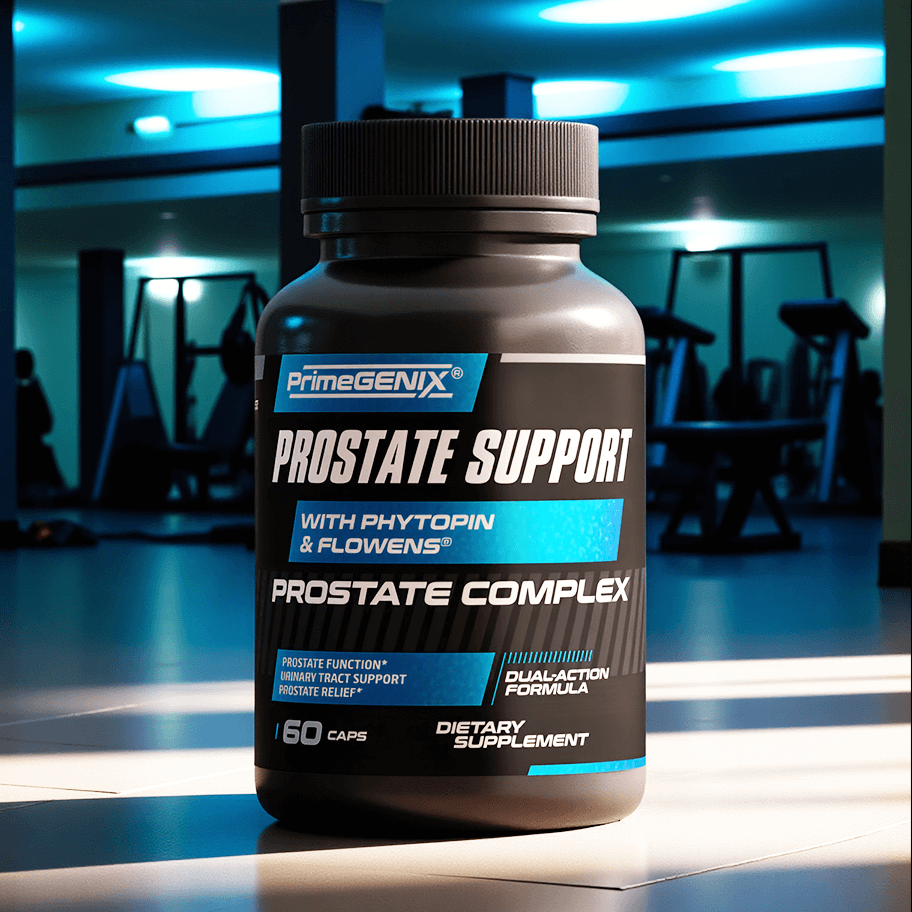
Then, and only then, the product shelf. Medical treatment for an enlarged prostate is a doctor's territory, and nothing below replaces it. Within the supplement shelf, honesty requires saying plainly what a prostate supplement can and cannot be aimed at: only cause 1 — the prostate pattern — and only with ingredient-level evidence behind it. The product we sell, PrimeGENIX Prostate Support (Our Score 7.0/10), publishes a genuinely checkable label — Flowens® cranberry 250 mg, saw palmetto 150 mg standardised to 45% fatty acids, Phytopin® 130 mg per serving — and its maker quotes specific figures for those ingredients (urine flow +53%, residual bladder volume −54%, per the maker). But no study design, participant count or finished-product trial is published behind those figures, and the maker publishes no warnings or exclusions at all: the numbers are the maker's, unverified by anyone we can check, and men in this age group are precisely the readers most likely to be on regular medication. If you read labels the way this site does, our prostate label guide sets out the six checks we apply to any product on this shelf — amounts printed, standardisation stated, page-versus-label agreement, and the name-confusion red flags — with this product's label as the worked example. And if your night pattern travels with the symptoms in our Signs of Low Testosterone checklist, that page is written for the same man, awake at the same hour, for a related reason.
Frequently Asked Questions
Is waking up once a night to urinate normal?
Yes — once a night is common at most adult ages and, on its own, is not generally read as a sign of a prostate problem. Frequency tends to rise with age. What deserves attention is a repeated pattern of two to three times a night, a clear change from your own baseline, or night waking that arrives with daytime symptoms like a weakening stream.
How do I tell whether it is my prostate or just fluids?
Use the void pattern. Waking to pass full, large voids — especially after evening drinks or alcohol — points at night-time production. Small voids, a weak stream, straining and a never-quite-empty feeling point at the prostate pattern. A few nights of simple notes (time and rough volume) usually separate the two, and they make any doctor conversation far more productive.
Can a supplement fix nocturia?
No supplement addresses all four causes, and most address none of them. A prostate supplement is aimed only at the prostate pattern, and the one we sell carries ingredient-level figures quoted by its maker with no published study behind them — we score it 7.0/10 for its label, not for proven night-time results. If your cause is production, bladder behaviour or sleep, a prostate capsule is the wrong tool, however good its label is.
When should I stop self-managing and see a doctor?
At any red flag above — inability to urinate, blood, pain, fever, a rapid change, very large volumes with thirst, or snoring with pauses and heavy daytime sleepiness. Also whenever the pattern is new, worsening, or simply unexplained after a few weeks of the free measures. A supplement page is the wrong tool for diagnosing why your pattern changed.
Our Verdict
Waking at night to urinate is a symptom, not a diagnosis, and the four-cause map is the whole game: production, bladder, prostate, sleep. The free measures fix more of it than the supplement shelf ever will, the red flags outrank every product, and the one product we sell for the prostate pattern earns its place only for men whose pattern actually is the prostate pattern — after the doctor conversation, with its maker's figures read as claims, not results. If you take one thing from this page, take the notes: three nights of times and volumes will tell you more about your 3 a.m. than any label in this category.
Disclaimer: This article is for general information only and is not medical advice. Always consult a qualified healthcare professional before starting any supplement, especially if you have a medical condition or take prescription medication. Individual results vary, and no result is guaranteed.
Last reviewed: October 2026