
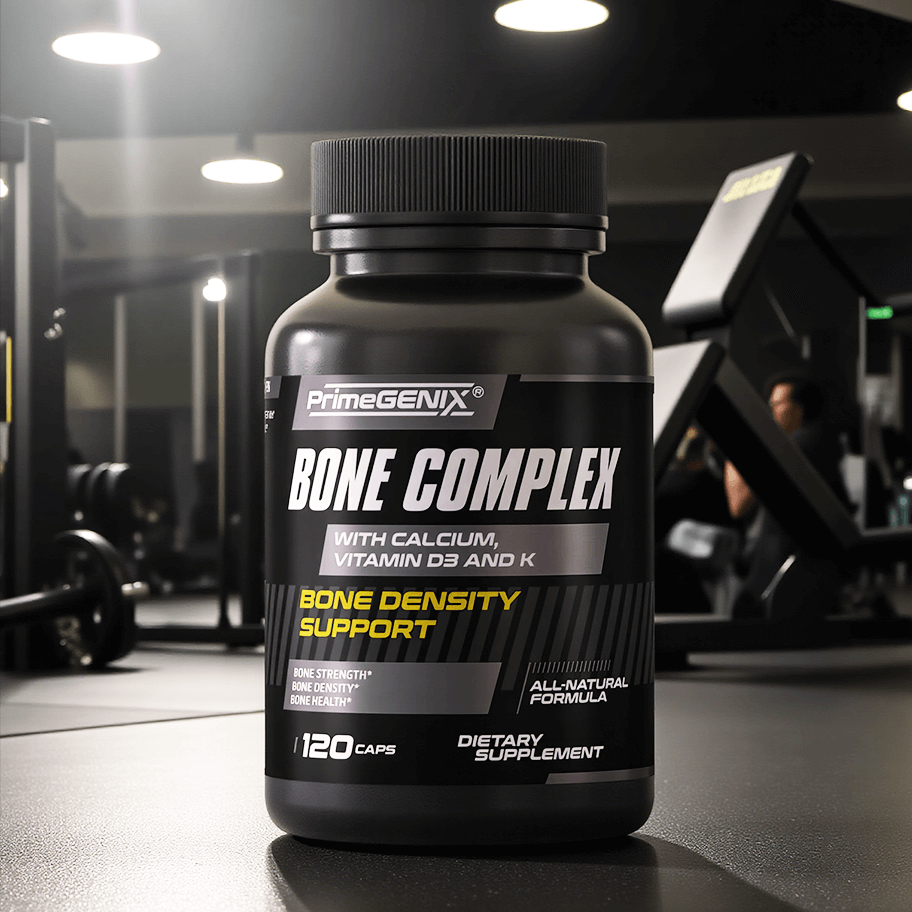
Affiliate disclosure: Our store sells PrimeGENIX Bone Complex through an affiliate link, and we may earn a commission if you buy it through our link, at no extra cost to you. This article exists because of what that product's maker does not say. Bone Complex contains vitamin K — 120 mcg per serving, a figure its maker does publish — yet no caution about blood thinners appears anywhere in its pages. The question readers keep putting to pharmacists — "Can I take this if I'm on warfarin?" — recurs across pharmacist Q&A columns, alongside its modern twin, "Can you take vitamin K2 with blood thinners like Eliquis?" The two questions have different answers, and the difference is the most useful thing a reader on an anticoagulant can learn before buying any supplement containing vitamin K. Nothing below replaces your prescriber's answer; it explains why the question must be asked drug by drug.
Quick Verdict: The Answer Depends Entirely on Which Blood Thinner
If you take warfarin: treat any vitamin K supplement — K1 or K2, in any form — as a prescriber-first item. Not because one capsule is an emergency, but because your warfarin dose is calibrated against your vitamin K intake, and a supplement is a concentrated change to one side of that balance. If you take Eliquis (apixaban) or another newer anticoagulant: vitamin K is not part of how your drug works, so K2 does not blunt it — a genuinely different answer. The pre-purchase check with your prescriber or pharmacist still applies, because anticoagulant users have other supplement interactions to screen. "Blood thinner" is a category label, not a mechanism, and vitamin K questions cannot be answered at the level of the category.
Why Warfarin Is the Special Case
Warfarin is, by design, a vitamin K antagonist. It works by interfering with the liver's recycling of vitamin K, which reduces the production of several vitamin-K-dependent clotting factors. Because the right dose varies from person to person and drifts over time, it is set individually and checked with INR blood tests. Now place a vitamin K supplement inside that system. Your prescriber set your dose against your existing intake — your diet, your habits, whatever you were already taking. A supplement adds a fixed, concentrated amount of the very substance the drug is calibrated against. More vitamin K can blunt warfarin's effect and push the INR down; a sudden drop in intake can push it the other way. That is why the standard clinical advice is consistency, not avoidance: warfarin patients are not told to fear vitamin K, they are told to keep their intake steady and to declare changes. A supplement started — or stopped — in silence is exactly the kind of change the system cannot absorb unnoticed. Doctors themselves sometimes use vitamin K deliberately in managing warfarin patients, which underlines the point: this is a lever inside the treatment, and levers are moved by the person managing the treatment.
Why Eliquis Is a Different Answer
Apixaban — Eliquis — does not touch vitamin K at all. It directly inhibits factor Xa, one of the activated clotting factors, downstream of the whole vitamin K pathway. Rivaroxaban works the same way; dabigatran directly inhibits thrombin instead. These drugs (the DOACs, or direct oral anticoagulants) have no vitamin-K dial for a supplement to turn, so vitamin K2 does not reduce their effect, and there is no INR-style balance for it to disturb. The confusion is understandable: pharmacists are asked the Eliquis version of the question constantly, because patients reasonably treat "blood thinner" as one thing — their parents' warfarin rules attached to the whole class. They do not. Two cautions remain for DOAC readers, and honesty requires both. First, "no vitamin K interaction" is not "no supplement interactions": other ingredients can matter to anyone on an anticoagulant, which is why the prescriber or pharmacist check before adding a supplement remains standard advice on any of these drugs. Second, no article — including this one — is a reason to change, skip or stop an anticoagulant. The split described here decides what you must ask about, not what you may do.
Does the K Form Matter — K1 vs K2, MK-4 vs MK-7?
For warfarin, no form earns an exemption. K1 (phylloquinone, from leafy greens) and K2 (the menaquinones, MK-4 through MK-7 and beyond, from fermented foods, animal products and supplements) differ in how long they circulate — MK-7 in particular persists longer than K1 — but all of them are vitamin K to warfarin's mechanism. If anything, a longer-acting form argues for more consistency, not less caution. Marketing that presents K2 as the gentle, modern form that slips past the warfarin problem is precisely backwards, and readers will meet it; this paragraph is the rebuttal to keep. For DOAC readers the form question is moot on the vitamin K axis, for the reasons above. For reference, the product that prompted this article: PrimeGENIX Bone Complex specifies its vitamin K as the MK-4 and MK-7 forms, 120 mcg per serving in total, per its maker's FAQ. The amount is published. What is missing is any sentence telling a warfarin reader what to do with that information.
The Caution That Isn't There
Here is the audit finding, stated plainly. On its maker's pages, Bone Complex publishes no warnings or exclusions of any kind. Its safety language is entirely positive — "no reported negative side effects," "no known negative side effects" — and no warfarin or blood-thinner caution appears anywhere, despite a formula containing 120 mcg of vitamin K per serving, sold to men in their 40s, 50s and 60s: the exact readership most likely to be prescribed an anticoagulant. Credit where it is due first: the maker does publish the vitamin K amount in text, which is the figure a careful reader needs, and more than some makers manage. But a number without its caution is half a label. That the caution is standard practice in this category is not speculation: in the algae-calcium comparison published on this site, we audited a rival maker whose official FAQ addresses vitamin K2 and blood thinners directly, tells readers on warfarin to avoid its K2-containing formula, and offers a K2-free version for exactly that case. One maker thought about the warfarin reader before the purchase; the other has not. Until Bone Complex's maker prints the caution, consider this article the missing paragraph of its label — and judge the omission as part of the product.
A Safe Way to Approach Any Bone Formula on an Anticoagulant
The workable routine is short. Name your exact drug first — warfarin and the DOACs produce different answers, and "blood thinner" alone decides nothing. Ask the prescriber or pharmacist with the numbers in hand: the product's vitamin K content per serving (120 mcg for Bone Complex) is the fact they will want, and it is the buyer's job to bring it. If the answer is yes, keep the intake consistent — same product, same dose, no silent brand-hopping — and expect an INR recheck after the change if you are on warfarin. Re-ask when anything changes: a new formula, a new dose, a major diet shift. And hold the underlying perspective: the warfarin interaction is not a reason to fear vitamin K, which is an essential nutrient performing real work in bone and vessel walls. It is a reason to refuse the supplement industry's default posture — silence — and to make one phone call before the bottle, not after the blood test.
Frequently Asked Questions
Can I take this if I'm on warfarin?
Not on an article's say-so — this is the recurring pharmacist question because it genuinely requires your prescriber's answer. Warfarin is calibrated against your vitamin K intake, so any K supplement (K1 or K2) is a change to one side of that balance. Ask first, keep intake consistent if approved, and expect an INR recheck.
Can you take vitamin K2 with blood thinners like Eliquis?
The vitamin K part of the answer is different: Eliquis (apixaban) inhibits factor Xa directly and does not depend on vitamin K, so K2 does not blunt it. But "different" is not "unconditional" — check with your prescriber or pharmacist before adding any supplement on an anticoagulant, because other ingredients raise separate questions.
Is it dangerous to take vitamin K2 if I'm on a blood thinner like warfarin?
The danger is not the vitamin itself — it is the unmonitored change. A concentrated K supplement started or stopped silently can shift a warfarin patient's INR away from the range their dose was set for. Managed openly, with the prescriber informed, it is a dosing conversation; done silently, it is the risk.
Does PrimeGENIX Bone Complex warn about warfarin?
No. We audited the maker's pages for our review: it publishes no warnings or exclusions of any kind, and no warfarin or blood-thinner caution appears anywhere, despite 120 mcg of vitamin K per serving. Treat that silence as missing paperwork, not as reassurance — and if you take any anticoagulant, get your prescriber's answer before using it.
These statements have not been evaluated by the Food and Drug Administration. This product is not intended to diagnose, treat, cure, or prevent any disease. This article is educational and is not medical advice.
Disclaimer: This article is for general information only and is not medical advice. Always consult a qualified healthcare professional before starting any supplement, especially if you have a medical condition or take prescription medication.
Last reviewed: October 2026
