
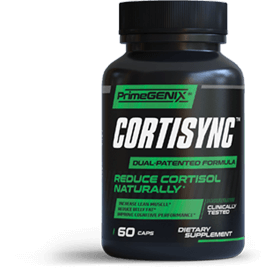
Affiliate disclosure: This article discusses CortiSync, a supplement we sell through our affiliate link; if you buy it through our link, we earn a commission. Keep that relationship in mind as you read, because this article's central advice — that the most convincing "high cortisol" sign pattern should take you to a laboratory, not to our checkout — argues directly against a sale. The symptom patterns below follow the medical-editorial coverage of this question (Cleveland Clinic and similar clinical sources), not any maker's marketing list. Where our product's own target-symptom list overlaps with the medical one, we say so, because the overlap is the most instructive thing in this topic.
Quick Answer
The internet's "signs of high cortisol" lists quietly merge two different lists. The first is the sign pattern of Cushing's syndrome — cortisol genuinely, pathologically high, all day, for months: rapid weight gain concentrated in the trunk, a rounding face, wide purple stretch marks, skin that bruises easily, muscle weakness, rising blood pressure and blood sugar. That pattern is specific, progressive and physical, and its next step is a doctor and laboratory testing. The second list — fatigue, brain fog, broken sleep, gradual weight gain, feeling wired and tired — is the experience of a stressed, under-slept life. Those symptoms are real and miserable, but they are non-specific: they point at a hundred causes, most of which are not cortisol at all. A supplement is the wrong instrument for the first list and, at best, a modest experiment for the second. Telling the lists apart is the entire skill this topic requires.
First, the Baseline: Cortisol Is Supposed to Move
Before any sign list makes sense, one fact has to be in place: cortisol is a normal, essential hormone with a strong daily rhythm — peaking in the early morning, falling to its low point around midnight — and it fluctuates further with illness, pain, caffeine, and ordinary alarm. "High cortisol" is therefore a measurement claim, not a description of a stressful week. A person can feel profoundly stressed with a cortisol pattern a doctor would call unremarkable; a person with Cushing's syndrome can be flooding with cortisol around the clock. The trend collapses these two people into one customer. The sign lists below keep them separate, because everything about what to do next depends on which one you are.
The Signs Doctors Take Seriously: The Cushing's Pattern
When clinicians describe sustained cortisol excess — the picture drawn by Cleveland Clinic, Dartmouth Health, Stony Brook and the other medical sources whose symptom pages dominate this topic — the pattern has a recognisable shape. Weight gain arrives fast and central: the trunk thickens while the arms and legs stay comparatively thin. The face rounds into the classic moon face, and fat may pad the upper back and above the collarbones. The skin changes character — it thins, bruises at minor knocks, heals slowly, and stretches into wide purple or pink stretch marks across the abdomen and thighs. Muscles weaken where they should be strongest: rising from a chair, climbing stairs. Blood pressure and blood sugar climb, sometimes to the point of new diagnoses. In women, periods may become irregular and facial hair may increase. Two properties unite the list. It is progressive — it builds over months and does not take weekends off — and it has findable causes: a pituitary or adrenal tumour driving production, or, more commonly, long-term corticosteroid medication. That is what makes it a medical problem in the strict sense: there is something specific to find, and finding it changes the treatment completely.
The Signs That Usually Mean Something Else
Now the second list — the one in the quizzes and the trend posts. Exhaustion that sleep doesn't fix. Brain fog. Sudden or gradual weight gain. Muscle fatigue. Poor sleep. Read it again with a clinician's eye and its problem is not that it is wrong but that it is everywhere: thyroid disease, sleep apnoea, anaemia, depression, perimenopause, vitamin deficiencies and plain chronic sleep debt all present in exactly this costume, and ordinary stress presents in it without any hormone disorder at all. Non-specific symptoms are a starting point for a workup, not a conclusion. And here is the overlap this page promised to name: that second list is, nearly word for word, the list of concerns CortiSync's maker says its product addresses — exhaustion, sudden weight gain, muscle fatigue, brain fog and poor sleep. That is marketing aimed squarely at list two, and there is nothing unusual about it; every cortisol product does the same. What deserves your attention is what the same maker does not publish anywhere on its pages: any warning, exclusion or contraindication at all — no guidance for the people whose symptoms might be list one, and none for readers whose medication intersects with the blood-sugar and blood-pressure effects its own FAQ claims for its ingredients. A symptom list that recruits everyone and warns no one is a sales document. Treat it as one.
How Doctors Actually Test Cortisol
Because the hormone swings across the day, a single random blood reading is weak evidence either way, and doctors do not diagnose from one. The workup for suspected cortisol excess uses targeted tests designed around the rhythm: late-night salivary cortisol (checking whether the normal midnight low has been lost), a dexamethasone suppression test (checking whether the off-switch still works), and 24-hour urine free cortisol (measuring the whole day's output) — typically with abnormal results repeated and confirmed before any conclusion. This is also why the home alternatives cannot do the job they imply: a symptom quiz cannot separate list one from list two, because the lists share their most common items, and a one-off home reading cannot interpret a hormone whose meaning lives in its pattern. If your signs match the first list, the test sequence above — ordered by a doctor who has seen the pattern — is the shortest route to an answer that means something.
These statements have not been evaluated by the Food and Drug Administration. This product is not intended to diagnose, treat, cure, or prevent any disease. This article is educational and is not medical advice.
Where a Supplement Honestly Fits
In list-two territory — the stressed, under-slept, wired-and-tired pattern — and only after sleep, workload and the medical basics have had their chance, an adaptogen is a reasonable experiment for some people. The evidence ceiling should be stated plainly: the studies behind products like ours are ingredient studies, measuring cortisol levels and stress questionnaires in people without Cushing's syndrome. CortiSync's maker cites double-blind, placebo-controlled studies of its lead ingredient, Sensoril® ashwagandha, reporting cortisol down 24% versus placebo and overall stress down 62.2% — with no sample sizes published, no trial of CortiSync itself, and no ingredient amounts in text to check the serving against the studied dose. The product costs $59 a bottle under a 67-day guarantee and carries our score of 6.0/10; our cortisol and belly fat article works through what such figures can and cannot promise. What no supplement in this category is: a treatment for high cortisol. Nothing in a capsule lowers a tumour's output or substitutes for the workup, and any page that lets a reader with the first list's pattern drift toward a checkout has failed that reader in a way a refund window does not repair.
Book the Doctor First If…
- Your weight gain is rapid and central — trunk thickening while your arms and legs stay thin
- Your face is persistently rounding, month over month, not just puffy on bad mornings
- You have wide purple stretch marks, skin that bruises at a touch, or wounds healing slowly
- You are developing muscle weakness — stairs, standing from a chair — out of proportion to your activity
- Your blood pressure or blood sugar is newly high or suddenly harder to control
- You take corticosteroid medication long-term, or medication for blood sugar or blood pressure (the last two matter even for supplements — CortiSync's maker claims ingredient effects in both areas and publishes no interaction guidance)
Anything on that list outranks everything on a supplement label. Everything off it — the tired, foggy, badly slept pattern — deserves the boring remedies first and, if you still want one, an honestly-labelled experiment second.
Frequently Asked Questions
What are the signs of high cortisol?
Two lists share the name. The medical pattern — Cushing's syndrome — is rapid central weight gain with thin limbs, a rounding moon face, wide purple stretch marks, thin bruising skin, proximal muscle weakness, and rising blood pressure and blood sugar, building progressively over months. The popular pattern — fatigue, brain fog, weight creep, poor sleep, feeling wired and tired — is real but non-specific, and usually reflects stress, sleep debt or another condition entirely. Which list your signs belong to decides everything about what to do next.
Can stress alone make cortisol high enough to cause these signs?
Everyday stress raises cortisol transiently, within a rhythm that returns to baseline; it does not produce the sustained, around-the-clock elevation that causes the Cushing's pattern. Chronic stress absolutely contributes to weight gain and poor sleep — mainly through appetite, cravings and behaviour — but a person can be severely stressed with a medically normal cortisol pattern. The feeling and the hormone level are related; they are not the same measurement.
How do I test my cortisol levels?
Through a doctor, with tests built around cortisol's daily rhythm: late-night salivary cortisol, a dexamethasone suppression test, or 24-hour urine free cortisol — usually after an examination of the sign pattern, and with abnormal results confirmed before conclusions are drawn. A single blood draw, a home kit or a symptom quiz cannot do this work, because cortisol's meaning is in its pattern across the day, not in one number.
What are some effective supplements for reducing cortisol levels?
The adaptogens carry the only real human trial data here — ashwagandha's branded extracts (Sensoril®, KSM-66®) foremost, in studies measuring cortisol and stress scores in people under stress, not in patients with cortisol disorders. Judge products by named extract, published amount and ingredient-attributed figures; most labels fail at least one check, including, on amounts, our own shelf's CortiSync. And supplements in this category are for the stress pattern — never a treatment for medically high cortisol.
Should I take a cortisol supplement if I have these signs?
If your signs match the medical list — rapid central gain, rounding face, purple stretch marks, easy bruising, weakness, new blood-pressure or blood-sugar problems — no: see a doctor first, because that pattern has findable causes and specific treatments, and a supplement can only delay them. If your signs are the stressed-and-under-slept list, a supplement is an optional experiment after sleep and workload — with a doctor's input first if you take medication, since the maker of our shelf's product publishes no interaction warnings at all.
Disclaimer: This article is for general information only and is not medical advice. Always consult a qualified healthcare professional before starting any supplement, especially if you have a medical condition or take prescription medication.
Last reviewed: October 2026
