
- Quick Answer: What Are the Most Effective Natural Ways to Boost Female Libido After 40?
- How Did We Rank These?
- 1. Sleep and Stress: The Strongest Lever You Have
- 2. Treat Dryness and Pain First — Before Anything Aimed at Desire
- 3. Exercise: The Underrated Middle of the List
- 4. Communication and Context: Where Responsive Desire Actually Comes From
- 5. Supplements: Last on the List, With Their Limits Stated
- What Drink Increases Libido in Women? (And Other Kitchen Myths)
Affiliate disclosure: This article contains affiliate links. If you buy through a link on this page, we may earn a commission paid by the manufacturer, at no extra cost to you. That never changes what we publish — and here it is the entire point of the article: we sell libido supplements, and we have ranked them last, below sleep, comfort, exercise, and conversation, because that is where the evidence puts them. Any list that ranks a capsule first is selling, not ranking.
Type "how to boost libido naturally" into a search engine and you will get a pile of aphrodisiac foods, miracle herbs, and drinks that promise desire in a glass. Almost none of it is ranked, because ranking requires saying which items have real support and which have none — and that is bad for selling the ones with none. This page does the ranking properly. The approaches below are ordered by how much reason there is to believe they help women over 40, strongest first. The top of the list is free, unglamorous, and addresses the causes that actually drive most low desire at this age; the bottom is where products live, with their limits stated in full. Before using it, one preliminary: this ranking assumes the problem is desire itself. If you are still working out whether what you feel is low libido, plain exhaustion, or a mismatch with your partner, settle that question first — the remedies differ.
Settle that question first with our diagnostic guide: Signs of Low Libido in Women: How to Tell It's Not Just Tiredness.
Quick Answer: What Are the Most Effective Natural Ways to Boost Female Libido After 40?
In order: (1) fix sleep and reduce stress load; (2) treat vaginal dryness and pain, if present, before anything aimed at desire; (3) regular exercise; (4) communication and rebuilding non-pressured closeness with a partner; (5) a daily libido supplement, as a modest final addition, with weak-to-preliminary evidence behind its ingredients. Not on the list at all: any food or drink claimed to raise libido directly — including the drink question answered at the end — because no food or drink has been shown to do that.
How Did We Rank These?
By the quality of the reason to believe each works. At the top sit approaches aimed at causes that are themselves well established: exhaustion reliably suppresses desire, and pain reliably suppresses it more, so interventions aimed squarely at those mechanisms inherit strong support even without a dedicated "libido trial." In the middle sit approaches with good general evidence for mood, energy, circulation, and relationship quality — the systems desire runs on. At the bottom sit supplements, where the evidence is ingredient-level, from small and short studies, usually of blends, and where the honest verdict is "possible, unproven." Everything in our fuller guide to the causes of low libido in women after 40 feeds into this ordering; here we simply make the ordering explicit.
1. Sleep and Stress: The Strongest Lever You Have
Desire is one of the first casualties of exhaustion, and the menopause transition manufactures exhaustion: hot flushes and night sweats fragment sleep, progesterone's decline lightens it further, and the forties and fifties pile on caring responsibilities and demanding work from the other side. For a great many women, "low libido" is substantially an energy problem wearing a libido label.
That is why sleep ranks first: it is upstream of mood, patience, physical comfort, and desire simultaneously, and improving it costs nothing. The practical moves are unglamorous — a cooler bedroom and lighter bedding against night sweats, a consistent wind-down rather than screens until lights-out, addressing the overall stress load where it can genuinely be reduced or shared. Judge the effect over weeks, not nights. No other item on this list helps as many women, as much, and none of the items below it can compensate for four broken hours a night.
2. Treat Dryness and Pain First — Before Anything Aimed at Desire
This ranks second overall but first in sequence for any woman it applies to. As estrogen falls, vaginal tissue becomes thinner, drier, and less elastic; sex becomes uncomfortable or painful; and the brain, entirely sensibly, starts declining in advance. What gets recorded as "low libido" is then actually pain avoidance — and no desire intervention, natural or otherwise, outruns pain.
The fixes are mechanical and inexpensive: a lubricant for during sex, and a vaginal moisturiser used regularly, a few times a week, for baseline tissue comfort. They are different tools for different jobs, and our dedicated guide to vaginal dryness after 40 explains how to choose and use each. Once sex is reliably comfortable again, desire frequently returns on its own — which is exactly why comfort is checked before desire is treated. If dryness and soreness persist despite those basics, that is a doctor conversation: local estrogen and other options exist, and needing them is common.
3. Exercise: The Underrated Middle of the List
Regular physical activity earns the third spot on general evidence rather than libido-specific trials — and it is worth being transparent that this is the basis. Exercise reliably supports the systems desire depends on: energy rather than fatigue, steadier mood, better sleep, healthy circulation (which arousal physically requires), and a more comfortable relationship with a changing body. Women who move regularly tend to report better sexual function than women who do not, and the mechanisms are plain enough that this does not need a miracle ingredient to explain it.
The practical bar is lower than the fitness industry suggests: consistent moderate activity — brisk walking, cycling, swimming, resistance work — most days beats an heroic programme abandoned by February. Pick the version you will still be doing in three months; desire responds to the habit, not the intensity.
4. Communication and Context: Where Responsive Desire Actually Comes From
Fourth on evidence, but for women in long-term relationships this is often where the change is actually won. Desire at this stage of life is frequently responsive rather than spontaneous: it grows out of closeness, affection, touch without an agenda, and feeling wanted — and it withers under pressure, score-keeping, and sex framed as an obligation with a deadline. Working on context is therefore not soft advice around the real treatment; for responsive desire, context is the mechanism.
Concretely: tell your partner what has changed and what you need; most partners would rather know than guess, and many are quietly blaming themselves. Rebuild physical affection that is not a prelude to anything. Slow the timetable down — arousal responds more slowly than it used to, and unhurried time is a physiological requirement now, not a concession. If your partner is the one doing the searching, we wrote a companion guide for exactly that side of the bed: a partner's guide to libido after menopause. And check the practicalities alongside: alcohol, general health, genuine downtime, and the medication question — if desire changed when a prescription started, that is a conversation with the prescriber, never a reason to stop a medicine on your own.
These statements have not been evaluated by the Food and Drug Administration. This article is educational and is not medical advice.
5. Supplements: Last on the List, With Their Limits Stated
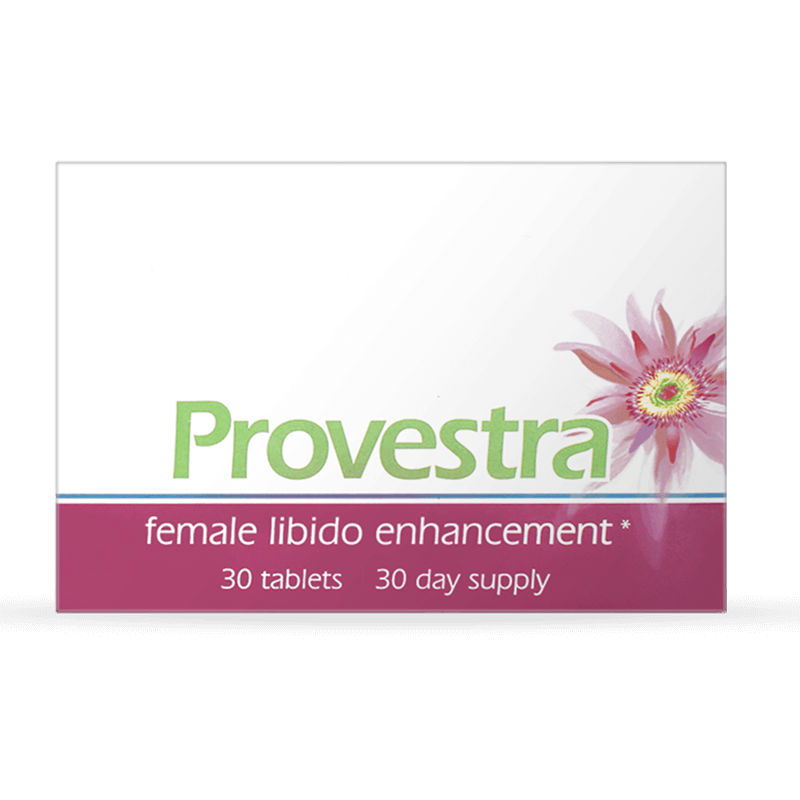
Only after the four approaches above does a daily women's formula enter the picture — as one modest support among several, for the woman whose main remaining issue, once comfort, sleep, and context are addressed, is that her interest itself still feels muted. The women's formulas sold through this store are HerSolution and Provestra, positioned to support desire and arousal as part of a daily routine. Here is the evidence position, without varnish:
- The evidence is ingredient-level, not product-level. The best-studied ingredient in this space, maca, has a handful of small trials in menopausal women — around 85 participants across them — with mixed results: improvement on some measures in some studies, no effect on desire in one. L-arginine has been researched almost only in blends with ginseng, ginkgo, and damiana over about four weeks, so no effect can honestly be credited to it alone. Ginkgo alone appears to have only a limited effect in systematic review. Small, short, blended, preliminary — that is the honest summary of the whole category.
- They are not hormones and not medicine. A supplement cannot reverse the hormonal changes of menopause, and it does not treat dryness — a tissue problem with the local answers ranked at number 2.
- They are gradual. Any effect builds over weeks of daily use. A fair expectation is "somewhat more interest, somewhat more responsiveness" — not a transformation, and not the return of being 25.
- Cautions are real. Ginkgo, a common ingredient here, can increase bleeding risk, which matters alongside blood-thinning medication. Every formula in this category deserves the same rule: check it against your medications with a doctor or pharmacist first.
Bought with those expectations — from the manufacturer's official website, where the guarantee applies and you deal with the maker directly — a supplement is a reasonable experiment to place after the free items have had their chance. Bought instead of them, it is the most expensive item on this list doing the least-supported job.
What Drink Increases Libido in Women? (And Other Kitchen Myths)
We end with the question this site gets in one form or another constantly, because the honest answer disappoints and therefore rarely gets published: no drink has been shown to increase libido in women. Not red wine, not any herbal tea, not any juice or tonic. The claim survives because alcohol feels like it works: it lowers inhibition, so wanting feels louder. Physiologically it points the other way — alcohol dampens arousal response, and heavier drinking reliably worsens the sleep this article just ranked first. A glass of wine with dinner is a pleasure, not a treatment; as a strategy for desire it is working against you by the second glass.
The same verdict covers the food versions. Oysters, chocolate, chilli, and the rest of the aphrodisiac canon have tradition and romance behind them, and no reliable evidence that they change desire in anyone. Eating well in general supports the energy and health that desire runs on — that is item 3 and 4 territory, and it is as far as the truth stretches. If a page names a food or drink as a libido answer, it is telling you a story, and the ranking on this page is our attempt to tell you the evidence instead.
The bottom line: natural libido support after 40 is mostly not a shopping problem. Sleep first, comfort before desire, movement, honest conversation — the free items carry most of what evidence exists, in roughly that order. A supplement can sit at the end of that list as a modest, eyes-open experiment. And anything in a glass or on a plate that promises desire directly is a myth we would rather lose a sale over than repeat.
Disclaimer: This article is for general information only and is not medical advice. Always consult a qualified healthcare professional before starting any supplement, especially if you have a medical condition or take prescription medication. Individual results vary, and no result is guaranteed.
Last reviewed: October 2026
