
- Quick Answer: Three Complaints, Three Different Logics
- For Working Memory: Citicoline (Cognizin®)
- For Memory Consolidation: Bacopa (Synapsa®)
- For Focus Under Strain: Tyrosine
- For Calm Concentration: L-Theanine
- The Supporting Cast: Phosphatidylserine, Ginkgo, DHA and B Vitamins
- What the One Working-Memory Trial Found
- Frequently Asked Questions
- The Bottom Line
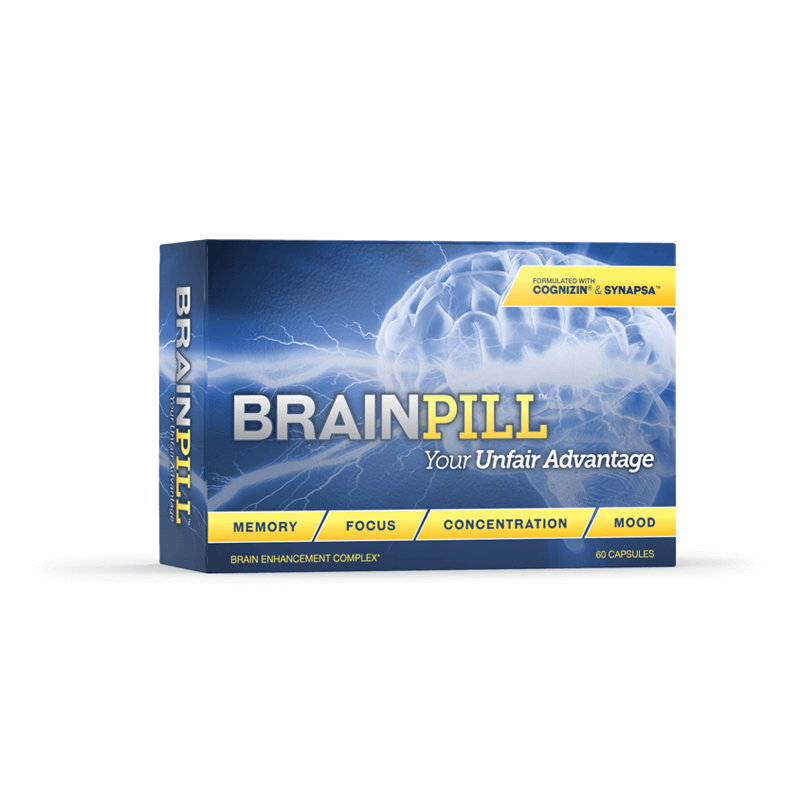
Affiliate disclosure: This article contains affiliate links. If you buy through a link on this page, we may earn a commission paid by the manufacturer, at no extra cost to you. The formula discussed most here is BrainPill, which we sell — chosen because its clinical trial is one of the very few in this category to use working memory itself as its primary endpoint, which makes it the natural worked example for this exact question. Its limits are covered with its results.
Quick Answer: Three Complaints, Three Different Logics
"I want better memory and focus" bundles three separate systems. Working memory is the mental notepad — holding a phone number, a sentence's beginning, a task's steps while you use them. Focus is selection: keeping the notepad's contents from being overwritten by everything else. Concentration is duration: holding that selection for an hour, not a minute. Different supplements aim at different parts of that chain — citicoline and bacopa at the memory side, tyrosine at performance under strain, theanine at the calm that concentration needs — and the only finished-product trial in this discussion measured working memory as its main outcome, which is why its result (positive, marginal, at a doubled dose) anchors this article.
For Working Memory: Citicoline (Cognizin®)
Citicoline is a choline compound — a source of the raw material for acetylcholine, the neurotransmitter most tied to learning and recall, and for membrane phospholipids. The branded form, Cognizin®, is the version BrainPill uses, positioned by its maker around attention and memory support; the maker's materials cite a McLean Hospital study reporting increased brain energy (ATP) of about 14% in the frontal lobes after six weeks of Cognizin® supplementation — a maker's citation of ingredient research, to be weighed as ingredient-level evidence. In BrainPill's own trial protocol, Cognizin® was dosed at 250 mg per day. If working memory is your specific complaint, citicoline is the ingredient whose logic points most directly at it — and the finished product built on it chose working memory capacity as the primary endpoint of its trial, a coherence between claim and measurement that is rarer in this category than it should be.
For Memory Consolidation: Bacopa (Synapsa®)
Working memory holds information for seconds; consolidation is what survives the hour. Bacopa monnieri, the Ayurvedic herb standardised here as Synapsa®, is the traditional memory ingredient aimed at that slower process — the maker's summary of its clinical work describes improved acquisition, retention and recall of information, framed around everyday tasks like remembering names and where things were left. Bacopa's logic is patience: it is a weeks-long ingredient, not a same-day one, which matches how BrainPill's trial was designed (12 weeks) and how the maker tells buyers to judge it (30 to 90 days by its FAQ). In the trial protocol, Synapsa® was dosed at 320 mg per day — again, figures available only from that document, since the retail label publishes no amounts. For the "I read it and it's gone" complaint, this is the half of the formula doing the aiming.
For Focus Under Strain: Tyrosine
Focus rarely fails in calm conditions; it fails at 4 p.m., on short sleep, under deadline. Tyrosine — an amino acid precursor to dopamine and noradrenaline — is included in formulas for exactly that scenario: the maker's summary of the research describes studies in demanding situations, including military settings, sleep deprivation and cold exposure, reporting support for mental performance while the strain lasted. That framing matters for expectations: tyrosine's logic is defensive — holding your normal level when conditions push it down — not raising the ceiling on a good day. In BrainPill's trial protocol it appears at 175 mg per day. Students and shift workers asking about "focus" are usually asking about this scenario, and tyrosine is the ingredient aimed at it.
For Calm Concentration: L-Theanine
Concentration over an hour is as much about what doesn't happen — the restlessness, the tab-switching — as about raw processing. L-theanine, the amino acid from tea, is the category's calming ingredient, included in BrainPill's Focus Fuel blend at a trial-protocol dose of 100 mg per day. Its pairing logic is why a caffeine-free formula can still claim a focus position: theanine supplies the settled state that stimulant formulas borrow from caffeine and then pay for with jitters. If your focus problem is agitation rather than fatigue, this is the relevant lever; if it is fatigue, look again at tyrosine above — matching the ingredient to the failure mode is the entire skill in this category.
The Supporting Cast: Phosphatidylserine, Ginkgo, DHA and B Vitamins
Behind the four headline ingredients, BrainPill's formula carries the structural and circulatory supporting cast: phosphatidylserine and DHA (100 mg each per day in the trial protocol) as membrane materials, ginkgo biloba (100 mg) in the blood-flow role its long history assigns it, and the B-vitamin group (B5, B6, folate, B12) as the metabolic foundation. None of these carries the formula's claim; each fills a job the headline ingredients don't. When you compare rival products, this layer is where labels inflate — a long tail of recognisable names at unknown doses. The honest question is never "how many ingredients" but "are the two or three that matter present at researched amounts" — and for supplements generally, including this one, the amounts question is precisely where published information runs out.
What the One Working-Memory Trial Found
BrainPill's trial (NCT03198936) randomised healthy adults aged 18–60 with subjective memory complaints to the formula or placebo for 12 weeks, at 4 capsules a day. The primary endpoint — working memory capacity — improved significantly versus placebo (p=0.044): a pass, close to the threshold. Matrix Span (visuospatial memory) improved more strongly (p=0.001); picture recognition improved at days 28 and 56 and then faded to non-significance by day 84 as the placebo group caught up; mood did not change in either group. Read plainly: modest statistical support for working memory, in people who felt their memory slipping, at twice the dose a monthly box implies, with the retail label printing neither the amounts nor directions. That is simultaneously one of the best evidence files in this category and a fair summary of how far "best" currently goes. Our full review is on the BrainPill page (Our Score 6.5/10). Readers whose interest in this area is really about healthy ageing rather than day-to-day performance may also want our coverage of GenuinePurity Longevity+, which approaches the question from the cellular-energy side.
These statements have not been evaluated by the Food and Drug Administration. This product is not intended to diagnose, treat, cure, or prevent any disease.
Frequently Asked Questions
What is the best natural supplement for working memory? On evidence posture, a citicoline-led formula is the strongest candidate: citicoline's logic targets the working-memory system directly, and the one finished-product trial we can point to made working memory capacity its primary endpoint and passed it (p=0.044, at 4 capsules a day). "Best" remains a modest claim in a modest-evidence category.
How long do memory supplements take to work? By the makers' own documents: BrainPill's homepage says allow at least 30 days, its FAQ says 30 to 90 days, and its trial ran 12 weeks. Bacopa-type ingredients are measured in weeks by design. Anything promising same-day memory change is selling a stimulant effect, not memory.
Can I improve focus without caffeine? That is the design premise of caffeine-free formulas like this one: theanine for calm, tyrosine for strain-resistance, no stimulant. Expect steadiness, not a kick — and note that in the trial, mood scores did not change, so "feels different" is not the metric; task performance is.
The Bottom Line
Match the ingredient to the failure: citicoline and bacopa for the memory side, tyrosine for focus under strain, theanine for calm duration — and judge any formula by whether its maker tested the whole product on the outcome in its name. One formula here did exactly that for working memory, passed marginally, and hid its doses anyway. Both halves of that sentence are what an informed buyer in this category has to hold at once.
Disclaimer: This article is for general information only and is not medical advice. Always consult a qualified healthcare professional before starting any supplement, especially if you have a medical condition or take prescription medication.
Last reviewed: October 2026
