
- Quick Answer: A Stack Is a Set of Pairs With Jobs, Not a Pile of Ingredients
- Pair One: Citicoline + Bacopa — Supply Meets Processing
- Pair Two: Phosphatidylserine + DHA — The Structural Pair
- Pair Three: L-Theanine + Tyrosine — State Control
- The Foundation Layer: B6, B9, B12 (and B5)
- The Pairing to Handle With Care: Huperzine A + Anything Cholinergic
- Building Your Own Stack vs Buying a Tested Formula
- Frequently Asked Questions
- The Bottom Line
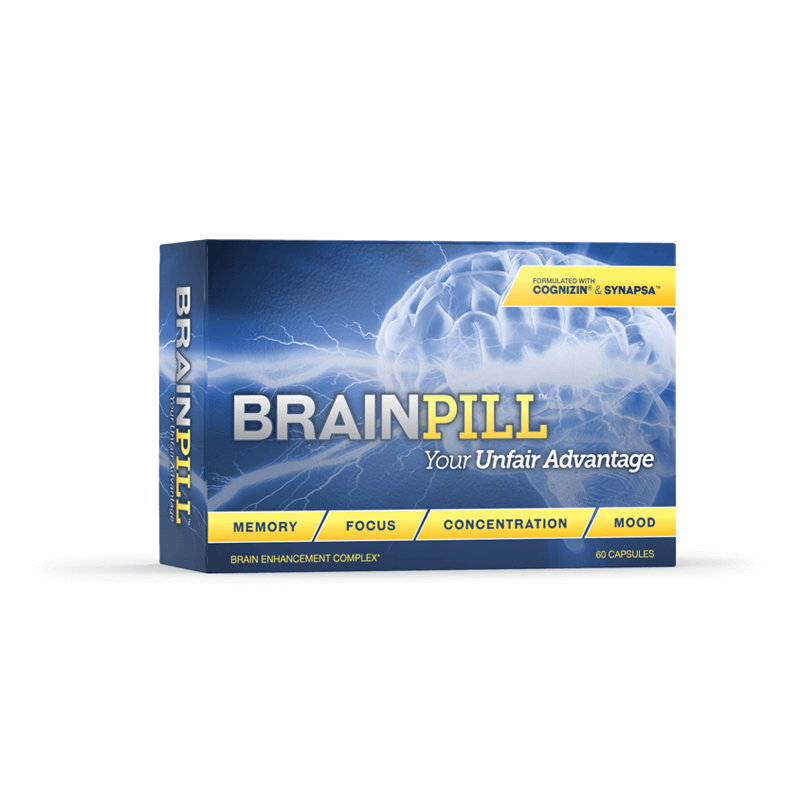
Affiliate disclosure: This article contains affiliate links. If you buy through a link on this page, we may earn a commission paid by the manufacturer, at no extra cost to you. The best-documented "stack" we can walk through is a single formula — BrainPill, whose 13 ingredients were tested together in one registered trial — so its pairings structure this guide. Where the pairing logic is formulator reasoning rather than tested fact, we say so.
Quick Answer: A Stack Is a Set of Pairs With Jobs, Not a Pile of Ingredients
"Stacking" means combining ingredients so each covers a different part of the job — supply, signalling, structure, and state — instead of five ingredients all pushing the same lever. The pairs that recur in serious formulas follow a logic you can audit: a choline source alongside a memory herb (supply meets processing), a structural fat with a signalling nutrient (membrane material meets neurotransmitter precursor), and a calming amino acid alongside an alerting one (state control). BrainPill's formula is built exactly this way — Cognizin® citicoline paired with Synapsa® bacopa, phosphatidylserine with DHA, L-theanine with tyrosine — which is why we use it as the map. One honesty note before the pairs: no pair below has been trialled as a pair. The only combination with finished-product evidence here is all 13 together, at 4 capsules a day, in trial NCT03198936.
Pair One: Citicoline + Bacopa — Supply Meets Processing
This is the anchor pairing of the BrainPill formula and the classic memory stack. Citicoline (as Cognizin®) supplies choline — a raw material for acetylcholine, the neurotransmitter most associated with learning and recall, and for the phospholipids cell membranes are built from. Bacopa monnieri (as Synapsa®) is the traditional memory herb, positioned by its maker around memory acquisition and retention over weeks of use. The pairing logic: one ingredient feeds the signalling system's inputs while the other is aimed at the slower machinery of consolidation. In BrainPill's trial protocol, the two were dosed at 250 mg (Cognizin®) and 320 mg (Synapsa®) per day — the only amounts the maker has ever published, and only inside its trial report, since the retail label prints no amounts. If you build this pair yourself from separate products, those trial figures are the reference points the combination was actually tested at — which is more guidance than most stacks ever get.
Pair Two: Phosphatidylserine + DHA — The Structural Pair
Phosphatidylserine is a phospholipid concentrated in brain cell membranes; DHA is the omega-3 fat those same membranes are built from. They pair as structure with structure: the formula's phospholipid alongside the fatty acid the brain preferentially incorporates. In the BrainPill trial protocol they appear at 100 mg each per day. The logic differs from pair one — nothing here is about a quick signal; both are framed by the maker as long-horizon nutritional support for the tissue itself. This is also the pair most likely to be duplicated carelessly: many buyers already take a fish-oil or omega-3 supplement, and a "stack" that adds a DHA-containing formula on top without noticing is double-counting the same job. Read your existing shelf before adding a structural pair.
Pair Three: L-Theanine + Tyrosine — State Control
Focus is partly a state problem: too wired and attention scatters, too flat and it never engages. L-theanine is the calming amino acid (the one naturally paired with caffeine in tea), and tyrosine is the precursor amino acid the maker positions for performance under stress and sleep loss. In a caffeine-free formula like BrainPill's, the pairing logic is balance without a stimulant: theanine to smooth, tyrosine to support drive. Both appear in the trial protocol at 100 mg (theanine) and 175 mg (tyrosine) per day. This is the pair to think about if your problem is less "I can't remember" and more "I can't settle to the work" — and it illustrates the first question of any stack: which failure are you actually treating?
The Foundation Layer: B6, B9, B12 (and B5)
Underneath the headline pairs sits the unglamorous layer: vitamins B6, folate (B9) and B12, with B5 in the supporting cast. Their pairing logic is metabolic — they work in shared pathways, including the homocysteine cycle that B-vitamin research keeps circling in brain-health discussions, and a formula that included one without the others would be the oddity. In stacking terms, the lesson is defensive: B vitamins appear in nearly every brain formula and multivitamin, so they are the easiest ingredients to duplicate across a self-built stack. Duplication of water-soluble vitamins is low-drama, but it tells you whether you are auditing your combinations or just accumulating them.
The Pairing to Handle With Care: Huperzine A + Anything Cholinergic
Not every combination is additive logic; some are collision risks. Huperzine A — in BrainPill's formula — acts on the acetylcholine system by slowing the breakdown of acetylcholine. Pair one (citicoline) increases the supply of the same transmitter's raw material. Inside a single tested formula, that push-and-protect combination is the maker's deliberate design, dosed as one product. The risk appears when a buyer stacks a huperzine-containing formula on top of another choline-heavy product, or alongside medication touching the same system: the levers compound in a way no trial has measured. The rule this teaches is the stacker's most important one — map ingredients by system, not by product name. Two bottles with different brands and different marketing can be the same intervention twice.
Building Your Own Stack vs Buying a Tested Formula
A self-built stack gives you published amounts and single-ingredient control; it costs you the combination evidence, because nobody has trialled your exact pile, and it multiplies the duplication traps above. A finished formula like BrainPill reverses the trade: the combination was trialled (at 4 capsules a day — the dose gap is real, and retail amounts remain unpublished), but you cannot adjust a single lever. Neither route is strictly better; they are different evidence postures. Our position: if you stack, stack by system map — one supply ingredient, one processing herb, one structural pair, one state pair, a B foundation — and never two products pushing acetylcholine from both directions unless a clinician has seen the list. If you buy a formula, buy the one whose combination was actually tested, and take it at the tested dose or accept that you are running your own experiment.
These statements have not been evaluated by the Food and Drug Administration. This product is not intended to diagnose, treat, cure, or prevent any disease.
Frequently Asked Questions
Can I take BrainPill alongside other nootropics? The maker publishes no stacking guidance, and its formula already contains a full spread — including huperzine A and a choline source. Combining it with another brain formula risks duplicating exactly those ingredients. Treat any addition as a clinician question, and map by ingredient, not by brand.
What is the best single pair for memory? On documented logic, citicoline + bacopa: supply plus processing, the two branded ingredients (Cognizin® and Synapsa®) at the centre of the one finished-product trial in this discussion, dosed there at 250 mg and 320 mg a day. "Best" still means "best-reasoned" — the pair itself was never trialled alone.
How many ingredients should a stack have? Enough to cover distinct jobs — supply, processing, structure, state, foundation — and no more. BrainPill's 13 cover those jobs with several supporting players; a 25-ingredient label usually means several ingredients present in amounts too small to matter, hidden by the same label that boasts about them.
The Bottom Line
Stack by job and by system, not by shopping list. The pairs that make sense — citicoline with bacopa, phosphatidylserine with DHA, theanine with tyrosine, the B-vitamin foundation — make sense because each partner does something the other doesn't. The pairs that hurt are the ones doing the same thing twice under different names. Whichever route you take, our BrainPill review (Our Score 6.5/10) shows the full formula this guide is built around, amounts and gaps included.
Disclaimer: This article is for general information only and is not medical advice. Always consult a qualified healthcare professional before starting or combining supplements, especially if you have a medical condition or take prescription medication.
Last reviewed: October 2026
