
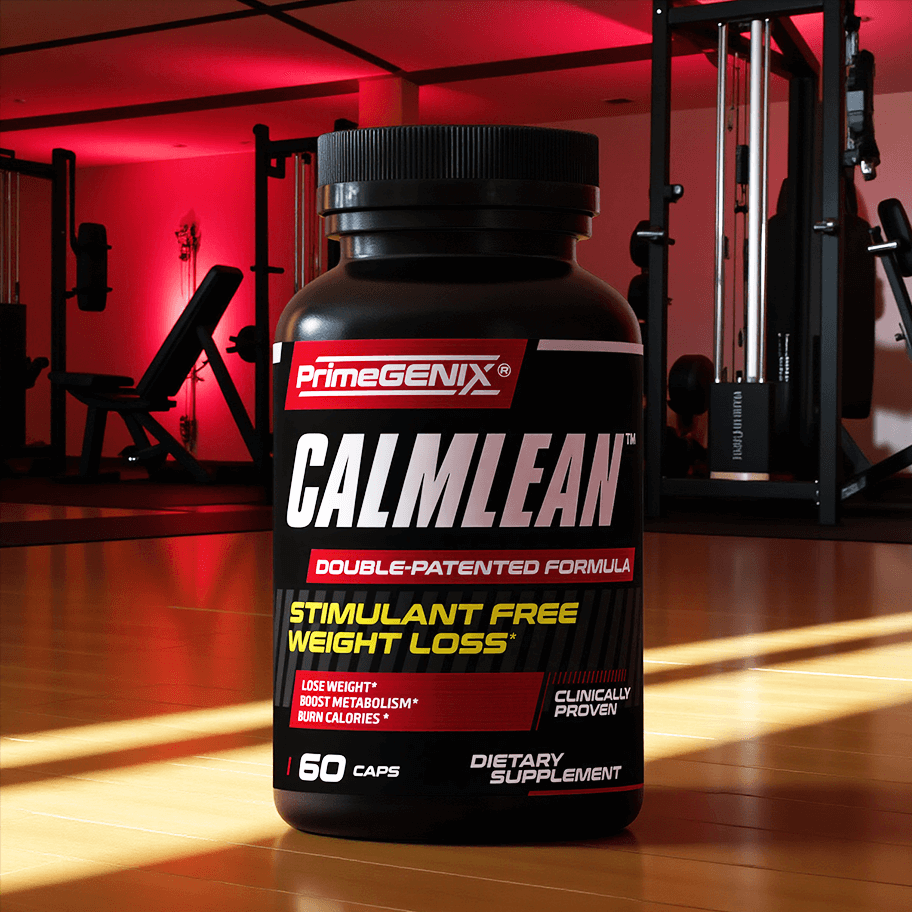
Affiliate disclosure: We sell CalmLean (PrimeGENIX; our score 5.5/10), whose headline ingredient is ForsLean®, through our affiliate link and earn a commission if you buy it. This article exists to do the thing ingredient marketing hopes you won't: find the one published trial behind the branded ingredient that can actually be checked, and report what it found — including that it studied women, not the men the product is sold to, and that what it found was weight-gain mitigation, not fat loss. Every product fact below comes from the maker's own pages and the published record of that trial.
Quick Answer
ForsLean® is a branded extract of Coleus forskohlii root, standardised to 10% forskolin, and it carries exactly one published human trial that a buyer can independently verify: the study indexed as PMID 18500958. That trial enrolled mildly overweight women — not men, not the obese, not athletes — and its finding was that the forskolin group mitigated weight gain rather than losing fat: the meaningful result was the gain that did not happen, not pounds that came off. Set that beside how the ingredient is sold inside CalmLean — a fat burner "scientifically tailor-made for men," promising at least a pound lost each week — and the distance between the verified trial and the marketing is the whole story of this page. The trial is real. What it supports is narrower, and in a different population, than the use it is put to.
What ForsLean Is, Before the Trial
Branded ingredients exist to solve a trust problem: instead of an anonymous plant powder, a maker licenses a named, patented extract with a specification — here, Coleus forskohlii root standardised to 10% forskolin — and, in the better cases, a research file. ForsLean's maker-side credentials, as CalmLean's pages present them, include industry awards for the compound (a Nutracon Best Product Award and a Thomas Alva Edison Patent Award among them), a Korean FDA functional-food approval, and patents held across several countries. Those are credentials about the ingredient's commercial standing. None of them is a clinical result. The clinical file is what matters for a fat-loss claim, and on the maker's own telling it consists of "six clinical studies" of the compound — of which the one that can be traced to a published, indexed trial is the study this article is about.
The Trial: Who Was In It
Population is not a footnote in a weight study; it is most of the result. The PMID 18500958 trial studied mildly overweight women. Hold that against the three audiences the ingredient's marketing addresses. It was not a study of men — yet CalmLean's brand copy is built around men whose metabolism slows with age, and presents the formula as tailor-made for them. It was not a study of people with substantial weight to lose — "mildly overweight" is the entry category, the population in which a few pounds either way is the entire phenomenon under observation. And it was not a study of a finished fat-burner product: it tested the Coleus forskohlii extract itself, which makes every conclusion ingredient-level even before the population question starts. Extrapolation from a trial is sometimes reasonable; what is not reasonable is extrapolating silently, across sex and across outcome, which is what happens when this study is used to sell weekly fat loss to men.
What It Actually Found: Mitigation, Not Loss
The trial's finding, stated at the precision the record supports, is that supplementing with the extract helped mitigate weight gain in the women studied. Read that phrase slowly, because marketing never does. Mitigating gain is a defensive result: the outcome is that a trajectory pointing upward flattened. It is not fat loss — no claim that the group shed meaningful body fat is what this trial is cited for — and it is the opposite direction of travel from a product promise of "lose at least 1 pound each week." A mitigation finding in mildly overweight women could honestly support a modest "weight management" framing for a similar population. It cannot honestly support a rate-of-loss promise, and it says nothing at all, one way or the other, about men. That gap — between a careful, narrow, real result and a loud, broad, invented one — is exactly where branded-ingredient marketing earns its money, and it is why this page grades the ingredient differently from the product built on it.
The Maker's Other Number — and Why It Can't Be Checked
Alongside the verifiable trial, CalmLean's maker cites an eight-week clinical study of the compound in which participants lost an average of 1.14 lb of body weight every seven days. If that study is what it appears to be, it would be the more relevant result — actual loss, at a stated rate. The problem is verification: the maker's pages publish no sample size for it, and nothing in the maker's material lets a reader match it to a published record the way PMID 18500958 can be matched. An auditor's rule applies: a number you cannot trace is a claim, not a finding. So the ForsLean file, fairly stated, contains one traceable trial (women; mitigation) and one untraceable average (1.14 lb a week; population and size unpublished). The marketing runs on the second. This page runs on the first.
These statements have not been evaluated by the Food and Drug Administration. This product is not intended to diagnose, treat, cure, or prevent any disease. This article is educational and is not medical advice.
The Second Missing Number: The Dose in the Bottle
Even if both studies were everything the marketing wants, a buyer of CalmLean would face one more unanswerable question: how much ForsLean is in a serving? The maker publishes, in text, the amount of exactly one of the formula's four ingredients — chromium, 0.200 mg. The ForsLean amount appears nowhere outside the supplement-facts label image. That means the single most basic audit of a branded-ingredient product — does the capsule deliver the extract at anything like the level the studies used? — cannot be performed from anything the maker prints. A branded ingredient is supposed to be the transparent option: a name, a standardisation, a dose. Here you get the name and the standardisation (10% forskolin), and the dose is the part left blank. Combined with the population gap, the honest description of the purchase is: a men's fat burner, built on a women's weight-management trial, at an unpublished dose of the studied ingredient. Our full audit of the product is on its CalmLean page (5.5/10), and the wider category question is in Do Stimulant-Free Fat Burners Actually Work?
Frequently Asked Questions
Has ForsLean been clinically tested?
Yes — that is what separates it from most fat-burner ingredients. The verifiable published trial (PMID 18500958) tested the Coleus forskohlii extract in mildly overweight women. Being tested, however, is not the same as being shown to do what the marketing claims: the trial's finding was weight-gain mitigation, not fat loss.
Did the ForsLean trial show fat loss?
No. Its result was that weight gain was mitigated in the women studied. A flattened upward trajectory in a mildly overweight population is a weight-management finding. The "pound a week" loss figures attached to CalmLean come from the maker's other cited study — the one with no published sample size and no traceable record.
Does the trial apply to men?
It does not speak to men at all: the participants were women. That does not prove the extract does nothing in men; it proves the only verifiable human evidence was not gathered in them. CalmLean is nonetheless formulated and marketed specifically for men, which makes the mismatch a fact a male buyer is entitled to know before paying.
How much ForsLean should a product contain?
The honest answer is that a buyer cannot benchmark CalmLean's serving against the studies, because the maker does not publish the ForsLean amount in text — only chromium's 0.200 mg appears. Whatever the studied doses were, there is no printed figure to compare them with.
Is ForsLean the same as forskolin?
ForsLean is the branded extract; forskolin is the marker compound it is standardised to — 10% of the extract, per the maker. Studies of "Coleus forskohlii" and claims about "forskolin" are used interchangeably in marketing; the trial record belongs to the extract as tested, which is the level this page keeps it at.
The Verdict
ForsLean is a genuinely studied ingredient being asked to carry a claim its one verifiable trial never made. The study is real, published and checkable — and it found weight-gain mitigation in mildly overweight women. Everything beyond that in the product's marketing — fat loss, a pound a week, a formula tailor-made for men — is extrapolation the file does not authorise, sold at an unpublished dose of the extract itself. If the ingredient interests you, buy it with the trial's actual finding in front of you, and judge any product containing it by whether it prints the dose the trial makes relevant. On that standard, CalmLean (our score: 5.5/10) has not yet earned the claim printed largest on its box.
Disclaimer: This article is for general information only and is not medical advice. Always consult a qualified healthcare professional before starting any supplement, especially if you have a medical condition or take prescription medication.
Last reviewed: October 2026
