
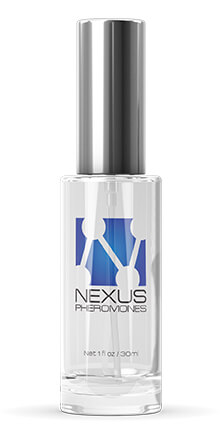
Affiliate disclosure: We sell Nexus Pheromones, a pheromone cologne, through our affiliate link and earn a commission if you buy it. You should know the conclusion of this article up front: the best-controlled evidence says pheromone colognes do not do what their marketing claims, and our own audit scores Nexus 4.0/10. We publish that verdict on a page that also carries our affiliate link, because the file is what it is — and a reader who buys anyway should buy knowing exactly what the evidence says. Nexus is a fragrance, not a supplement or a drug, and this page treats it as one.
Quick Answer
No controlled study has shown a pheromone cologne making its wearer more attractive. The most rigorous test of the two most-studied "human pheromone" compounds — a double-blind study published in 2017 (PubMed PMID 28405372) — found no effect on how wearers were perceived: not on gender perception, not on attractiveness ratings, not on judgements of unfaithfulness. A pre-registered study of 170 people found the lead compound also did not change behaviour. Reddit's fragrance communities, who have no product to sell, argue about many things — but on pheromone perfumes their recurring consensus is that the marketing is overblown. What a pheromone cologne reliably delivers is a scent. Everything beyond that is a claim the evidence has had decades to support and hasn't.
What Reddit Argues
The pheromone question is one of the most reliably recurring topics in fragrance communities. Summaries of the Reddit discussion describe the position as "complicated, leaning heavily towards 'probably not as advertised,'" and guides documenting the subreddits (r/fragrance, r/FemFragLab and their neighbours) record that experienced users discuss pheromone perfumes frequently, with most concluding the "attraction perfume" marketing is overblown. The scepticism is not that the bottles smell bad — it is that the mechanism is fiction-grade: no verified human pheromone pathway comparable to the animal one the marketing borrows, no demonstrated effect, and a sales story that survives on anecdotes structured to be unfalsifiable (if someone smiled at you, it worked; if nobody did, you needed another spray). The category nonetheless exploded on social media in 2024–2025 — pheromone perfume content drew tens of millions of views on TikTok — which is why the question keeps arriving: the marketing is loud, the wearers are curious, and the communities keep answering with the same shrug. A question can be genuinely popular and its answer genuinely negative; this is the batch's clearest example.
What the Studies Found
The science side of this question is unusually checkable, because the field has a pair of flagship compounds and a pair of rigorous tests.
The double-blind test (PMID 28405372). Researchers exposed participants to androstadienone (AND) or estratetraenol (EST) — the two most-cited candidate human pheromones — under double-blind conditions and measured the outcomes the marketing promises: whether faces were perceived as more masculine or feminine, whether they were rated more attractive, and whether they were judged more likely to be unfaithful. Result: no effect on any of them. Not a small effect, not a mixed effect — none.
The pre-registered replication-style test. A pre-registered study of 170 participants tested whether androstadienone changed prosocial behaviour — the softer claim that the compound at least shifts how people act around the wearer. It did not. Pre-registration matters here: the researchers committed to their measures before seeing the data, which removes the flexibility that produced much of the older literature.
The older literature. Set against those are earlier, smaller studies — some reporting mood or attention shifts in laboratory settings, some (like the 2005 study Nexus's maker leads with) reporting that women exposed to androstadienone rated men more attractive in some of the experiments run. That older work is why the category exists. But the pattern is the familiar one: small early positives, followed by larger and better-controlled nulls. When the rigorous studies arrive and the effect leaves, the scientific verdict follows the rigorous studies. It is also worth registering what has never been produced at all: a controlled trial of any finished, named pheromone cologne — including Nexus, whose maker cites no trial of the product itself.
Why the Idea Persists Anyway
If the evidence is this thin, why do wearers keep reporting that "it works"? Three ordinary mechanisms cover nearly every story, and none of them requires a pheromone. Confidence: a man who believes he smells attractive behaves differently — stands closer, talks more, holds eye contact — and behaviour is genuinely attractive; the cologne gets credit for the wearer's own change. The fragrance itself: Nexus and its rivals are scented products; a pleasant smell earns compliments and proximity all on its own, no pheromone hypothesis needed. Selective counting: a night out produces dozens of ambiguous social signals, and a wearer primed by the marketing remembers the smile and forgets the forty neutral faces. Add the guarantee structure — Nexus offers 67 days to judge whether there is "a distinct improvement in how women respond," a criterion no one can measure objectively — and the purchase is designed so the buyer can almost always talk themselves into a result. None of this makes wearers foolish. It makes the claim untestable by the only person asked to test it.
The Nexus File, Specifically
Everything above is the category. Our audit of the specific product we sell is not kinder. Nexus names seven pheromone compounds and publishes no concentration for any of them — no milligrams, no percentages, no total content — and not even the bottle's size, so there is no way to know whether a bottle holds a meaningful dose of anything or a trace. Its headline research citation, a 2005 study, concerns androstadienone — a compound that is not in the formula (we take that apart in full in Androstadienone: The Most-Studied "Pheromone" — and Why It Isn't in Most Sprays). Its second citation tested a generic pheromone product on 38 men in 1998, not this cologne. Its loudest marketing number — a scent "amplified A THOUSAND TIMES" — has no baseline, no measurement and no figure behind it. What is verifiable is the commerce: $49 a bottle ($89 for two, $129 for three), a fully published price ladder, and a genuine 67-day guarantee whose terms, including refund minus shipping, are printed in its FAQ. Our score for the file is 4.0/10. A sceptical third-party reviewer reached the same destination by a shorter road: there is no controlled study of the finished spray. There still isn't.
What You Are Actually Buying
Stripped of the mechanism claim, a pheromone cologne is a fragrance with a story — and should be priced and judged as one. If you like how Nexus smells, $49 for a cologne with a 67-day, use-the-whole-bottle guarantee is a knowable purchase: you are buying a scent, the small confidence effect of wearing something you believe in, and a refund window if the whole thing disappoints. If you are buying the claim — that invisible compounds will change how women respond to you — the evidence says you are buying a claim that the best double-blind test in the field could not detect, attached to a bottle that does not disclose how much of anything it contains. Buy the fragrance if you want the fragrance. Do not buy the pheromone.
Frequently Asked Questions
Do human pheromones exist at all?
Compounds like androstadienone exist in human sweat, and researchers have studied them for decades. What has never been conclusively demonstrated is a compound that functions as a human sex pheromone — reliably changing perception or behaviour in others — and the best-controlled tests of the leading candidates found no effect. "The chemicals exist" and "the mechanism works" are different claims; only the first is established.
Has Nexus Pheromones itself been tested?
No trial of Nexus is cited by its maker or visible anywhere. Its research case is two citations: a 2005 study of androstadienone, which is not in the formula, and a 1998 study of an unnamed generic pheromone product used by 38 men. Neither tested this cologne.
Why do some studies report positive results?
The positive findings cluster in older, smaller studies with flexible methods. When larger, double-blind, pre-registered tests were run on the same compounds, the effects disappeared. That sequence — early excitement, rigorous nulls — is exactly what a non-effect looks like in the literature.
If it doesn't work, why do people swear it does?
Confidence changes behaviour, pleasant fragrance earns real compliments, and a night out offers endless ambiguous signals to count selectively. All three produce sincere testimonials for a mechanism that controlled studies cannot detect.
Is Nexus a supplement?
No. It is a fragrance spray worn like cologne — no Supplement Facts, no oral dose, nothing swallowed. We audit it as a scent with a research story attached, and its maker publishes no warnings or skin-safety guidance for it, which our product review records as part of its file.
Final Verdict
The question "do pheromone colognes work?" has been asked in forums for years and in laboratories for decades, and both venues have converged: the forum consensus is that the marketing is overblown, and the best-controlled studies find no effect to buy. Our shelf carries Nexus Pheromones (Our Score 4.0/10) because readers shop this category and deserve the audited version of it — seven named compounds at unpublished concentrations, a headline study about a molecule the bottle doesn't contain, and an honest price ladder with a real guarantee. Wear it as a cologne if the scent appeals to you. The pheromone claim, on current evidence, is the one part of the product that isn't in the bottle either.
Disclaimer: This article is for general information only and is not medical advice. Nexus Pheromones is a fragrance product, not a dietary supplement or drug.
Last reviewed: October 2026
