
- Quick Answer: Do Nootropics Actually Work?
- The Three Tiers of Evidence, and Why Sellers Mix Them
- What Ingredient Evidence Can and Cannot Tell You
- The Rare Case: A Finished-Product Trial, Read in Full
- Reading That Trial Honestly: The Four Limits
- What "Working" Would Even Look Like
- Frequently Asked Questions
- The Bottom Line
Affiliate disclosure: This article contains affiliate links. If you buy through a link on this page, we may earn a commission paid by the manufacturer, at no extra cost to you. That never changes what we publish — and on this page it means giving the category's biggest question a straighter answer than most sellers give it, including a full reading of the one finished-product trial behind BrainPill, the nootropic we sell, with the parts of that trial that do not flatter it.
Quick Answer: Do Nootropics Actually Work?
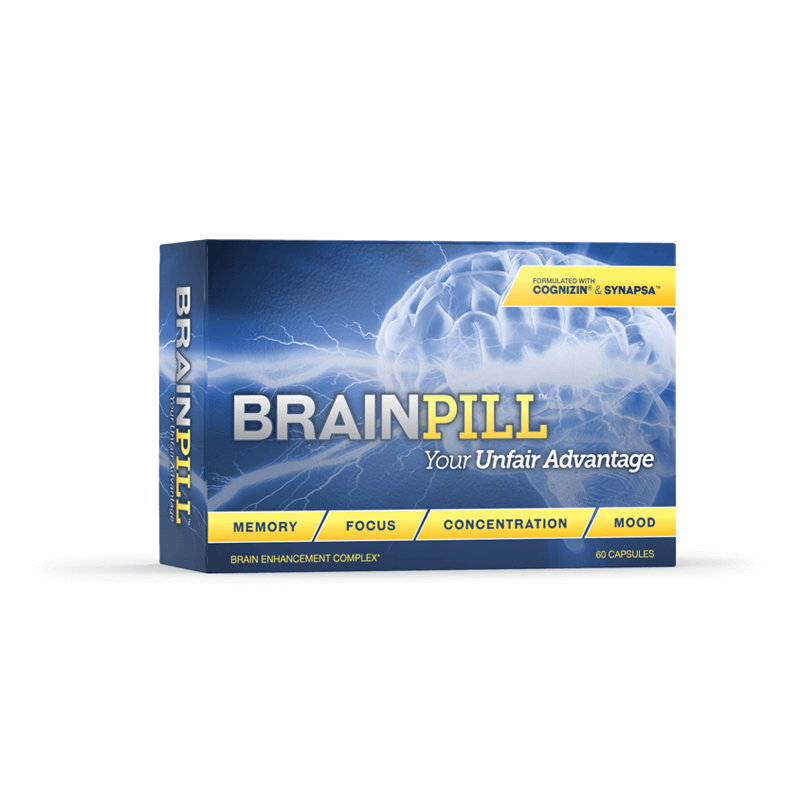
Sometimes, a little, for some outcomes — and the honest version of that answer lives in three tiers of evidence that sellers blur into one. Tier one is ingredient research: studies of single substances like citicoline or bacopa, usually at specific doses, often in specific populations. Tier two is mechanism talk: plausible pathways ("supports acetylcholine") presented as if they were results. Tier three — a randomized, placebo-controlled trial of the exact product in the bottle, at the dose buyers actually take — is the only tier that answers the question as asked, and almost no product in this category has one. One that does is BrainPill, and its trial is genuinely instructive: a real result, on a real primary endpoint, surrounded by limits that its own sales page does not mention. This article uses it as the worked example.
The Three Tiers of Evidence, and Why Sellers Mix Them
Ingredient studies are the category's workhorse. A maker lists 13 ingredients and cites research for perhaps half of them — a bacopa study here, a citicoline study there. What this establishes: those ingredients have been studied, at those doses, in those people. What it does not establish: that this bottle, at its (usually undisclosed) doses, in a blend never tested together, does anything. Ingredients can also undercut each other or simply be present in token amounts — and when a maker publishes no amounts at all, the reader cannot even check whether the bottle matches the study's dose.
Mechanism claims are weaker still. "Supports blood flow to the brain" or "nourishes neurotransmitters" describes a proposed route, not a measured outcome. Mechanism language is how a formula with no human data at any level gets to sound scientific.
Finished-product trials are the gold standard the category mostly avoids: the whole formula, randomized against placebo, with pre-set outcome measures and a registration record anyone can look up. They are expensive and they can fail in public, which is precisely why they are rare — and why a product that has one deserves a closer, not a softer, reading.
What Ingredient Evidence Can and Cannot Tell You
Ingredient research is not worthless; it is how sensible formulas get built. Citicoline and bacopa — the two branded ingredients at the centre of BrainPill's formula (Cognizin® and Synapsa®) — have human research behind them as single ingredients, which is more than can be said for the exotic extracts padding out many rival labels. But note the three gaps that always sit between an ingredient study and your bottle. Dose: the study used a stated amount; the product may or may not match it, and if amounts are unpublished you cannot know. Population: studies often run on older adults with diagnosed decline, or on students — results do not transfer freely to a healthy 35-year-old. Combination: nobody tested the blend; interactions between a dozen ingredients are assumed benign and additive, which is an assumption, not a finding. A seller who quotes ingredient studies as if they were product results is skipping all three gaps at once.
The Rare Case: A Finished-Product Trial, Read in Full
BrainPill's maker, Leading Edge Health, ran the experiment most competitors only gesture at: a randomized, double-blind, placebo-controlled trial of the finished formula, registered at clinicaltrials.gov as NCT03198936, run by a contract research organisation (Vedic Lifesciences) over 12 weeks in healthy adults aged 18–60 with subjective memory complaints. The full report is hosted on the maker's own site, and we read it rather than the sales page that summarises it. What the report shows:
- The primary endpoint landed — barely. Working memory capacity (the pre-set main measure) improved significantly versus placebo at day 84, at p=0.044 — under the 0.05 threshold, but close enough to it that a slightly different sample could have flipped the result.
- One secondary measure was strong. Matrix Span accuracy (visuospatial memory) is reported at p=0.001.
- One measure faded. Picture recognition response time improved significantly at days 28 and 56, then was not significant by day 84 (p=0.476) — the report itself attributes this to a rising placebo effect.
- Mood did not move. The mood score changed insignificantly in both groups.
- Safety was clean. Nine mild-to-moderate adverse events in total — three on BrainPill, six on placebo — none serious.
That is a real trial with a real, mixed result: the profile of a modest effect on working memory in a specific population, not of a transformation. It is also more than almost any other product on this shelf can show.
Reading That Trial Honestly: The Four Limits
One: the dose gap. The trial dosed 4 capsules a day. The maker publishes no directions for buyers anywhere on its web pages, and sells a 60-capsule box as a one-month supply — which implies 2 capsules a day, half the tested amount. The result above belongs to the higher regimen. Two: the money. The trial was funded by the maker's own sponsor entity. Sponsor funding does not invalidate a trial, but it raises the standard for everything around it — and the maker's studies page then overstates the report, announcing that "every participant" significantly improved, which the report's own numbers do not say. Three: the size and the record. Roughly 74 people completed the study (the report's internal counts vary slightly), it has no peer-reviewed journal publication as presented on the maker's pages, and the hosted report is the only record. Four: the missing ingredient. The trial report's composition table lists 12 ingredients; the marketed formula has 13 — vinpocetine is absent from the table, unexplained. Either the trialled formula differed from the sold one, or the table is incomplete. Our full audit of all of this is on the BrainPill review page (Our Score 6.5/10).
What "Working" Would Even Look Like
Set expectations by the category's own documents. BrainPill's maker says full benefits require at least 30 days (homepage), advises allowing 30 to 90 days (its FAQ), and its retail store talks about hitting your stride at three to six months. The trial itself ran 12 weeks. In other words, even where evidence exists, it points to slow, modest, statistical improvements in test performance — not the sharpened-by-lunch effect of the advertising. Anything in this category that promises an immediate transformation is describing caffeine or describing fiction: BrainPill is caffeine-free, and the honest products mostly are, which is why their timelines are measured in weeks. The placebo effect, meanwhile, is not a footnote — in the trial above it grew strong enough by day 84 to erase one measured advantage. Any supplement taken daily with hope and attention will feel like it does something; only the tier-three design can separate that feeling from the formula.
These statements have not been evaluated by the Food and Drug Administration. This product is not intended to diagnose, treat, cure, or prevent any disease. This article is educational and is not medical advice.
Frequently Asked Questions
Do nootropics work at all, or is it all placebo? Neither extreme. Some ingredients have genuine human research; a small number of finished products — BrainPill among them — have real placebo-controlled trials with positive but modest primary results. The placebo effect is also real and large in this category, which is exactly why the trial design matters more than the testimonial count.
How strong is BrainPill's trial result? Real but marginal: the primary working-memory endpoint reached p=0.044 at a dose (4 capsules a day) that is twice what a one-month box implies, in about 74 completers with subjective memory complaints. It supports "may modestly help working memory in people like those studied, at the tested dose" — and nothing broader.
Why don't more brands run finished-product trials? Cost and risk. A registered trial can fail publicly, and ingredient citations are cheaper and can be selected to flatter. The absence of a product trial is the category's normal state — which is a statement about the category, not proof that every untrialled product is inert.
The Bottom Line
Do nootropics work? The ingredients, sometimes, at studied doses. The products, almost never proven — with a short list of exceptions that prove the rule by showing what proof actually looks like: a registered trial, a marginal primary result, a faded secondary measure, a sponsor's name on the funding line, and a tested dose you may not be taking. Judge every product in this category by which tier its evidence sits in, and read the tier-three documents in full when they exist. That discipline — not any single formula — is what separates a reasonable experiment from an expensive hope.
Disclaimer: This article is for general information only and is not medical advice. Always consult a qualified healthcare professional before starting any supplement, especially if you have a medical condition or take prescription medication. Individual results vary, and no result is guaranteed.
Last reviewed: October 2026
