
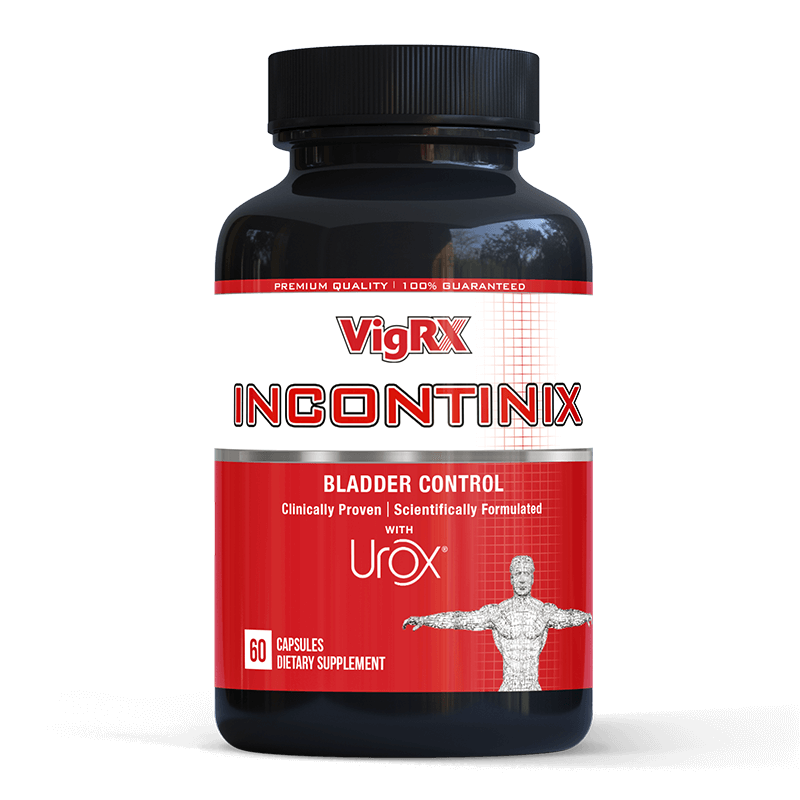
Affiliate disclosure: This article contains affiliate links. If you buy through a link on this page, we may earn a commission paid by the manufacturer, at no extra cost to you. That never changes what we publish — and this page carries the clearest conflict on our site, so it gets the clearest statement: we sell a bladder supplement, and nothing on this page should be read as a reason to stop, skip or replace a medicine your doctor has prescribed. Supplements and prescription overactive bladder (OAB) medicines are not rival answers to the same question. They are different tools, with different evidence, different oversight and different jobs. This page sets out what each can and cannot do — fairly, including the parts that do our side of the shelf no favours.
Quick Answer: What Is the Actual Difference?
Prescription OAB medicines are drugs tested in large, regulated clinical trial programs, approved by regulators for treating overactive bladder, dosed precisely, and prescribed after an assessment — on the strength of evidence that they reduce urgency, frequency and urge-incontinence episodes by measured amounts against placebo. Bladder supplements are food-category products: they cannot legally claim to treat OAB, their evidence ranges from tradition to — at best — a single blend-level trial reported by the maker, and nobody has assessed your pattern before you buy one. The practical summary: medicines are treatment, with a doctor in the loop and known side effects to weigh; supplements are a lower-evidence, lower-oversight option some men try for mild symptoms or alongside medical care — with the doctor still in the loop. Anyone who tells you a capsule makes the medicine unnecessary is selling something. We are selling something too, and we are not telling you that.
What Prescription Medicines Do
Two main drug families treat overactive bladder. Antimuscarinics (names you may recognise: oxybutynin, tolterodine, solifenacin and their relatives) damp down the bladder muscle's unwanted contractions — the signals that produce urgency at low volumes. Beta-3 agonists (mirabegron, vibegron) relax the bladder during filling by a different route, letting it store more before signalling. Both families were approved on the back of multiple large randomised trials measuring the outcomes that matter — voids per day, urgency episodes, leaks — and both carry known, published side-effect profiles that a prescriber weighs with you: dry mouth and constipation are the classic antimuscarinic complaints, with extra caution in older patients; blood-pressure monitoring belongs with the beta-3 conversation. When oral medicines are not enough or not tolerated, the prescription pathway continues — bladder Botox injections, nerve-stimulation therapies, and specialist review. Two implications deserve emphasis. First, the pathway starts with assessment: a clinician confirms the pattern is OAB and not infection, prostate obstruction, blood sugar or something else wearing its clothes. Second, men specifically should know that bladder symptoms plus prostate enlargement are often treated as a pair — medicines for the prostate and for the bladder are separate decisions a doctor sequences deliberately, because relaxing the bladder of a man who already empties poorly needs care. That sequencing is exactly the kind of judgement no product page can make.
What Supplements Do — and the Evidence Ceiling
Supplements work the category's softer levers: botanicals positioned at bladder tone, capacity, connective tissue and age-related change, sold as daily capsules without any assessment at the door. The evidence ceiling is the honest story. At the category's floor: ingredient folklore and studies of single herbs at doses the product may not contain. At its ceiling — the strongest structure we have audited in this aisle — sits the Urox® blend in the men's product we sell, Incontinix: its maker reports an eight-week, double-blind, placebo-controlled trial of the exact blend at the exact dose, 150 volunteers, published in BMC Complementary Medicine and Therapies, with urgency down 62% and leaks halved. Compare that ceiling with the prescription floor, fairly: one trial, reaching us through the maker, with its sponsor and full citation unpublished, against regulatory trial programs of thousands of patients with published protocols. Both can be "a placebo-controlled trial." They are not the same weight of evidence, and any supplement page that blurs that difference — ours included, if we ever did — should lose your trust on the spot. Add the regulatory asymmetry: a medicine's maker must prove safety and efficacy to sell it; a supplement's maker must not — the standard FDA disclaimer on the label says these statements have not been evaluated by the Food and Drug Administration, and the product is not intended to diagnose, treat, cure or prevent any disease.
These statements have not been evaluated by the Food and Drug Administration. This product is not intended to diagnose, treat, cure, or prevent any disease. This article is educational and is not medical advice.
| Prescription OAB medicines | Bladder supplements | |
| Evidence | Multiple large randomised trials per drug; regulatory approval | Tradition up to — at best — a single maker-reported blend trial |
| Assessment first | Yes — diagnosis and pattern confirmation by a clinician | No — self-selected off a page |
| Dose | Precise, standardised, labelled | Often proprietary blends with unpublished component amounts |
| Side effects | Known, published, monitored | Commonly unpublished by the maker — an absence of data, not of risk |
| Interaction checking | Part of prescribing | Up to you and your pharmacist — makers often publish nothing |
| Claims allowed | Treats overactive bladder | Structure/function language only; cannot claim to treat OAB |
The Side-Effect Question, Answered Evenly
Men often arrive at supplements fleeing medicine side effects — dry mouth is a genuinely miserable daily tax — and the supplement pitch writes itself from there. Take the trade seriously and completely. A medicine's side effects are known: listed, quantified in its trial data, and discussable in advance, with alternatives in the same family and beyond it if one drug disagrees with you. A supplement's side-effect profile in this category is usually unknown in print: the maker of Incontinix, for example, publishes no warnings, no side-effect list and no medication cautions anywhere in its marketing, and reports only that its trial saw no negative side effects. Unpublished is not the same as none — it means the information does not exist for you to weigh. The balanced reading: "the medicine's side effects are documented and the supplement's are undocumented" is an argument about paperwork, not a proof that the supplement is gentler. Decide with that straight, and raise any switch you are contemplating with the prescriber who knows your other medications.
Where a Supplement Legitimately Fits
Three honest places. Mild symptoms, pattern confirmed: a man whose diary and assessment say bladder-pattern, whose symptoms are bothersome rather than severe, and who prefers to start low-intervention can reasonably trial a well-documented supplement — judged at its trial's timeframe, inside its guarantee, with his own counts as the scoreboard. Alongside, never instead: some men use a supplement as an adjunct while continuing prescribed treatment; that combination belongs in a conversation with the prescriber, because interactions are precisely what supplement makers fail to publish. While waiting or deciding: during the weeks before an appointment, the free work — bladder diary, fluid timing, caffeine and alcohol audit — does more than any capsule, and makes the eventual consultation sharper. And the places a supplement does not fit: as a reason to delay assessment of new or worsening symptoms; as a substitute where a prescription is working and tolerated; as an answer to the prostate or production patterns, which are different machinery — our prostate, bladder or production explainer separates them. Prostate-pattern men, for reference, are choosing between a different supplement shelf (ours includes PrimeGENIX Prostate Support) and prostate medicines — the same evidence logic, applied one organ over.
The Bottom Line
Medicines treat overactive bladder on deep evidence, inside medical oversight, with known costs and known side effects. Supplements offer a thinner file: at their best, one credible blend-level trial and a guarantee, sold without the assessment that makes the medicine route safe. Those are different offers, and for different severities — not enemies. If your symptoms are mild, your pattern is checked, and your prescriber knows what you are taking, a supplement trial is a defensible, refundable experiment. If your symptoms are significant, changing, or already prescribed for, the medicine is the treatment and the supplement is, at most, a conversation. We would rather sell you nothing than sell you a reason to abandon treatment that was working.
Last reviewed: October 2026
