
- Quick Answer: "Safe" Is a Checklist, Not a Label Claim
- Check One: The Pregnancy Warning That Lives on the Ingredients Page
- Check Two: Ingredients That Work on the Same Systems as Medicines
- Check Three: "FDA-Approved Ingredients" — A Phrase That Means Nothing
- Check Four: Weigh the "No Side Effects" Claim Against the Trial Record
- Check Five: The Unknowns the Label Cannot Fill
- Frequently Asked Questions
- The Bottom Line
Affiliate disclosure: This article contains affiliate links. If you buy through a link on this page, we may earn a commission paid by the manufacturer, at no extra cost to you. Safety coverage is where that disclosure matters most: we sell one of the products discussed here — BrainPill — and this page names its safety gaps as directly as anyone else's. If a check below worries you about any nootropic, the answer is a pharmacist or doctor, not a label.
Quick Answer: "Safe" Is a Checklist, Not a Label Claim
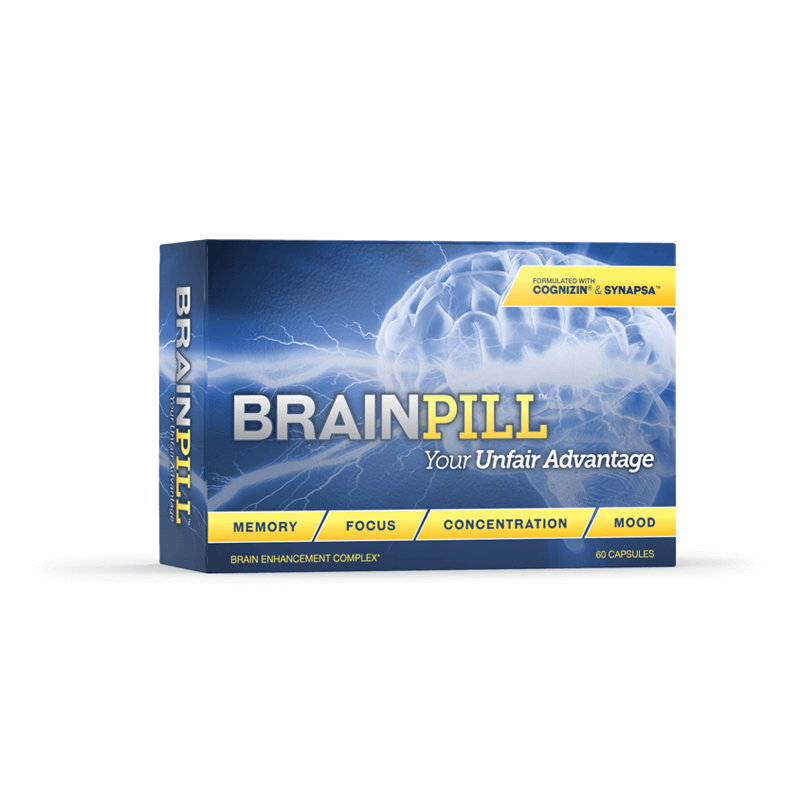
Are nootropics safe? The category cannot answer that as a whole, because nootropics are not one thing — they are dozens of ingredients with very different risk profiles, sold in blends whose amounts are often unpublished. What a careful buyer can do is run the specific checks below: the pregnancy check, the interaction check, the claims check, and the evidence check. We run each one against a real product — BrainPill — because its documentation is unusually public: a full trial report, a 13-ingredient label, and, as you will see, a homepage that claims "No Unwanted Side-Effects" while its own trial quietly recorded adverse events. Both things being officially published by the same maker is the whole lesson.
Check One: The Pregnancy Warning That Lives on the Ingredients Page
The single most specific safety warning in BrainPill's documentation concerns vinpocetine, a synthetically produced ingredient in its Advanced Memory Matrix. The warning — that people who are pregnant or could become pregnant should not take vinpocetine — appears only on the maker's ingredients page. It does not appear on the product homepage, in the product's FAQ, or in any visible safety section, because the brand has no safety section. The maker also notes, on the same page, that vinpocetine is prescription-only in Germany. Read that combination slowly: an ingredient one major country regulates as a prescription drug, carrying a pregnancy warning, presented on a consumer homepage under the banner of no unwanted side-effects. The check this teaches is general: for any nootropic, read the ingredients page and each unusual ingredient individually — the warnings in this category live at ingredient level, not product level, and they are rarely carried up to the page doing the selling.
Check Two: Ingredients That Work on the Same Systems as Medicines
Some nootropic ingredients are pharmacologically active by design, and their marketing says so. Huperzine A, also in BrainPill's formula, is included because it acts on acetylcholine — the same neurotransmitter system targeted by several prescription drugs for memory disorders. An ingredient that meaningfully raises acetylcholine availability is, by the same token, an ingredient whose combination with cholinergic or anticholinergic medication is a clinician's question, not a forum's. The same caution pattern applies across the category: blood-flow ingredients such as ginkgo are routinely flagged alongside blood-thinning medication, and amino acids like tyrosine interact with mood and blood pressure in ways that matter to people on related prescriptions. The most telling detail in BrainPill's trial report is its exclusion list: the researchers barred participants from taking a range of cognition-affecting and other medications — stimulants, sedatives, antihistamines, certain blood-pressure drugs and more. Even the maker testing its own product did not mix it freely with common medicines. If you take any prescription drug daily, the check is simple and non-negotiable: show the full ingredient list to your pharmacist before the first capsule, not after the first strange week.
Check Three: "FDA-Approved Ingredients" — A Phrase That Means Nothing
BrainPill's brand FAQ reassures readers with the phrase "FDA-approved ingredients." No such approval exists for dietary supplement ingredients in this sense: the FDA does not pre-approve supplement formulas or ingredients for efficacy, and no supplement product carries FDA approval the way a drug does. The phrase borrows the authority of drug regulation for a category that operates under a different, lighter framework — and it appears on other brands' pages too, including NooCube's official site. Treat it as a diagnostic: a maker willing to use one meaningless regulatory phrase has told you something about how carefully the rest of its claims were written. The legitimate version of the reassurance would name something checkable — a manufacturing standard, a testing laboratory, a certificate — rather than an approval that was never granted.
Check Four: Weigh the "No Side Effects" Claim Against the Trial Record
BrainPill's homepage states there are "No Unwanted Side-Effects." Its own trial report records nine adverse events across the study: three among BrainPill participants, six among placebo participants, all mild to moderate, none serious, none clearly attributed to the product. Both facts are the maker's. The trial record is genuinely reassuring as far as it goes — placebo produced more complaints than the product did — but it does not say "none," and it covers only about 74 people over 12 weeks at the tested dose. That is the honest shape of supplement safety evidence almost everywhere: small, short, and reassuring-within-limits, while the homepage rounds it up to an absolute. When any brand in this category claims zero side-effects, translate it as "no safety section, no caveats, marketing copy" and go looking for the underlying record — trial report, adverse-event table, anything with numbers in it. If none exists, the claim has nothing underneath it at all.
Check Five: The Unknowns the Label Cannot Fill
Several safety questions have no published answer for products like BrainPill, and an honest article says so. The trial excluded pregnant women entirely, so there is no safety data in pregnancy — only the vinpocetine warning standing guard. There is no published long-term data beyond 12 weeks, and no published data on combining the formula with other supplements — a real gap, because nootropic users commonly stack products, and two blends can quietly duplicate ingredients like huperzine A or bacopa. There is also no published per-ingredient amount on any sales page: the amounts exist only inside the trial report. Dose opacity is a safety issue in itself — you cannot discuss a sensible dose of an ingredient with your doctor if nobody will tell you how much of it you are taking. Finally, note where the one plain-English caution lives: the instruction to consult your doctor if you take prescription medication appears on the maker's secondary retail store, not on the brand's own homepage or FAQ. The check generalises: if a brand's caution appears only in its least-visited documents, weight it more, not less — it is the sentence the lawyers wrote.
These statements have not been evaluated by the Food and Drug Administration. This product is not intended to diagnose, treat, cure, or prevent any disease. This article is educational and is not medical advice; it cannot assess your personal risk.
Frequently Asked Questions
Are nootropics safe for everyone? No category-wide answer exists. The documented cautions concentrate in predictable places: pregnancy (vinpocetine-type warnings), prescription medication (ingredients acting on acetylcholine, blood flow, or mood), and unpublished doses. People outside those groups, taking a documented formula at its directed dose, face a smaller and better-defined risk — which is why the checks above are individual, not universal.
Is BrainPill safe? Its trial recorded fewer adverse events on the product than on placebo, all mild to moderate, over 12 weeks in screened healthy adults. Its label also carries no safety section, publishes no ingredient amounts, and includes one ingredient (vinpocetine) with a pregnancy warning and another (huperzine A) that acts on a drug-targeted system. Our review scores its safety documentation 4.5/10 — the full reasoning is on the BrainPill review page.
What should I ask my doctor before taking a nootropic? Bring the full ingredient list and ask three things: does any ingredient act on a system my medication touches; is any ingredient flagged in pregnancy or before surgery; and is the dose of each ingredient published anywhere, so the conversation can be specific. If the third answer is no, that itself is information.
The Bottom Line
Nootropics are not uniformly safe or uniformly dangerous; they are under-documented, and documentation is what safety decisions run on. Run the checks: find the ingredient-level warnings (especially pregnancy), screen for drug-system overlaps, discount any "FDA-approved ingredients" or "no side effects" language to zero, weigh whatever adverse-event record exists, and treat unpublished doses as a gap in the safety file — because that is exactly what they are.
Disclaimer: This article is for general information only and is not medical advice. Always consult a qualified healthcare professional before starting any supplement, especially if you are pregnant, could become pregnant, have a medical condition, or take prescription medication.
Last reviewed: October 2026
