
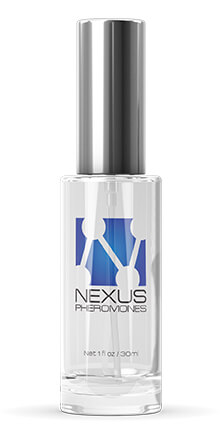
Affiliate disclosure: We sell Nexus Pheromones through our affiliate link and earn a commission if you buy it. This article is about the compound Nexus's own marketing leans on hardest — and the plain fact at its centre deserves saying in the first paragraph: androstadienone is not in Nexus. It is not one of the seven compounds in the formula. Nexus is a fragrance, not a supplement or a drug, and we audit its research story the way we audit supplement labels: against what is actually in the bottle.
Quick Answer
Androstadienone is a steroid compound found in human sweat and the single most-studied candidate "human pheromone" in the scientific literature. It is also the compound behind the headline study in Nexus's research case — a 2005 study the maker presents as women rating men more attractive under its influence. Two problems follow. First, the strongest tests of androstadienone itself — a double-blind study (PMID 28405372) and a pre-registered study of 170 people — found no effect. Second, and more basic: Nexus does not contain androstadienone. Its seven compounds are androstenone, alpha-androstenol, androsterone, epiandrosterone, beta-androstenol, androstenedione and androstanone. Similar names, different molecules. Whatever the famous study shows — and the rigorous follow-ups say it shows nothing — it shows it about a compound you are not buying when you buy this spray.
What Androstadienone Is
Androstadienone (often shortened to AND) is a steroid related to testosterone, detectable in male sweat and other secretions. It became the field's flagship candidate for understandable reasons: it is really present in human biology, it belongs to a chemical family that functions as pheromones in other mammals, and early laboratory work reported that it could shift women's mood, attention and physiological arousal in experimental settings. Through the 1990s and 2000s it accumulated more published attention than every other candidate combined, which is why "androstadienone" became the word pheromone marketing reaches for: it is the one compound in the category with a genuine research literature attached. That literature is real. What it concludes, once its strongest studies are weighed, is the subject of the next section — and why a molecule can be simultaneously the most-studied in its field and absent from the product citing it is the section after that.
Why It Became the Headline Compound
The citation that matters for this page is the one Nexus's maker leads with: a 2005 study, published in the European Journal of Obstetrics & Gynecology and Reproductive Biology, presented by the maker as finding that women exposed to androstadienone rated men more attractive in two of the three studies run. Around it sits a broader early literature of small experiments — mood ratings, attention tasks, hormone measures — frequently reporting something positive, rarely reporting it at a size or with a design that would settle anything. This is the material from which an entire product category built its scientific costume. A shopper reading "more than 12 years of scientific research prove it's true" (Nexus's own headline) is reading the accumulated weight of that era — small studies, a real compound, a plausible story — presented as if the story had only grown stronger since. It had not. It had been tested properly.
What the Rigorous Tests Found
The double-blind test (PMID 28405372). When androstadienone and estratetraenol — the two flagship candidates — were tested double-blind, with neither participants nor experimenters knowing who received what, the outcomes were the exact ones the marketing promises: perception of gender in faces, ratings of attractiveness, and judgements of likely unfaithfulness. The compounds produced no effect on any of them. This is the strongest single study in the field, and it is a null.
The pre-registered test (170 participants). A later study, pre-registered so its methods and measures were fixed before data collection, asked whether androstadienone at least changed behaviour — prosocial responses toward others. It did not. Pre-registration is the discipline the early literature largely skipped, and the compound did not survive it.
The pattern is the one this store's audits keep meeting, in category after category: small, flexible early studies find an effect; large, disciplined later studies cannot. The honest summary of androstadienone in 2026 is not "proven pheromone" and not quite "debunked chemical" — it is a real human compound whose flagship claim has failed its best tests. Even a reader who wants to keep an open mind about the molecule, though, faces the second, simpler problem with the Nexus bottle.
The Name Trap: It Isn't in the Bottle
Here is the fact this article exists to state plainly: androstadienone is not one of the seven compounds in Nexus Pheromones. The maker's published formula is:
- Androstenone — "signals dominance," per the maker
- Alpha-Androstenol — comfort and attraction
- Androsterone — masculinity; mood effects
- Epiandrosterone — "may communicate youthfulness"
- Beta-Androstenol — the "icebreaker pheromone"
- Androstenedione — heightened responsiveness
- Androstanone — "powerful, masculine effect"
Read the list against the citation and the trap becomes visible. Androstenone is not androstadienone. Androstanone is not androstadienone. Androstenedione is not androstadienone. Four names in this formula begin with the same stem and differ in their endings — and in chemistry, the ending is the molecule. The compound with the 2005 study, the compound in the double-blind null, the compound whose name a shopper might search to check the research — that compound is simply absent. Whether the omission is a formulation choice or a marketing convenience is something only the maker knows; what a buyer can verify is the mismatch itself. And it gets worse under one more layer of audit: the maker publishes no concentration for any of the seven compounds it does list — no milligrams, no percentages, no total content, not even the bottle's volume — so even the compounds that are present cannot be checked for a meaningful dose. The research story cites a molecule that isn't there, at doses that aren't stated, for a product that has never been trialled.
How to Use This When Shopping Any Pheromone Spray
The androstadienone gap is not unique to Nexus — it is the standard shape of this category's marketing, because the famous compound is famous and the formulas are whatever the formulas are. Three checks, each taking a minute, dismantle most of it. First, match the citation to the ingredient list: find the study the brand leads with, note the compound it tested, then find that exact name — full name, not the shared stem — in the formula. If it isn't there, the citation is decoration. Second, look for a concentration: researchers test specified doses; a formula publishing none gives you no way to distinguish a serious dose from a trace, and "amplified a thousand times" (Nexus's phrase) without a baseline is a multiplier with nothing under it. Third, look for a trial of the product itself: not of a compound, not of a rival, not of "pheromones" in 1998 — of the bottle you are buying. On our shelf, no pheromone product passes the third check, and Nexus fails the first two as well, which is why our product review scores it 4.0/10 while still carrying it for readers who want the fragrance: $49 a bottle, a published price ladder, and a 67-day guarantee that lets you use the entire bottle — terms that are, to the maker's credit, printed in full. The wider evidence picture is in our companion piece, Do Pheromone Colognes Actually Work?
Frequently Asked Questions
Is androstadienone a real pheromone?
It is a real compound found in human sweat, and the most-studied candidate in the field. Its claim to pheromone status — reliably changing how others perceive or behave toward the wearer — failed its strongest tests: a double-blind study found no effect on gender perception, attractiveness or unfaithfulness judgements, and a pre-registered 170-person study found no behavioural effect.
Does Nexus contain androstadienone?
No. Plainly: it does not. The seven compounds in Nexus are androstenone, alpha-androstenol, androsterone, epiandrosterone, beta-androstenol, androstenedione and androstanone. Androstadienone — the compound in the 2005 study the maker cites — is not among them, despite the similar names.
Isn't androstenone basically the same thing?
No. They are different molecules that share a naming stem, as do androstanone and androstenedione. Studies of one say nothing about the others. Any marketing that lets the names blur is borrowing evidence across a chemical boundary.
Which compound in Nexus has the best evidence?
None has evidence at product level: no trial of Nexus exists, and the maker publishes no concentration for any compound, so no ingredient in the bottle can be matched to a studied dose. The formula is seven names without numbers — the deepest problem in its file, deeper even than the missing androstadienone.
Why would a maker cite a compound its product doesn't contain?
We record the fact, not the motive. The charitable reading is category shorthand — "pheromone research" treated as one pool. The practical effect on a buyer is the same either way: the most impressive citation in the research case describes a molecule the purchase does not include.
Final Verdict
Androstadienone earned its fame honestly — it is in human sweat, it was studied seriously, and for a while the results looked promising. Then the double-blind and pre-registered studies arrived, and the effect wasn't there. That is a normal scientific story. The abnormal part is commercial: the compound's name and its oldest study still headline the marketing of sprays that do not contain it. Nexus Pheromones (Our Score 4.0/10) is our shelf's example — seven different compounds at unpublished concentrations, sold under a headline its own ingredient list doesn't support. Check the citation against the formula, on this product and every rival. It takes a minute, and it is the whole review.
Disclaimer: This article is for general information only and is not medical advice. Nexus Pheromones is a fragrance product, not a dietary supplement or drug.
Last reviewed: October 2026
