
- Quick Answer: Does Semen Volume Decrease With Age?
- What Does Research Actually Show About Age and Volume?
- Why Does Volume Go Down?
- What Is Still Normal at Any Age?
- Does Lower Volume Mean Lower Fertility?
- How Much Do Hydration and Frequency Matter, Whatever Your Age?
- When Is a Drop Not Just Age?
- What Can — and Can't — Be Done About Age-Related Decline?
Affiliate disclosure: This article contains affiliate links. If you buy through a link on this page, we may earn a commission paid by the manufacturer, at no extra cost to you. That does not decide what we say here: this page explains a normal part of ageing, puts the numbers in perspective, and is upfront that most age-related change needs no product at all.
Does semen volume decrease with age? If you have noticed less than there used to be, you are observing something real — and, in most cases, something normal. Volume does drift downward as men get older, gradually rather than suddenly. This page explains what research shows about the size and timing of that decline, why it happens, what still counts as normal at any age, and the specific patterns that are not just age and deserve a doctor's attention instead.
Quick Answer: Does Semen Volume Decrease With Age?
Yes — gradually, and usually modestly. Studies of ageing men consistently find that semen volume eases down from around the 40s onward, alongside slower declines in sperm quality. There is no cliff edge and no age at which volume simply stops; the change is measured in small amounts over years, and it varies a lot between men. A sudden drop, at any age, is a different matter — that pattern is not explained by ageing and is covered below.
What Does Research Actually Show About Age and Volume?
The honest version starts with a caveat: there is no single authoritative number. Studies differ in who they enrol — fertility-clinic patients, sperm donors, healthy volunteers — and in how carefully they control for the time since a man's last ejaculation, which by itself changes volume a great deal. With that said, the direction of the findings is consistent across cohort studies and reviews of male ageing: semen volume, sperm motility and the proportion of normally shaped sperm all tend to decline with age, with the change becoming noticeable from around the 40s and continuing into later decades.
In size, the volume decline reported in cohort studies is small per year — on the order of a few percent annually in some of them, less in others — which is why it is usually noticed as "less than in my twenties" rather than as a year-to-year change. Studies vary enough that we would not put a single precise figure on it, and you should be suspicious of any page that does. The same research finds sperm concentration holds up better than volume and motility do; total sperm output per ejaculate still falls, partly because there is less fluid carrying them.
One more perspective matters: these are averages across groups. Plenty of older men produce volumes well inside the normal range, and a younger man can sit at the low end of normal his whole adult life. Age shifts the odds; it does not stamp a number on any individual.
Why Does Volume Go Down?
Most of the fluid in an ejaculate is not sperm. The seminal vesicles contribute the largest share — roughly 60 to 70 percent — and the prostate most of the rest. Ageing acts mainly on those glands and on the systems around them:
- The glands themselves change. The seminal vesicles and prostate produce less fluid with age, and the smooth muscle that propels ejaculation weakens, so a smaller share of what is produced is expelled with the same force.
- Testosterone declines. Levels fall slowly with age, and the fluid-producing glands are hormone-responsive — less signal, less output.
- The prostate grows. Benign prostate enlargement is common with age and can interfere mechanically with ejaculation, as well as bringing its own urinary symptoms.
- Medications accumulate. The prescriptions men commonly start in midlife are a major, under-rated factor. Prostate medicines — alpha blockers such as tamsulosin, and 5-alpha reductase inhibitors such as finasteride and dutasteride — are documented to reduce ejaculate volume or divert semen into the bladder. Some blood-pressure medicines and antidepressants can also interfere with ejaculation.
- The refractory period lengthens. Older men typically need more recovery time between ejaculations. Ejaculating again before the glands have refilled means less fluid — a timing effect, not lost capacity.
What Is Still Normal at Any Age?
The World Health Organization (WHO), whose laboratory manual is the reference standard for semen testing, sets a lower reference limit for ejaculate volume of about 1.4 to 1.5 mL, with a typical adult range around 1.5 to 5 mL — roughly a third of a teaspoon to a full teaspoon. An age-related drift that stays inside that range is normal variation, not a disorder.
Context helps here too. Volume moves around from day to day with hydration, arousal and the interval since the last ejaculation, which is why laboratories standardise on two to seven days of abstinence before measuring and usually ask for a second sample. Judging a trend from one occasion — especially a dehydrated, back-to-back one — overstates any decline. Our guide to how to increase semen volume naturally covers the everyday factors that move the number at every age.
Does Lower Volume Mean Lower Fertility?
Not necessarily — and the distinction matters, because it is the worry underneath this question for many men. Volume is mostly the delivery fluid: the seminal vesicles and prostate produce it, and sperm make up only a small fraction of an ejaculate. Fertility depends far more on the sperm themselves — how many there are, how well they swim, and how many are normally shaped. A man can have modest volume and entirely healthy sperm, or generous volume and poor sperm quality; studies of semen parameters find volume one of the weaker predictors of fertility on its own.
Age does affect sperm quality as well as volume — motility and the share of normally shaped sperm decline gradually, and the rate of genetic abnormalities in sperm rises — but again the changes are gradual averages, not a deadline. Men father children in their fifties and beyond. What low volume can do, when it is very low or semen is being diverted into the bladder, is reduce how many sperm are delivered — which is one reason the red-flag patterns below are worth checking rather than shrugging off as "just age." If conception is the actual goal and it is not happening, a semen analysis answers the real question directly; guessing from volume alone does not.
How Much Do Hydration and Frequency Matter, Whatever Your Age?
Two of the strongest influences on volume have nothing to do with ageing, and they explain a fair share of what men attribute to it. Hydration: seminal fluid is mostly water, and a chronically under-drinking body produces less of it; drinking normally restores your own baseline — it does not raise you above it. Frequency: the glands refill over time, so ejaculating daily reliably produces smaller amounts, while spacing by two to three days produces visibly more; past roughly three to five days the reservoirs are full and there is no further gain. A man in his fifties who is mildly dehydrated and ejaculating daily can easily read the combined effect as steep age-related decline when much of it is neither steep nor, in part, age at all.
These statements have not been evaluated by the Food and Drug Administration. This product is not intended to diagnose, treat, cure, or prevent any disease. This article is educational and is not medical advice.
When Is a Drop Not Just Age?
Ageing is gradual. The following patterns are not, and each warrants a medical appointment rather than a supplement or a shrug:
- A sudden change — volume that drops sharply over weeks, or nearly disappears. Gradual is ageing; sudden suggests a blockage, an infection, a new medication's effect, or semen being diverted into the bladder.
- Pain, burning or discomfort with ejaculation, which points to infection or inflammation.
- Blood in the semen, especially if it persists over several weeks or you are over 40.
- "Dry" orgasms with cloudy urine afterwards — the pattern of retrograde ejaculation, where semen flows into the bladder; it is linked to diabetes, certain medicines and prostate procedures.
- Very low volume while you are trying to conceive. If a year of trying has passed without success — six months if your partner is over 35 — a semen analysis is the proper next step. Volume is only one measure on it, alongside sperm count, motility and shape.
Our companion guide on why semen volume is low walks through these causes and red flags in more depth.
Read it here: Why Is My Semen Volume Low? Causes, and When to See a Doctor.
What Can — and Can't — Be Done About Age-Related Decline?
What can be done is the unglamorous list, and it genuinely helps because it removes the brakes layered on top of ageing: stay properly hydrated; space ejaculations by two or three days when volume matters; do not smoke — smoking is consistently linked to worse semen parameters, volume included; keep alcohol moderate; sleep properly, since testosterone is produced largely during sleep; and if a prescription coincides with the change, raise it with the prescriber rather than stopping it yourself — an alternative drug often exists.
What cannot be done is reversing gland ageing itself. No supplement restores a 55-year-old's glands to their 25-year-old output, and any product implying otherwise is overselling. What supplements in this category offer is narrower: nutritional and herbal support for the glands that produce seminal fluid, based on ingredient-level reasoning and — for one product — a single maker-run study.
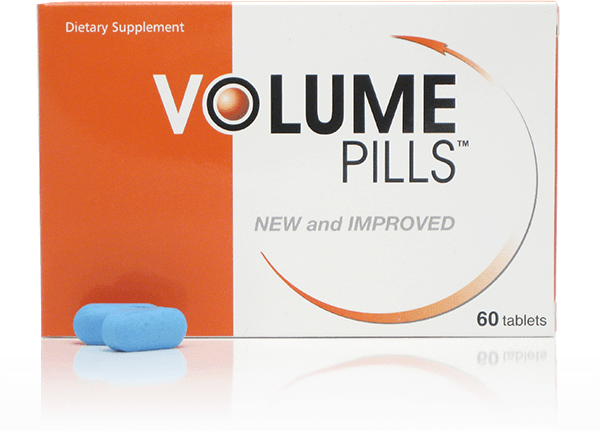
That product is Semenax: according to its maker, a randomized, double-blind, placebo-controlled study of 63 men aged 30 to 60 over two months found significantly more men on Semenax achieved a semen-volume increase of 20 percent or more than men on placebo (p=0.0008). That is the maker's report of its own small study — encouraging, unreplicated, and not a promise. The other formula we carry, Volume Pills, follows the same general approach without a finished-product study behind it. Neither is a fertility treatment, and neither changes the red-flag advice above: a sudden or symptomatic change goes to a doctor first.
The bottom line: yes, semen volume decreases with age — slowly, modestly, and starting somewhere around the 40s for most men. Staying hydrated, spacing ejaculations and dropping the habits that suppress output recover the part of the decline that was never really ageing. What remains is normal. And if the change was sudden, painful, bloody, or matters for fertility, skip the supplements shelf entirely and book the appointment.
Disclaimer: This article is for general information only and is not medical advice. Always consult a qualified healthcare professional before starting any supplement, especially if you have a medical condition or take prescription medication. Individual results vary, and no result is guaranteed.
Last reviewed: October 2026
