
- Quick Answer: Marine vs Bovine Collagen — Which Is Better?
- Where Does Each One Come From?
- What About Collagen Types — Is Type I Better Than Type III?
- Is Marine Collagen Absorbed Better?
- Which One Fits Your Allergies and Dietary Rules?
- Is Marine Collagen More Dangerous?
- What About Price?
- So Which Should You Choose? A Verdict by Use Case
- An Honest Note About What We Sell
Affiliate disclosure: This article contains affiliate links. If you buy through a link on this page, we may earn a commission paid by the manufacturer, at no extra cost to you. That never changes what we publish — and here it comes with a confession up front: this store does not sell collagen powders at all. What we sell is a peptide cream. So this comparison has no powder to push you toward, which makes it a good place to get the straight version.
Marine vs bovine collagen: which is better? It is the first question most powder buyers ask, and the marketing on both sides wants you to believe the answer is about absorption, purity, or potency. Read the labels more carefully and a different picture emerges: both are animal collagens, both are digested the same way, and the differences that actually decide your purchase are less glamorous — your allergies, your dietary rules, and whether the maker tests its product. Here is the comparison, claim by claim.
Quick Answer: Marine vs Bovine Collagen — Which Is Better?
For most people, neither is "better" in the way the ads mean. Both are hydrolyzed into peptides, both are broken down in digestion into amino acids and small peptide fragments, and the trial evidence for skin support — modest improvements in hydration and elasticity after about 8 to 12 weeks — does not separate them by source. The real deciding factors: fish allergy rules out marine; a beef allergy, or avoiding cattle products for dietary or religious reasons, rules out bovine; and for either source, a named manufacturer that batch-tests beats an unbranded bargain. Choose by your constraints, not by absorption slogans.
Where Does Each One Come From?
The names are the ingredient lists. Marine collagen comes from fish — concentrated from fish skin. Bovine collagen comes from cattle — concentrated from hides and bones. Neither is a laboratory invention; both are animal-derived products, refined from parts of the animal that would otherwise be waste. That origin matters for three practical reasons — allergy, dietary rules, and quality control — and we will take them in turn below.
One structural fact applies to both before we compare them: swallowing collagen is not the same as wearing it. A collagen cream's molecules are far too large to pass the skin barrier, which is why oral peptides exist as a format at all — digestion is their route in. We compare the two formats directly in Collagen Cream vs Collagen Supplements: Which Does What? Here, the comparison is between the two things you might put in the glass.
What About Collagen Types — Is Type I Better Than Type III?
Powders are also sorted by "type," and you will see the two sources labelled accordingly: marine is sold as a type I product, bovine as a types I and III product. Type language sounds scientific, and it is — but notice what it actually describes: which animal tissue the collagen was extracted from, not what happens after you swallow it. Once either powder hits digestion, it is broken down into amino acids and very small peptides — research shows some of the smallest fragments, two- and three-amino-acid peptides, can be absorbed intact — and that process does not check the type label on the tub. No evidence we can point to shows that a type I peptide from fish reaches or helps your skin differently from a type I peptide from cattle. Treat "type" as a sourcing description, not a potency grade.
Is Marine Collagen Absorbed Better?
This is the centrepiece claim of marine marketing: smaller particles, faster absorption, therefore better. Weighed honestly, it does not carry much. Both products are sold hydrolyzed — pre-broken into peptide fragments before they ever reach your stomach — and from there both face the same digestive process described above. Peptides are peptides: the body dismantles them by the same chemistry regardless of whether the original protein lived in a fish or a cow. A claim that one source is absorbed so much better that it justifies a large price premium is a claim the published evidence does not separate — the systematic reviews of oral collagen pool hydrolyzed peptides together and report modest effects on hydration and elasticity, with real weaknesses (mixed results between trials, short follow-ups, frequent industry funding). Paying double for an absorption story is paying for the story.
These statements have not been evaluated by the Food and Drug Administration. This product is not intended to diagnose, treat, cure, or prevent any disease. This article is educational and is not medical advice.
Which One Fits Your Allergies and Dietary Rules?
Here is where the comparison stops being marketing and starts being decisive:
- Fish allergy: marine collagen is a fish product. That is a hard stop, not a caution — bovine is your only one of the two.
- Beef allergy: the mirror image. Bovine collagen is a cattle product; marine is the remaining option.
- Dietary or religious avoidance of cattle: bovine collagen is relevant to anyone avoiding bovine products for dietary or religious reasons — a large group of buyers for whom this is the whole decision, settled before any absorption claim gets a hearing. Marine avoids the cattle question entirely.
- Avoiding animal products altogether: neither qualifies. Both are animal-derived, full stop — the choice between them is which animal, not whether.
- Check the whole formula, not just the source: some multi-ingredient formulas add egg-derived or shellfish-derived components on top of the collagen itself. The source line and the full label are both worth the thirty seconds they take to read.
If you take either and get hives, swelling, itching, or any breathing difficulty, that is a stop-immediately-and-seek-care event. Our full safety rundown is in Collagen Side Effects, Interactions, and Who Should Be Careful.
Is Marine Collagen More Dangerous?
It is a fair question — the ocean has a public-relations problem, and "heavy metals in fish" headlines stick. The straight answer is that the contaminant question in collagen is not really a fish-versus-cow question. Collagen from any source is an animal product concentrated from hides, bones, or fish skin, so sourcing and testing quality matter more than they do for a synthetic vitamin. The risk concentrates where you would expect: cheap, unbranded powders sold through marketplaces with no named manufacturer, no batch testing, and no address. A reputable marine maker that tests its batches is a safer purchase than an anonymous bovine powder, and vice versa. "Marine" on the front of the tub tells you the animal; it tells you nothing about the testing. Judge the maker, not the species.
What About Price?
Marine collagen is positioned as the premium option, and bovine as the workhorse. Given what the absorption section above concluded, our honest advice on price is twofold. First, do not pay a large marine premium for absorption — that is the claim with the least evidence behind it. Second, do not chase the bottom of the market either: as the safety section explains, the suspiciously cheap, unbranded end of this category is exactly where untested product lives, and a low price there is not a bargain but a business model. The middle rule covers both sources: a named manufacturer, the collagen source and amount per serving stated plainly, and batch testing you can read about. Whatever the tub costs, judge it over a fair trial — daily use for 8 to 12 weeks is the window the research used, and quitting at week three tells you nothing about either source.
So Which Should You Choose? A Verdict by Use Case
- You have a fish allergy: bovine — marine is not a "maybe" for you.
- You avoid cattle for dietary or religious reasons, or have a beef allergy: marine — the decision is already made, and it is a legitimate one.
- You want general skin hydration and elasticity support, with no constraints: either. On the evidence available they are interchangeable; buy the one from the maker whose testing and labelling you can verify, and judge it after 8 to 12 weeks of daily use.
- You want the cheapest possible tub, source unstated: neither, in that form. An unstated source is a reason to choose a different brand — for allergy reasons alone.
- You expected either one to rebuild skin structure or remove wrinkles: neither does that. The oral evidence supports, at most, modest hydration and elasticity support; wrinkle and structural outcomes were the findings that held up least.
An Honest Note About What We Sell
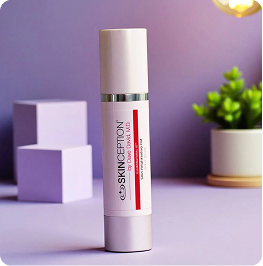
This store's shelf holds a peptide cream — Kollagen Intensiv — not powders, and that is a different tool for a different job. A powder works systemically and slowly, over months, for whole-body support. A cream works on the surface where you apply it: hydration, comfort, and a smoother look today, with a peptide formula designed to support the skin's own collagen production — it contains no collagen doing deep repair, and we say so on its pages. If the surface job is the one you actually want done, the cream is the honest fit and the powder comparison is moot. If you want the systemic route, buy a powder on the rules above — from someone who names their source. We would rather you chose the right format with open eyes than the wrong one from us.
The bottom line: marine vs bovine is mostly a question of constraints, not quality. Fish allergy points one way, cattle avoidance points the other, and for everyone else the two are digested into the same building blocks with the same modest, slow evidence behind them. Spend your attention on the maker's testing, the stated source and amount, and a fair 8-to-12-week trial — those decide your result far more than the animal on the label.
Disclaimer: This article is for general information only and is not medical advice. Always consult a qualified healthcare professional before starting any supplement, especially if you have a medical condition or take prescription medication. Individual results vary, and no result is guaranteed.
Last reviewed: October 2026
