
- Quick Answer: How to Tell a Trustworthy Brain Supplement Brand
- Check 1: Are the Ingredient Amounts Published?
- Check 2: Was the Finished Product Ever Tested?
- Check 3: Does the Guarantee Cover the Brand's Own Timeline?
- Check 4: Are Directions Printed Anywhere?
- Check 5: Is There a Safety Section — or Just "No Side Effects"?
- Check 6: Is the Price Honest Arithmetic?
- The Scorecard, and How to Run This on Any Brand
- Frequently Asked Questions
- Our Verdict on the Method
Affiliate disclosure: This guide contains affiliate links. If you buy through a link on this page, we may earn a commission paid by the manufacturer, at no extra cost to you. We use BrainPill as the worked example throughout — including the checks it fails — because it is the brain supplement we know best and sell. Score it against these checks yourself before believing our grade of it.
Quick Answer: How to Tell a Trustworthy Brain Supplement Brand
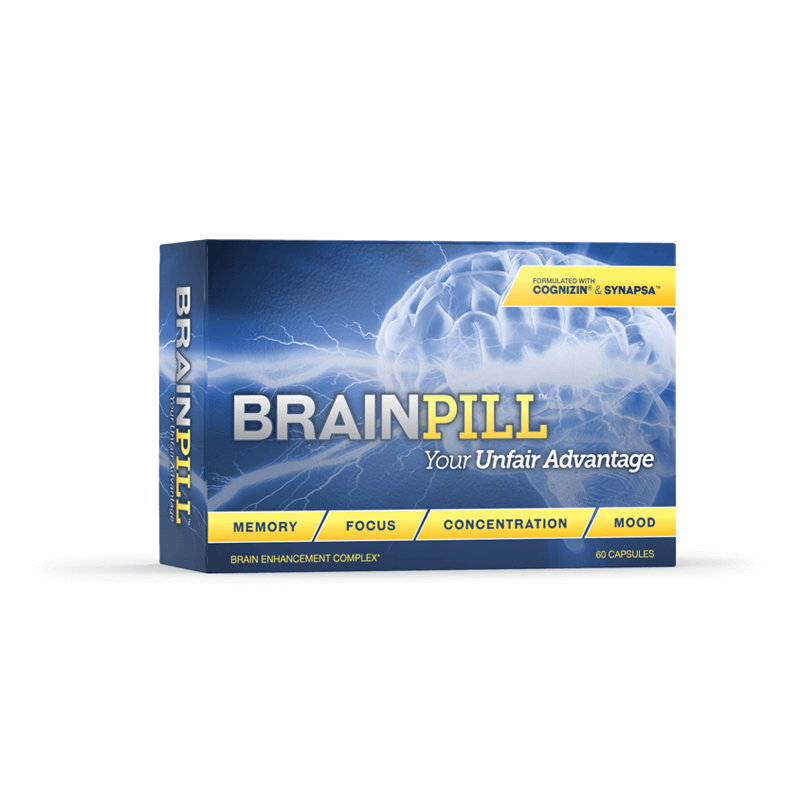
Ask which nootropic brands are reliable and you mostly get lists written by the brands' own affiliates. A better method is a label audit any buyer can run in ten minutes. A trustworthy brand publishes its ingredient amounts, has tested the finished product (or says plainly that it hasn't), prints directions a buyer can follow, guarantees the product for at least as long as it says results take, keeps a safety section, and prices in the open. Below, each check explained — then graded, pass or fail, against BrainPill, whose documentation is public enough to make the exercise real. It passes some checks most brands fail, and fails some checks most brands pass. Both halves are the point.
Check 1: Are the Ingredient Amounts Published?
What to look for: a label or supplement-facts panel stating milligrams per ingredient, not just a list of names inside a "proprietary blend." Without amounts, no reader — and no doctor — can compare the formula against the doses used in research. BrainPill: FAIL. Its sales pages name 13 ingredients and publish no amounts for any of them. The only place amounts exist is a table inside its 57-page clinical trial report (Cognizin® 250 mg and Synapsa® 320 mg per day, among others) — a document marked "CONFIDENTIAL" on every page that the maker nonetheless links publicly. Amounts that live only inside a trial PDF are not label transparency; at retail, buyers are simply never told the doses. Any brand can pass this check by printing its label. Most, including ours, choose not to.
Check 2: Was the Finished Product Ever Tested?
What to look for: a trial of the exact formula — randomized, placebo-controlled, ideally registered with a number (an "NCT" number) you can look up independently. Ingredient citations are not a substitute. BrainPill: PASS, with caveats. It has a genuine finished-product trial (NCT03198936; 12 weeks; the primary working-memory result reached p=0.044). The caveats a trustworthy presentation would include: the sponsor was the maker's own entity, the trial dose (4 capsules a day) is double what a one-month box implies, one ingredient on the current label (vinpocetine) is missing from the trial's composition table, and the maker's studies page overstates the report it links to. Grade the pass as real but qualified — and notice that almost no competitor in this category can present even a qualified one.
Check 3: Does the Guarantee Cover the Brand's Own Timeline?
What to look for: a money-back window at least as long as the time the brand itself says the product needs. If results "take 90 days" but the guarantee ends at 30, the guarantee is decoration. BrainPill: PARTIAL. Its guarantee runs 67 days (try 60, return empties by day 67, shipping excluded). Against its homepage claim of "at least 30 days" and FAQ range of "30 to 90 days," that covers the optimistic end but not the full stated window — and against the three-to-six-month timeline its own retail store mentions, it falls well short. The terms are at least written down in full, including the awkward bits (only the first two opened bottles refundable on multi-packs). A published, imperfect guarantee outranks a vague lifetime promise.
Check 4: Are Directions Printed Anywhere?
What to look for: capsules per day, timing, with or without food — on the product page or label, findable before purchase. BrainPill: FAIL. We could not find published buyer directions anywhere in the maker's web documentation. The daily dose has to be inferred from a 60-capsule box sold as a month's supply (implying 2 a day) — an inference that then contradicts the trial's 4-a-day regimen, leaving the buyer unable to replicate the only protocol ever tested. This is the check almost nobody runs, and it is one of the most revealing: a brand confident in its product tells you exactly how to take it.
Check 5: Is There a Safety Section — or Just "No Side Effects"?
What to look for: named warnings, interaction guidance, a pregnancy caution where relevant. BrainPill: FAIL. The homepage instead claims "No Unwanted Side-Effects," while its own trial recorded nine mild-to-moderate adverse events (three on the product, six on placebo — a record that is actually reassuring, and could have been published honestly). The one substantive warning — vinpocetine and pregnancy — sits on the ingredients page only, and the maker's FAQ claims "FDA-approved ingredients," a form of approval that does not exist for supplements. Our safety deep-dive covers this in full: Are Nootropics Safe? The Checks to Run Before You Take One.
Check 6: Is the Price Honest Arithmetic?
What to look for: the real monthly cost at the dose the evidence supports, not the headline bottle price. BrainPill: MIXED. The sticker price is plainly published — $69.95 for one month's box — with bulk packs down to about $59.16 a bottle at six. But if a buyer tried to match the trialled regimen of 4 capsules a day, each box would last roughly two weeks and the true monthly cost would roughly double. No page states that. When you evaluate any brand, redo the maths at the tested dose, not the implied one.
The Scorecard, and How to Run This on Any Brand
BrainPill's audit: published amounts — fail; finished-product trial — pass with caveats; guarantee vs timeline — partial; printed directions — fail; safety section — fail; price transparency — mixed. That is one pass in six, from one of the better-documented products in the category, sold by a maker with a 20-plus-year trading history and a genuine trial. Let that calibrate the exercise: the point of the checklist is not to find a perfect brand — in this category, there isn't one — but to see exactly which imperfections you are accepting, priced in, before you buy. Run the six checks on any rival in order; the brands worth your money are the ones whose failures are minor, disclosed, and cheap, and whose one or two passes sit on the checks that matter most: amounts and evidence.
These statements have not been evaluated by the Food and Drug Administration. This product is not intended to diagnose, treat, cure, or prevent any disease.
Frequently Asked Questions
Which nootropic brands are reliable and trustworthy? None earns blanket trust; reliability in this category is check-by-check, not brand-by-brand. The most reliable signals are boring ones: a published label with amounts, a registered finished-product trial, printed directions, and a guarantee that outlasts the promised result window. Brands displaying most of those are rare; brands displaying none of them are the norm.
Is a certificate of analysis (CoA) a substitute for a trial? No — they answer different questions. A CoA says the bottle contains what the label claims, uncontaminated; a trial says the contents do something. A trustworthy brand ideally offers both; BrainPill, for example, offers neither a published CoA nor amounts on its label, which is why its trial — the one strong document it has — carries so much weight in our scoring (Our Score 6.5/10; full breakdown on the BrainPill review page).
Do higher prices mean a better brain supplement? No reliable relationship exists. BrainPill at $69.95 sits mid-category; what separates it from both cheaper and pricier rivals is not price but paperwork — a registered trial. Price comparisons only become meaningful after the label checks, and after re-costing at the tested dose.
Our Verdict on the Method
Trust is a paperwork standard. Brands in this category ask to be believed; the six checks above convert belief into verification. Any brand can fix its failures here cheaply — print the amounts, print the directions, extend the guarantee to match its own timeline — and the day BrainPill's maker does those things, our review score goes up. Until then, buy (or don't) with the failures named, which is more than most sellers in this category will ever hand you.
Disclaimer: This article is for general information only and is not medical advice. Always consult a qualified healthcare professional before starting any supplement, especially if you have a medical condition or take prescription medication.
Last reviewed: October 2026
