
Affiliate disclosure: This article contains affiliate links. If you buy through a link on this page, we may earn a commission paid by the manufacturer, at no extra cost to you. That is directly relevant here, because this page sells testosterone boosters — and then spends most of its length explaining when buying one is not worth it, and what else moves testosterone more reliably than any bottle we stock.
So: are testosterone boosters worth it? The honest answer is "it depends" — but not the vague kind. It depends on three things you can check before spending anything: what your testosterone situation actually is, whether the specific product discloses doses that match the research, and whether its guarantee is long enough to let you judge it fairly. This guide works through all three, with real prices from our own shelf.
Quick Answer: Are Testosterone Boosters Worth It?
Sometimes. A booster can be a reasonable purchase for a man whose levels are normal but flagging, who has symptoms he wants to address gently, and who picks a product with disclosed ingredient amounts and a guarantee of 60 days or more. It is not worth it if you have diagnosed low testosterone — that needs a doctor — or if the product hides its doses in a proprietary blend and offers a 30-day guarantee that expires before the ingredients could plausibly do anything. The rest of this page shows the math behind both halves of that answer.
What Does the Money Actually Buy?
Start with what a testosterone booster is not. It is not testosterone. No legal over-the-counter supplement contains the hormone itself — real testosterone is a prescription medicine in the United States. It is also not TRT (testosterone replacement therapy), which is prescribed testosterone given under medical supervision after blood tests confirm a deficiency.
What the money buys is a blend of vitamins, minerals and botanical extracts — zinc, vitamin D, fenugreek, ashwagandha, D-aspartic acid and similar — marketed as supporting the body's own testosterone production. The plausible best case is nutritional support: correcting a shortfall (zinc and vitamin D deficiency genuinely drag on hormone production), or giving a modest nudge from an ingredient that has shown one in trials. The realistic expectation is a small effect, in some men, over weeks — not a transformation, and not a substitute for treating an actual hormone deficiency.
How Big Are the Effects, Honestly?
This is where most marketing quietly leaves the room. When researchers have audited this category, the picture is modest. A 2020 analysis in The World Journal of Men's Health catalogued the ingredients in the first 50 boosters found on Google: 90 percent claimed to boost testosterone, but fewer than a quarter had data supporting their claims. A 2021 systematic review in Advances in Nutrition found few high-quality trials for any booster herb and concluded firm conclusions are not yet possible.
The ingredients with the best records — ashwagandha, fenugreek, tongkat ali — have raised testosterone in some controlled human trials, but the gains were modest and concentrated in specific groups: men starting with low levels, older or overweight men, men in training programs. In healthy young men with normal levels, effects are usually small or absent. We audit the ingredient evidence one by one elsewhere on this site.
See the audit here: Testosterone Booster Ingredients, Checked One by One: What Actually Has Evidence?
And here is the part supplement sellers rarely volunteer: the biggest proven levers on testosterone are not in a bottle. Poor sleep reliably lowers testosterone — it is produced largely during sleep, and short or broken sleep shows up in morning blood tests. Carrying substantial excess weight suppresses it, and weight loss raises it. Resistance training supports it, especially in men who were sedentary. Heavy drinking works against it. A man who fixes sleep, trains, and loses excess weight will very often move his testosterone further than any supplement on our shelf can. If those basics are broken, a booster is money spent papering over a crack — which is why we say so on a page that profits when you buy.
These statements have not been evaluated by the Food and Drug Administration. This product is not intended to diagnose, treat, cure, or prevent any disease. This article is educational and is not medical advice.
What Do Boosters Actually Cost Per Bottle?
Advertised prices hide the real number: the per-bottle cost at the pack size you will actually buy, because a fair trial takes two to three months. Here is the honest math for the three boosters we carry.
Testosil — $69 for one bottle. Multi-box pricing brings that to about $59 a bottle on the mid-size pack and $49 a bottle on the largest. Unusually, Testosil carries a lifetime money-back guarantee — the strongest guarantee on our shelf, and the one that removes the deadline pressure entirely.
TestRX — $69 for one bottle. The three-pack is $199, about $66 a bottle; the six-pack is $389, about $65 a bottle. The savings per bottle are modest, so the case for the bigger packs is trial length, not discount. TestRX carries a 67-day guarantee.
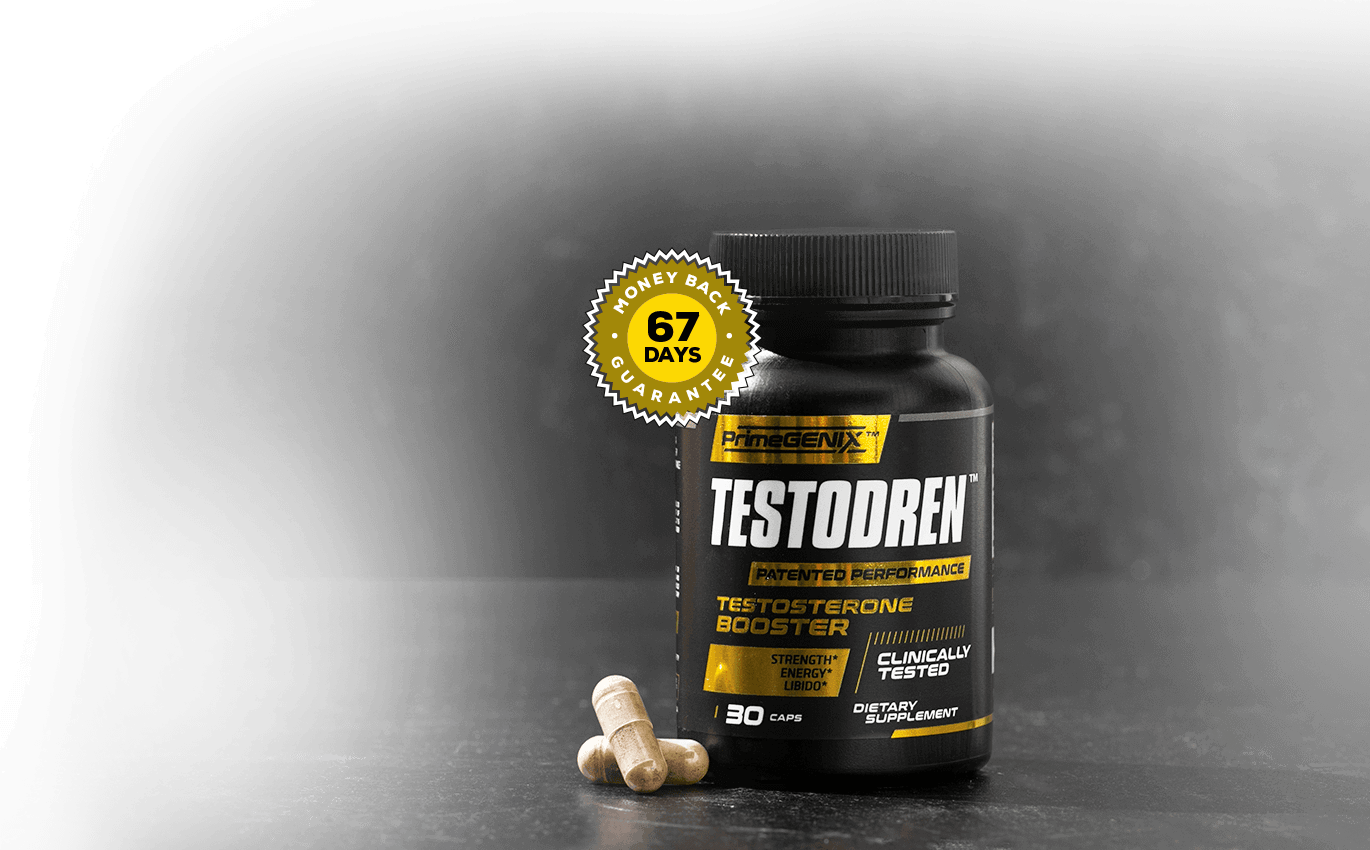
Testodren (PrimeGENIX) — $59 for one bottle. Three bottles cost $119, about $40 a bottle; six bottles cost $199, about $33 a bottle — the deepest per-bottle discount of the three. A subscription runs $49 a month. Testodren carries a 67-day guarantee.
Read those numbers as cost per month of a fair trial, because that is what you are really buying. A two-to-three-month trial runs roughly $100 to $200 depending on product and pack — real money, which is exactly why the next two sections matter more than the price.
One honest extra belongs in the total: the blood test. If you have symptoms and have never had your testosterone measured, an early-morning test — from a lab or through your doctor — costs far less than a three-month supply of anything, and it decides which category you are even shopping in. Bought in the wrong order — supplement first, test never — the bottle is the expensive way to stay uninformed. Bought after a normal-but-borderline result, with the basics in order, it is a bounded experiment with a refund attached. Same product, completely different value.
What Separates a Booster Worth Buying From One That Is Not?
Three tests, all checkable on a product page in five minutes.
Test 1: Does it print its doses? The studied ingredients were tested at specific amounts. KSM-66 ashwagandha, for example, was studied at 600 mg a day. Testosil prints its KSM-66 at 300 mg per serving — and because that is disclosed, you can do the honest comparison: one serving is half the studied daily amount, two servings match it. A product that hides everything inside a "proprietary blend" with one total weight gives you no way to make that check at all. Treat any ingredient without a printed amount as unverified — it may be present in a dusting too small to matter.
Test 2: Is the guarantee longer than the trial? Ingredient studies in this category run 8 to 12 weeks. A 30-day guarantee therefore expires before a fair trial does — it protects the seller, not you. Look for 60 days or more: 67 days on TestRX and Testodren covers about two months of daily use; Testosil's lifetime guarantee removes the deadline altogether. The guarantee is what turns "worth it?" from a gamble into an experiment with a refund attached.
Test 3: The dose-vs-study gap. Even with disclosed amounts, compare the printed dose against the dose used in the ingredient's best trial. If the product contains a third of the studied amount of its headline ingredient, discount your expectations by at least that much. This single habit — reading the label against the research — filters out most of the category's weak products, including, on some labels, weak versions of good ingredients.
Who Should Not Spend the Money?
- Men with normal testosterone and no symptoms. If nothing is wrong, there is nothing for a booster to support. The trials show the least effect in exactly this group.
- Men with symptoms and a confirmed low reading. That is a diagnosis, not a supplement deficiency. No booster has been shown to raise deficient levels into the normal range, and self-treating delays finding the cause — which is sometimes a separate condition that needs its own treatment. Our comparison of boosters and medical treatment sets out where that line sits.
Our comparison sets out where that line sits: Testosterone Boosters vs TRT: What's the Difference?
- Men trying to conceive in the near future should be careful with anything that claims to manipulate hormones, and should discuss supplements with their doctor — fertility has its own workup, and guesswork wastes time.
- Men taking prescription medication — for blood pressure, blood thinning, diabetes or anything else — should clear any supplement with their doctor or pharmacist first. "Natural" ingredients still interact.
- Anyone expecting a drug-like result on a deadline. If you need a large change, fast, a supplement is the wrong tool and the money is better kept.
How Do You Decide? A Simple Framework
Work through these five questions in order:
- 1. Have you been tested? An early-morning blood test is cheap information. Low and symptomatic means doctor first, supplement never as a substitute.
- 2. Are the basics fixed? Sleep, training, weight, alcohol. If two or more are broken, fix those first — the expected gain is larger and free.
- 3. Does the product print its doses? No printed amounts, no purchase. This one rule eliminates most bad value in the category.
- 4. Does the dose match the research? Compare the headline ingredient against its studied dose. Big gap, low expectations — or walk away.
- 5. Does the guarantee cover a real trial? Sixty days minimum, and buy the pack size that lets you reach the guarantee deadline still taking it daily. Set a calendar date to judge, and judge honestly: clearer energy, training, libido — or the empties go back.
The bottom line: a testosterone booster is worth the money only when it is bought like an experiment — disclosed doses, research-matched amounts, a guarantee longer than the trial, and a man whose basics are already in order and whose levels are normal-but-flagging rather than deficient. Bought any other way, the honest answer to "are testosterone boosters worth it?" is no — and the money is better spent on sleep, training and a blood test. If you do run the experiment, the three products compared above are on our shelf with their prices and guarantee terms on their pages: Testosil, TestRX and Testodren.
Disclaimer: This article is for general information only and is not medical advice. Always consult a qualified healthcare professional before starting any supplement, especially if you have a medical condition or take prescription medication. Individual results vary, and no result is guaranteed.
Last reviewed: October 2026
