
- Quick Answer: How Do You Tell a Scam From an Honest Product?
- First, Separate the Three Questions Hidden in "Scam"
- Check 1: Read the Label — Amounts, or a "Proprietary Blend"?
- Check 2: Climb the Evidence Ladder
- Check 3: Read Percentage Claims Like an Auditor
- Check 4: Read the Guarantee Like a Contract
- Check 5: Treat Endorsements as Advertising
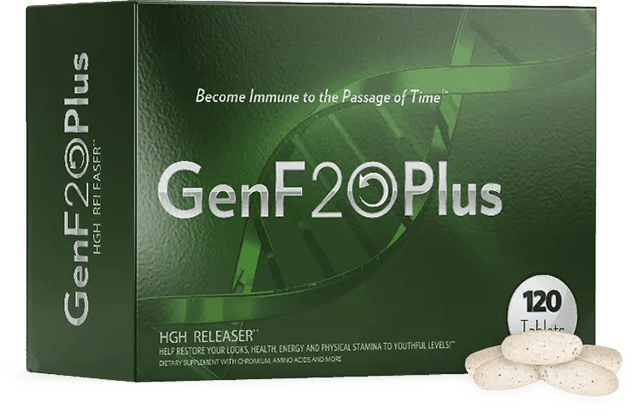
- The Worked Example: GenF20 Plus Through All Five Checks
- When "Legit but Unproven" Is the Right Verdict
Affiliate disclosure: This article contains affiliate links. If you buy through a link on this page, we may earn a commission paid by the manufacturer, at no extra cost to you. That never changes what we publish — and on this page it means building you the same claim-judging framework we apply to the products we ourselves sell, then running one of those products through it in full view. A separate guide on this site covers where to buy safely; this one covers how to judge what is being claimed, for any product, sold by anyone.
"Are supplements a scam?" is badly posed, and that is why it is so hard to answer from reviews. The honest answer is that "supplements" is not one thing: it is a market containing genuine products with published formulas and real guarantees, genuine products whose benefits are simply unproven, and outright frauds — sometimes on the same shelf, at similar prices, in similar bottles. No verdict about the category protects you. What protects you is a repeatable way to judge a single product's claims. Here is the one we use, in five checks, with a worked example at the end.
Quick Answer: How Do You Tell a Scam From an Honest Product?
Run five checks. One: does the label publish ingredient amounts, or hide them in a "proprietary blend"? Two: where does the evidence sit on the ladder — no study, studies of ingredients, or a study of the finished product itself? Three: do the percentage claims survive basic questions (a percentage of what, in whom, measuring what)? Four: does the written guarantee actually cover a fair trial, on your order, from the seller you are using? Five: are you being shown evidence, or endorsements? A product that passes all five may still be unproven — but it is not a scam. A product that fails several is telling you to stop, whatever its rating on any website.
First, Separate the Three Questions Hidden in "Scam"
In this market, "scam" usually means one of four failures: the product does not exist as described; the company vanishes when you want a refund; the bottle contains something other than the label says; or the marketing promises results the seller knows it cannot deliver. Notice that only some of those are about the product, and one of them is purely about the claims. That gives you three separate questions to ask of anything you are considering: Is the company real and reachable? Is the product what the label says? And are the claims proportionate to the evidence? Most buying mistakes come from collapsing the three into a single warm feeling — a professional website answering question one while questions two and three go unasked. The five checks below are just those three questions made operational.
Check 1: Read the Label — Amounts, or a "Proprietary Blend"?
The single fastest honesty signal on any supplement is whether the maker publishes how much of each ingredient is in it. A label that lists ingredients with individual amounts can be checked: you can compare the doses against the doses used in research, and show the list to a doctor or pharmacist. A label that groups everything into a "proprietary blend" with one combined weight asks you to trust instead — you cannot tell whether the headline ingredient is present in a meaningful amount or in a dusting included for the label. Blend secrecy is legal and extremely common, which is exactly why it is informative: in a category where publishing amounts is allowed and some makers do it, a maker who hides them has made a choice you are entitled to weigh. Treat amounts-published as the baseline for a serious product, and a blend as a reason to lower — not necessarily end — your interest.
Check 2: Climb the Evidence Ladder
Evidence in this market comes in rungs, and marketing blurs them deliberately. From weakest to strongest:
- No study at all. The claims rest on tradition, theory, or the ingredient list's reputation. This is the true position of a large share of the market — including, to pick an example from our own shelves, GenFX, for which we found no published clinical trial of the finished product.
- Studies of ingredients. Individual components have been researched, sometimes in humans, often at doses the product may not match. This supports "the ingredients are plausible," never "this product works."
- A study of the finished product. The actual formula, taken as directed, tested against a placebo. This is the first rung that speaks about the product itself — and even here, ask who ran it, how many people took the real thing, and whether anyone independent has repeated it. A single small study paid for by the maker is a starting point, not a conclusion.
The practical rule: never let a product borrow a higher rung than it stands on. Ingredient research quoted as if it tested the bottle, and a sibling product's study quoted as if it tested this one, are the two most common ladder frauds in supplement marketing.
Check 3: Read Percentage Claims Like an Auditor
"Increased by 28%." "354% improvement." Percentages are the loudest numbers in this category and the least examined. Four questions defuse most of them. Twenty-eight percent of what? A rise in a blood marker is not a rise in anything you can see or feel. Measured how, and in whom? A small group, over a short period, in a study the seller commissioned, is a weaker fact than the same number from a large independent trial. Is the endpoint the outcome, or a stand-in for it? Markers like IGF-1 are used as proxies for the benefits actually being sold — younger-looking skin, strength, energy — and a change in the proxy is not a measurement of any of them. And is a relative score being sold as an absolute one? A "354% improvement in the appearance of wrinkles" is a relative change on a grading scale, not 354% of wrinkles removed. None of this means the underlying study is worthless; it means the headline number is the beginning of the reading, not the end of it.
These statements have not been evaluated by the Food and Drug Administration. This product is not intended to diagnose, treat, cure, or prevent any disease. This article is educational and is not medical advice.
Check 4: Read the Guarantee Like a Contract
A money-back guarantee is evidence about the seller, not about the product — and it only counts if its terms cover your actual situation. Read three things. The window versus the trial: if a maker advises judging its product over three months but guarantees it for 67 days, the refund expires before the recommended trial ends, and your real decision point is around day 60 — a solvable problem, but only if you notice it before you buy. Where it applies: guarantees are honoured on orders in the maker's own system, which is why the same product bought from a marketplace listing generally carries no guarantee at all. The mechanics: written terms may ask you to return the containers, even empty ones, within the window, with shipping excluded from the refund. A seller who publishes terms like these, in plain words, before you buy is behaving measurably better than one whose guarantee is a badge with no text behind it. Our companion guide to buying supplements safely online covers the seller-side checks — official stores, counterfeit bottles, what to inspect on delivery — that pair with this one.
Check 5: Treat Endorsements as Advertising
A named doctor's endorsement on a maker's site is a stronger signal than an anonymous "doctors recommend" line — the person is identifiable, and their name is attached. It is still marketing, not evidence: an endorsement tells you someone agreed to be associated with the product, not that a claim was tested. The same applies, with interest, to celebrity faces, "as seen on" logos, and the five-star review counts on sites that earn a commission from the sale — a category that includes this site, which is why this page teaches a method instead of asking for trust. Weigh endorsements at zero in the evidence column. They belong, at most, in the "real company" column.
The Worked Example: GenF20 Plus Through All Five Checks
Here is the framework applied to a product this site sells — our full safety and legitimacy review of it is published separately as Is GenF20 Plus Safe — and Is It a Scam or Legit?, and the summary below is drawn from it:
- Label: pass. The maker publishes all 16 ingredients with per-tablet amounts — the category's exception, not its rule.
- Evidence ladder: third rung, with caveats. A 12-week double-blind study of the complete system exists and the maker links the full report — but it is one study, 31 people took the product, it was run for the company, and it measured a blood marker rather than visible benefits.
- Percentage claims: handle with care. The headline "Increased IGF-1 Levels By 28%" is the maker's framing of that marker result; it establishes a measurable change, not younger skin or more strength.
- Guarantee: real, with a catch. A written 67-day money-back guarantee from an established seller — shorter than the 12-week trial the study used, so the decision point is day 60, and it applies to official-store orders.
- Endorsements: present, weighted at zero. A named doctor endorsement appears on the maker's site; it is marketing, and the verdict does not rest on it.
Net verdict: a real company, a checkable formula, a published study, written guarantee terms. Legitimate — and not proven. Note that both halves survived the framework; a scam fails the checks, while this product passes the legitimacy checks and simply stops short on evidence.
When "Legit but Unproven" Is the Right Verdict
That middle verdict is where most honest supplements actually live, and learning to be comfortable with it is the real skill this page is teaching. A scam takes your money under false pretences — a fake company, a fake product, a claim the seller knows is false. An unproven product makes a claim that might be true, on evidence too thin to settle it, and sells you the chance to find out under a guarantee. Those are different purchases deserving different reactions: walk away from the first at any price; consider the second, if at all, as a priced experiment — official store only, baseline written down before you start, decision made while the guarantee is still open, and no fourth month bought on hope. Judge every product you meet with the five checks, and you will rarely need to ask the internet whether something is a scam: you will already know which kind of thing it is.
The bottom line: supplements are not a scam, and they are not a pharmacy. Run the label, the ladder, the percentages, the guarantee, and the endorsements — in that order — and most products will classify themselves.
Disclaimer: This article is for general information only and is not medical advice. Always consult a qualified healthcare professional before starting any supplement, especially if you have a medical condition or take prescription medication. Individual results vary, and no result is guaranteed.
Last reviewed: October 2026
